
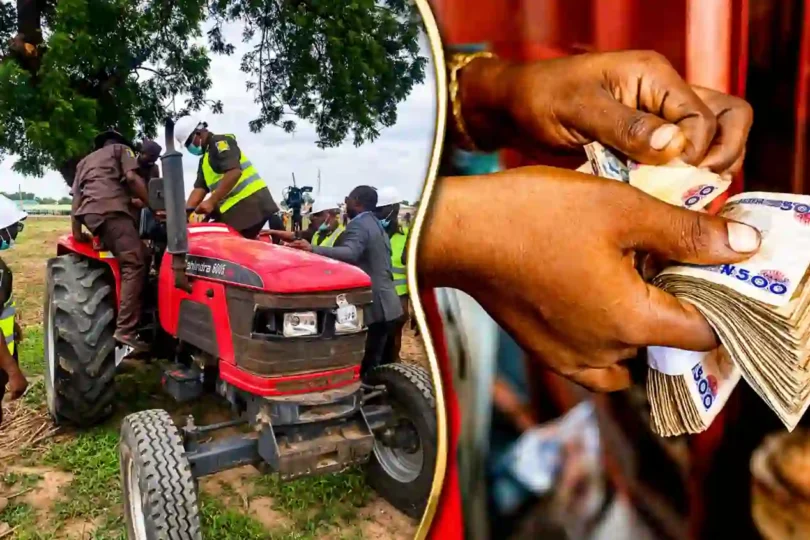
The Federal Government, through the Nigerian Correctional Service (NCoS), has commenced the transformation of custodial farmlands into structured agribusiness hubs as part of efforts to boost food production and strengthen inmate rehabilitation across the country.
The initiative was formally flagged off at the Dukpa Farm Centre in Gwagwalada, Abuja, marking the beginning of the 2026 farming season nationwide. The event serves as a symbolic launch for all correctional farm centres, signalling a coordinated push to reposition correctional facilities as contributors to Nigeria’s agricultural output.
Controller-General of NCoS, Sylvester Nwakuche, said the programme is designed to go beyond routine farming activities by integrating vocational training with large-scale agricultural production.
“This is a nationwide flag-off using Dukpa as a contact point. Our farming programme is part of efforts to equip inmates with practical skills and ensure they become productive members of society upon discharge,” Nwakuche said.
He explained that the Dukpa facility already operates a diversified agricultural system, including crop production, poultry, piggery and cattle rearing, reflecting an integrated agribusiness model the service intends to replicate nationwide.
Nwakuche linked the initiative directly to national food security goals, noting that the correctional service is leveraging its extensive land assets and available manpower to support government priorities.
“We have large acreages and manpower. What we are doing aligns with national priority on food security. We want to contribute our quota meaningfully,” he said.
Beyond food production, the programme is structured to reposition inmates as economic contributors rather than liabilities. According to the NCoS chief, the goal is to ensure that individuals in custody acquire practical skills that can support reintegration into society.
“We want them to be ‘awaiting assets’ and not just awaiting trial. When they return to society, they should not be a burden or a threat but contributors to development,” he added.
The Controller-General acknowledged that while inmate participation in the 2025 farming season was strong, financial returns were affected by external factors, including market price fluctuations and environmental challenges.
“Prices dropped significantly, and we also experienced natural disasters that impacted our facilities and output. But in terms of engaging inmates productively, we recorded success,” he said.
He expressed optimism about improved outcomes in 2026, citing earlier planning, better coordination and adjustments to operational strategies as key factors expected to enhance productivity.
Nwakuche also emphasised the need for private sector participation to scale the initiative, particularly in areas such as mechanisation, funding and technical expertise.
“Farming has gone beyond traditional methods. We need modern technology and capital. That is why we are calling on private partners to collaborate with us. Government alone cannot do it,” he said.
On the potential inclusion of awaiting trial inmates in farming activities, he noted that the service is exploring options that would ensure security while expanding participation.
“For now, awaiting trial inmates are not deployed, but with proper monitoring systems, fencing and security, those willing may be engaged,” he said.
Reflecting on his first year in office, Nwakuche pointed to improvements in staff welfare, infrastructure and inmate engagement, while acknowledging support from President Bola Tinubu and Minister of Interior, Olubunmi Tunji-Ojo.
He confirmed that the agribusiness programme will be implemented across all correctional farm centres nationwide, noting that several facilities have land capacities exceeding that of Dukpa.
“Once we flag off here, it is symbolically done nationwide. Other farm centres will proceed accordingly,” he said.
The initiative forms part of broader correctional reforms aimed at strengthening rehabilitation systems, promoting self-reliance among inmates and positioning the correctional service as an active participant in Nigeria’s food production value chain.
What do you think about this?
Drop your opinion in the comment section.
FOLLOW US & Share this with someone who needs to see this.