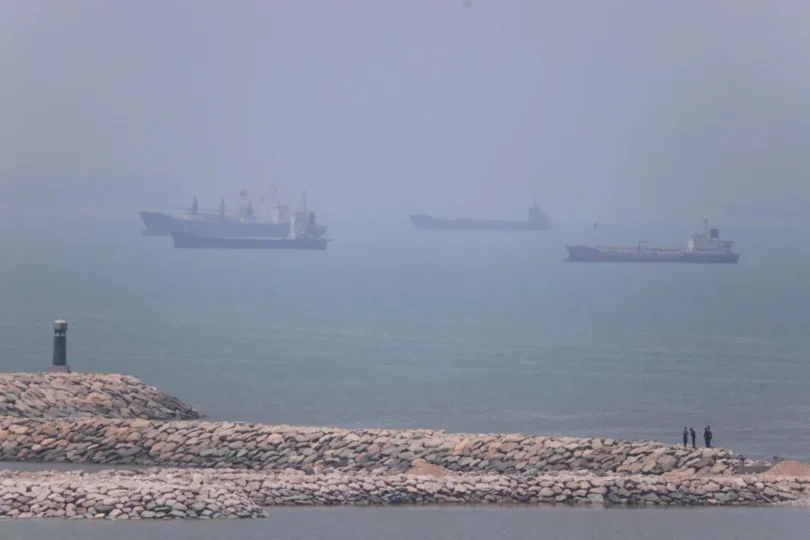
DUBAI – Some oil and gas vessels have begun to cross the Strait of Hormuz, including ships owned by Saudi Arabia’s state tanker giant, in an early sign of the shipping industry responding to the interim US-Iran peace deal.
Three laden oil supertankers controlled by Saudi Arabia’s Bahri switched on their signals in the Gulf of Oman on June 18.
Each one, called Shaden, Jaham and Awtad, has been stuck inside the Persian Gulf since the war began.
A ship carrying Qatari liquefied natural gas and a Chinese fuel tanker also exited.
While transits are still light compared to pre-war levels, the movement of Saudi ships through the crucial waterway is significant as it marks the first large volumes – around 6 million barrels – of Saudi oil to cross the strait since the war began.
Traders will be carefully watching to see if other ships that have been stuck in Hormuz will escape in the coming hours and days, potentially releasing a fresh flood of barrels onto the market.
More than 100 oil tankers were trapped inside prior to the signing of the interim peace deal, including about 30 supertankers capable of hauling 2 million barrels.
Even though anticipation built up toward the agreement signing in recent days, there were no reported and confirmed deals to pick up cargoes from the region.
Shipowners were seeking clarity on how the reopening would work before deciding whether to sail through, and brokers said on June 17 there was a wide gap between shipowners and charterers regarding the prices they’d be willing to accept to book a vessel.
Some shipowning groups have said they’re concerned about the presence of mines in the waterway.
Earlier this week, the US published guidance to owners about the assistance it has been offering vessels in crossing via a southern route near the coastline of Oman.
The more than three-month closure of Hormuz has curbed access to gas and oil from within the Persian Gulf, with limited shipments going through by vessels that went dark by turning off their transponders to mask their locations, or with approval from Tehran.
A gas carrier Mraikh, which is chartered by QatarEnergy, is signalling Pakistan’s Port Qasim as its next location.
Ye Chi, which is managed by a subsidiary of Chinese state-backed Cosco Shipping, didn’t indicate a clear destination.
It wasn’t immediately clear if either vessels’ crossings were the result of negotiated deals with Tehran.
QatarEnergy and Cosco didn’t respond to requests for comment. Bahri didn’t immediately respond to a request for comment on its ships. BLOOMBERG