
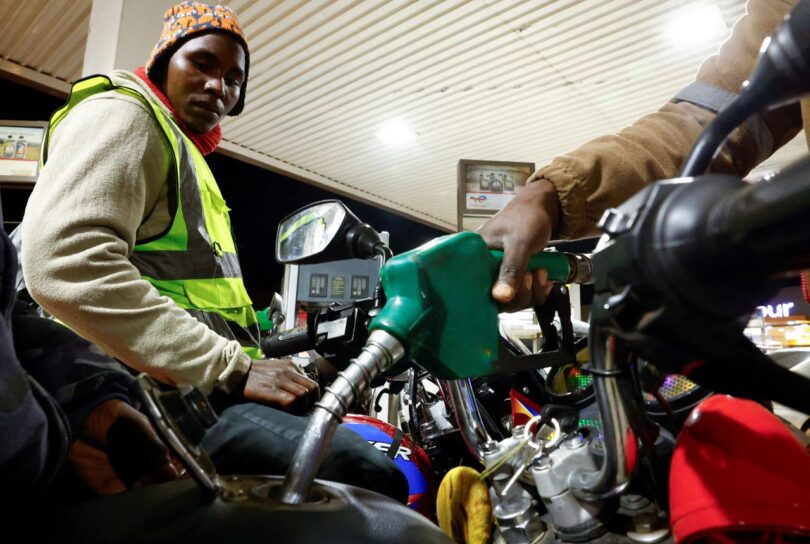
South Sudan has introduced power rationing in the capital, Juba, to conserve diesel, while Tanzania has raised nationwide fuel prices by nearly a third.
Kenya already had a government-to-government (G2G) oil import arrangement with Gulf countries, introduced in 2023, that allowed it to import refined fuel on credit and cut out middlemen.
The suppliers under the deal included Saudi oil firm Aramco and the United Arab Emirates (UAE) state-owned oil company, Adnoc.
However, opposition leaders and critics have questioned why the deal has failed to cushion the East African economic powerhouse from the current crisis.
“The government-to-government fuel import framework was supposed to insulate Kenya from exactly this kind of supply shock. Instead, Kenya now has the most expensive petrol in East Africa, and the framework’s first real stress test has produced a quality crisis, a procurement scandal and now a regulatory rollback,” says Mutoro.
Defending decision
Allowing “dirty” fuel into the domestic market means motorists will be filling their tanks with fuel that could damage engines more, with replacement costs exceeding 200,000 Kenya shillings ($1,550) in parts alone, says the Cofek official.
However, the Kenyan government has defended its decision, which it said was taken following wide consultations.
Kenya’s Ministry of Investments, Trade and Industry said the measure was taken after it ‘’received requests from stakeholders in the petroleum sector, including the Ministry of Energy and Petroleum, regarding challenges in sourcing fuel that meets the current standard compliance levels’’.
The ministry said the waiver was approved ‘’under the guidance of the National Standards Council’’, which is the agency in charge of ensuring the quality of goods and services in the East African country, and that the move was taken ‘’in full consideration of the need to safeguard the welfare of Kenyan consumers and the stability of the economy’’.
The ‘’temporary’’ measure was ‘’intended to ensure continued fuel availability and to sustain economic stability during the current period of global supply disruption. It will be reviewed at the end of the six-month period,’’ it added in a statement on 30 April.
However, according to Mutoro, the waiver on sulphur levels is an issue beyond Kenya’s borders, saying the policy contravenes a regional treaty introduced in 2015 on fuel standards in East Africa.
“The East African Community (EAC) fuel quality standards are not domestic administrative rules that a cabinet minister can wave away with a press release. They are the product of a regional harmonisation process under the EAC Treaty, to which Kenya is a signatory,” Mutoro says.
“A unilateral six-month suspension of EAC-adopted standards without reference to the EAC Council or partner states is a treaty compliance issue, not merely a domestic policy matter,” he argues.
Environmentalists have also warned of the impact of allowing “dirty fuel” back into the domestic market, saying the effects will outlast the waiver period.
“We are talking about thousands and thousands of vehicles being fuelled with this low-grade, sulphur-contaminated fuel,” says environmental campaigner James Wakibia.
“Releasing that emission is dangerous enough even for a day, let alone six months, in a country that has always been said to be a world leader in environmental conservation. This is a shocker.”
(This article was first published on TRT Afrika)