
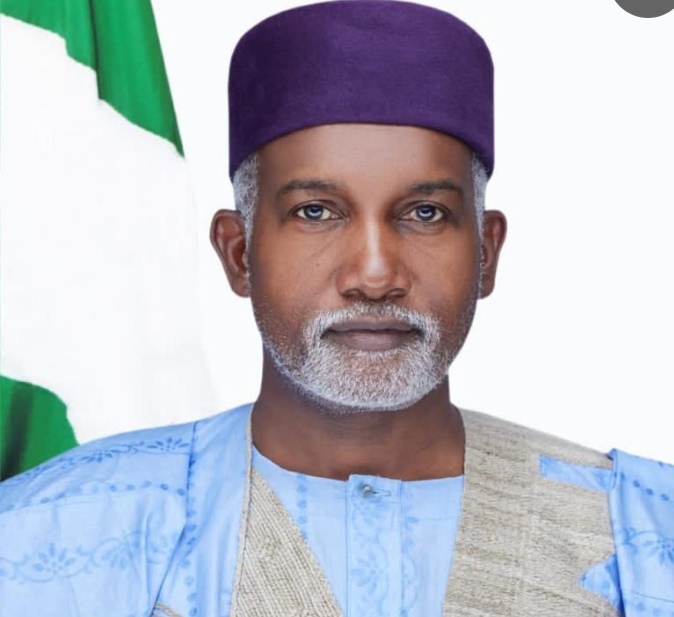
A UAE-based erstwhile diplomat and foreign policy consultant, Farouq Bin Momoud, has delivered a scathing assessment of the tenure of former Nigerian Foreign Affairs Minister Yusuf Maitama Tuggar, describing him as a “serial underachiever” whose stewardship weakened Nigeria’s regional influence and produced little lasting diplomatic legacy.
In an opinion article titled “Yusuf Maitama Tuggar: Silhouette of a Serial Underachiever,” Bin Momoud argued that Tuggar failed to live up to the towering reputation associated with the name “Maitama,” a reference to the late elder statesman Yusuf Maitama Sule, popularly known as “Dan Masanin Kano.”
The writer said while Maitama Sule earned national reverence for his intellect, moral authority, and diplomatic accomplishments, Tuggar’s years in public office were marked by “polished speeches, diplomatic photo opportunities and a foreign policy record defined more by confusion than consequence.”
Bin Momoud particularly criticized Nigeria’s handling of the 2023 Niger Republic coup crisis and Tuggar’s leadership at the Ministry of Foreign Affairs.
According to him, Nigeria adopted an overly confrontational posture through sanctions, ultimatums, and threats of military intervention, a strategy he claimed ultimately deepened divisions within the Economic Community of West African States (ECOWAS).
The article argued that rather than restoring democratic rule in Niger, the approach contributed to a major geopolitical fracture in the sub-region, as Niger, Mali, and Burkina Faso strengthened ties and moved away from ECOWAS under the Alliance of Sahel States framework.
The foreign policy analyst further stated that Nigeria’s traditional image as the stabilizing force in West Africa diminished during Tuggar’s tenure, with Abuja increasingly appearing “like an overextended power issuing threats it lacked the leverage, domestic stability or regional goodwill to enforce.”
He also faulted the administration’s diplomatic strategy for allegedly failing to adapt to shifting realities across the Sahel region, including rising anti-Western sentiment, growing Russian influence, and declining French credibility.
Beyond regional diplomacy, Bin Momoud criticized the federal government’s decision to recall Nigerian ambassadors globally in 2023 without swiftly appointing replacements, describing the development as evidence of institutional dysfunction within the foreign ministry.
“For months, key missions operated without substantive ambassadors, undermining bilateral engagement,” he wrote, adding that Nigeria often appeared “administratively absent from critical global conversations.”
The commentator described Tuggar’s tenure as one dominated by “optics without substance,” arguing that despite numerous international appearances and conferences, there were no landmark diplomatic breakthroughs, transformative agreements, or major mediation successes attributable to the former minister.
He further maintained that Nigeria’s domestic challenges — including inflation, insecurity, currency instability, and social discontent — weakened the country’s moral authority and soft power influence abroad.
“Foreign policy cannot be divorced from domestic strength,” Bin Momoud stated, insisting that Nigeria attempted to project continental leadership while struggling internally.
The article concluded that despite Tuggar’s elite education and diplomatic exposure, his years in office produced “no defining legacy,” contrasting his record sharply with that of Maitama Sule.
Bin Momoud described the former minister as “a silhouette of inherited greatness, but never its embodiment.”
The author identified himself as a UAE-based erstwhile diplomat and foreign policy consultant.