
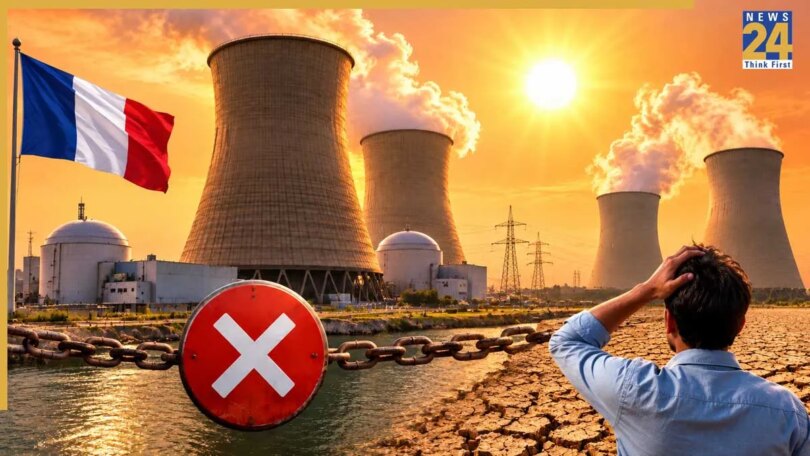
The intense heatwave in France has begun to affect the country’s nuclear power plants. This week, the state-owned power company EDF shut down three nuclear reactors and reduced power generation at eight others because the rivers used to cool them had become too warm.
As a result, around 6.3 gigawatts (GW) of electricity generation was affected. The development has raised questions about whether a similar situation could happen in countries like India.
Why do nuclear reactors need cooling?
Nuclear reactors produce a large amount of heat while generating electricity. They need a constant supply of cool water from rivers, lakes, or the sea to keep the reactors at a safe temperature.
In France, the recent heatwave increased river temperatures, making it harder to cool the reactors efficiently. This affected electricity production, although there were no technical faults or safety issues.
Why were the reactors shut down?
France temporarily shut down reactors at the Golfech, Bugey, and Chooz nuclear power plants and reduced power generation at eight other reactors.
The decision was taken to prevent hot water released from the plants from raising river temperatures further, which could harm fish and other aquatic life.
French regulations require operators to reduce output or stop reactors if the discharged water could push river temperatures above the allowed environmental limit.
Could the same happen in India?
Experts say the risk is lower in India. Many of India’s major nuclear power plants, including Kudankulam, Kalpakkam, and Tarapur, are located along the coast and use seawater for cooling. Sea temperatures change much more slowly than river temperatures, making them less vulnerable during heatwaves.
Other inland plants, such as Rawatbhata, Narora, and Kakrapar, use large cooling towers, which release heat into the air instead of depending only on river water.
What is India’s biggest challenge?
While hot rivers are a major concern in France, India’s biggest challenge is likely to be water availability. Cooling towers require a continuous water supply. If the country faces long periods of drought or reservoirs and rivers run low, electricity generation at nuclear plants could be affected.
Experts say that as climate change increases the risk of extreme weather, better water management will become just as important as expanding nuclear power generation.
First published on: Jul 15, 2026 05:15 PM IST
Get Breaking News First and Latest Updates from India and around the world on News24. Follow News24 on Facebook, Twitter.
End of Article
Related Story