
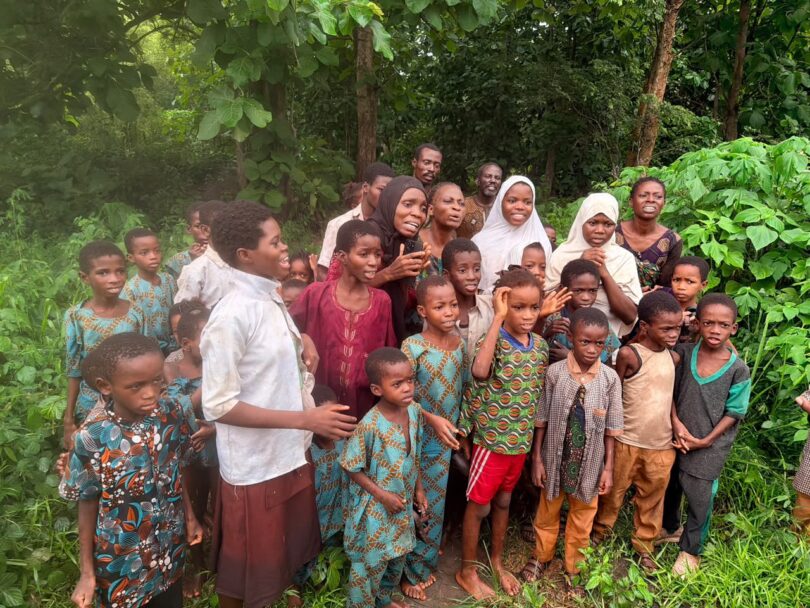
It has become one of Nigeria’s most painful security challenges. The abduction of schoolchildren, once a rare occurrence, has evolved into a recurring national tragedy, forcing schools to shut down, disrupting education and leaving thousands of families traumatised….
It has become one of Nigeria’s most painful security challenges. The abduction of schoolchildren, once a rare occurrence, has evolved into a recurring national tragedy, forcing schools to shut down, disrupting education and leaving thousands of families traumatised.
The latest chapter closed on Friday with the release of pupils and teachers abducted from schools in Oriire Local Government Area of Oyo State after spending 56 days in captivity.
Their freedom, confirmed by the Presidency, marks the end of another ordeal but also serves as a reminder that school abductions remain a persistent threat beyond Nigeria’s North-East.
The Oriire incident began on May 15, when armed men attacked schools in Ahoro-Esiele and nearby communities, abducting 39 pupils and students alongside seven teachers.
The attack shocked many because it occurred in Oyo State, far from the regions where mass school kidnappings were once concentrated.


Their release adds another entry to a long and troubling history of attacks on schools.
The Chibok Turning Point – 2014
The world’s attention turned to Nigeria on the night of April 14, 2014.
Boko Haram militants stormed Government Girls Secondary School in Chibok, Borno State, abducting 276 schoolgirls who had gathered to sit their final examinations.
More than 50 escaped in the days that followed, but many remained in captivity for years.
The attack sparked the global #BringBackOurGirls campaign, drawing international condemnation and support from world leaders.
Some of the girls have since been rescued or released, but several remain unaccounted for more than a decade later.
Dapchi – 2018
Four years after Chibok, history repeated itself.
On February 19, 2018, Boko Haram fighters abducted 110 girls from the Government Girls’ Science and Technical College in Dapchi, Yobe State.
Most were released a month later.
However, one student, Leah Sharibu, was held back after reportedly refusing to renounce her Christian faith.
Her continued captivity has become one of Nigeria’s most enduring human rights concerns.
A New Wave of Mass Kidnappings
From 2020 onwards, criminal gangs commonly referred to as bandits shifted tactics, targeting boarding schools and rural communities for ransom.
Unlike Boko Haram’s ideological attacks, these kidnappings were largely financially motivated.
The attacks spread across Kaduna, Katsina, Niger, Zamfara and other states.
Among the most notable were:
The abduction of more than 300 students from Government Science Secondary School, Kankara, Katsina State, in December 2020.
The kidnapping of 279 girls from Government Girls Secondary School, Jangebe, Zamfara State, in February 2021.
The seizure of 39 students from the Federal College of Forestry Mechanisation in Kaduna in March 2021.
The abduction of 121 students from Bethel Baptist High School in Kaduna later that year.
Each incident renewed fears over school safety and disrupted education across affected communities.
The Kuriga Kidnapping – 2024
In March 2024, armed men stormed LEA Primary School and Government Secondary School in Kuriga, Kaduna State.
Nearly 300 pupils and teachers were abducted in one of Nigeria’s largest school kidnappings in recent years.
They regained their freedom weeks later following intensive security operations, although authorities maintained that no ransom was paid.
School Attacks Spread South
For years, mass school kidnappings were largely confined to Nigeria’s North-East and North-West.
The Oriire attack demonstrated that the threat is no longer geographically limited.
Security experts say criminal groups increasingly exploit poorly secured rural schools, weak road networks and limited security presence.
The attack prompted nationwide concern and renewed calls for stronger protection of schools and improved intelligence gathering.
The Human Cost
Beyond the headlines lie devastating consequences.
Thousands of children have missed months or even years of education.
Many survivors continue to suffer psychological trauma.
Parents remain fearful of sending their children back to school, while several communities have closed schools entirely after attacks.
International organisations have repeatedly warned that insecurity is undermining Nigeria’s efforts to improve access to education.
Government Response
Over the years, successive governments have introduced various measures to protect schools.
These include the Safe Schools Initiative, increased military deployments, community policing, intelligence-led operations and partnerships with state governments.
Security agencies have also intensified rescue missions, leading to the release of hundreds of abducted students.
However, experts argue that preventing future attacks will require sustained investment in rural security, surveillance technology, rapid-response capabilities and stronger collaboration between federal, state and local authorities.
The release of the Oriire pupils and teachers brings relief to dozens of families and offers a rare moment of celebration after nearly two months of uncertainty.
Yet their ordeal underscores a difficult reality.
From Chibok to Dapchi, from Kankara to Kuriga, and now Oriire, the safety of Nigerian schoolchildren remains one of the country’s defining security challenges.
Until every child can go to school without fear, the story of school abductions in Nigeria is not yet over.