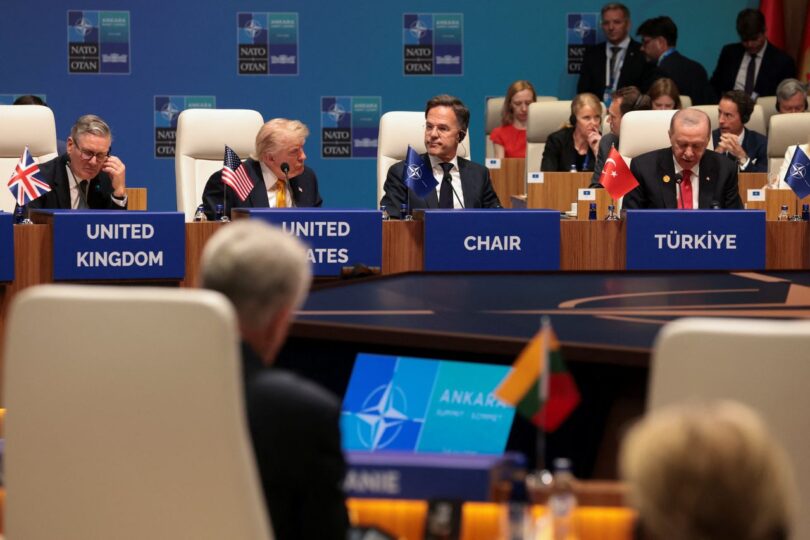
Leaders from NATO’s 32 member nations gathered in Türkiye’s capital, Ankara, on July 7 and 8 for a landmark summit that produced a number of landmark outcomes amid a rapidly changing security environment.
Türkiye’s President Recep Tayyip Erdogan called the summit “historic”, saying it will shape the alliance’s common future.
From renewed talks over the F-35 fighter jet programme to expanded Black Sea security cooperation, here are the most important agreements and announcements from the summit.
Türkiye and the US moved closer to resolving the F-35 issue
One of the summit’s major developments came from renewed defence talks between Ankara and Washington.
US President Donald Trump indicated that his administration is prepared to work towards lifting CAATSA sanctions on Türkiye and reopening discussions about Ankara’s return to the F-35 fighter jet programme. While no formal agreement has been signed, the announcement marks the strongest signal in years that both sides are interested in repairing defence ties.
Restoring Türkiye’s role in the F-35 programme would represent a major shift in US–Türkiye relations and strengthen NATO’s southern flank.
Black Sea allies expanded their joint maritime security mission
Türkiye, Romania and Bulgaria agreed to expand their existing Black Sea naval cooperation.
Originally focused on clearing sea mines, the trilateral Mine Countermeasures Black Sea Task Group initiative will now also protect critical infrastructure, including underwater cables, offshore energy facilities, and pipelines.
The expanded mission reflects growing concerns about maritime security amid ongoing tensions in the Black Sea region related to the Ukraine-Russia war.
Related
NATO launched the Drone Edge Initiative to boost counter-drone capabilities
Secretary General Mark Rutte unveiled NATO Drone Edge, a new alliance-wide initiative designed to accelerate investment in drone and counter-drone technologies.
The programme will increase funding for advanced counter-UAV systems while expanding the training of drone operators across NATO member states. As drones become increasingly central to modern warfare, the initiative aims to ensure allies can rapidly develop and deploy next-generation unmanned systems.
Ankara pushed for access to Europe’s growing defence funds
Türkiye renewed its campaign to participate in Europe’s emerging defence financing initiatives, including programmes that currently favour EU member states.
Turkish officials argued that NATO’s security architecture should include all allies—not just those inside the European Union.
Türkiye, UK forge new defence pact
Türkiye and the United Kingdom signed a new security and defence partnership during the NATO summit, strengthening cooperation between two major alliance members amid growing security challenges across Europe and beyond.