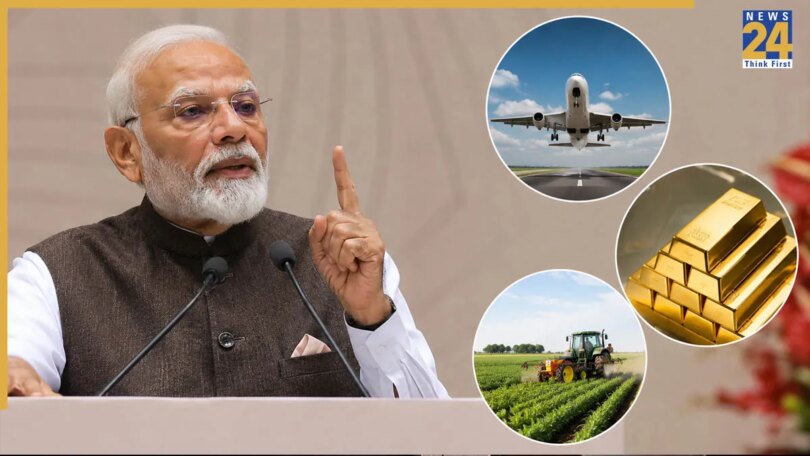
While the world is watching the war, India is preparing for something bigger. The indication came during Prime Minister Narendra Modi’s speech in Telangana on Sunday. His address clearly suggested that India is gearing up for a larger challenge. As the global oil market remains highly unstable due to the conflict in West Asia and tensions around the Strait of Hormuz, the Prime Minister advised people to save fuel. Narendra Modi urged citizens to return to some of the habits followed during the Covid era. He encouraged people to work from home, hold virtual meetings, use less fuel, and depend less on imported goods. His message to households, businesses, and industries has put several sectors on alert mode.
Aviation

2 / 6
The aviation and tourism industry may be the first to feel the impact. Prime Minister Narendra Modis appeal to postpone ” foreign travel” and revive work-from-home practices shows that he is concerned about rising fuel costs and heavy forex outflows. Airlines are vulnerable because aviation turbine fuel forms a part of their operating expenses. At the time aircraft leasing costs, maintenance payments and insurance are mostly linked to the dollar. Rising crude oil prices and a weaker rupee can increase pressure on carriers. Therefore, the market reacted immediately. Shares of InterGlobe Aviation, the parent company of IndiGo fell over 4 percent in trade on Monday. This is because investors are expecting travel demand and higher operating costs.
Fertilizer and agriculture

3 / 6
One of the most impacted sector is agriculture as PM has stressed on using bio fertilizers. Prime Minister Narendra Modi urged citizens to reduce the consumption of chemical fertilizers by half and promoted natural farming practices. India imports quantities of fertilizers such as urea, DAP and potash. Global fertiliser prices are heavily tied to energy costs and shipping rates. As gas and crude oil prices rise globally fertiliser subsidies also increase sharply. This puts pressure on government finances. Prime Minister directly linked fertiliser imports with foreign exchange stress. He warned that agriculture too consumes an amount of foreign currency through imported inputs.
Oil Marketing and Logistic companies

4 / 6
PM requested to save on Petrol and diesel as the biggest concern India’s growing oil import burden. India consumes 5.5 million barrels of crude oil daily and imports most of it. Any sharp increase in oil prices significantly increases the country’s import bill and strains forex reserves. He encouraged metro travel, carpooling, electric vehicles and rail freight movement. Oil marketing companies are already facing under-recoveries on petrol and diesel sales. If crude prices remain high companies may eventually be forced to increase fuel prices absorb mounting losses or seek government support. Higher diesel prices will not impact transport companies but also affect trucking, e-commerce logistics, cab services, bus operators and FMCG distribution networks. Rising transportation costs could eventually feed into food inflation, retail prices and household expenses.
Gold and imported goods

5 / 6
Prime Minister Narendra Modi also appealed to Indians to avoid buying gold for weddings for one year. India is one of the world’s biggest importers of gold. Gold purchases significantly contribute to dollar outflows and the current account deficit. The stock market reacted sharply after the speech. Shares of Titan Company, Kalyan Jewellers, Senco Gold and PC Jeweller fell between 5 percent and 10 percent in Monday trading. Also, this can have an impact on luxury retail, imported electronics, premium appliances, high-end automobiles and luxury malls. Many consumer electronics businesses rely heavily on imported semiconductors, batteries and display components. This makes them vulnerable to a rupee and higher import costs.
Manufacturing

6 / 6
The broader manufacturing sector could also face pressure as higher crude oil and gas prices increase production costs across industries. Energy-intensive sectors such as chemicals, plastics, metals, packaging, textiles and industrial transport are especially vulnerable during periods of rising commodity prices. MSMEs may face the challenge because small businesses usually operate with thin profit margins and limited pricing power. Rising fuel prices, expensive raw materials, higher logistics costs and elevated borrowing expenses can quickly squeeze profitability. The ongoing disruption around the Strait of Hormuz is also increasing shipping costs. Creating uncertainty across global supply chains. Industries such as pharmaceuticals, auto components, chemicals, engineering goods and textiles may face pressure due, to rising freight charges and delayed shipments.