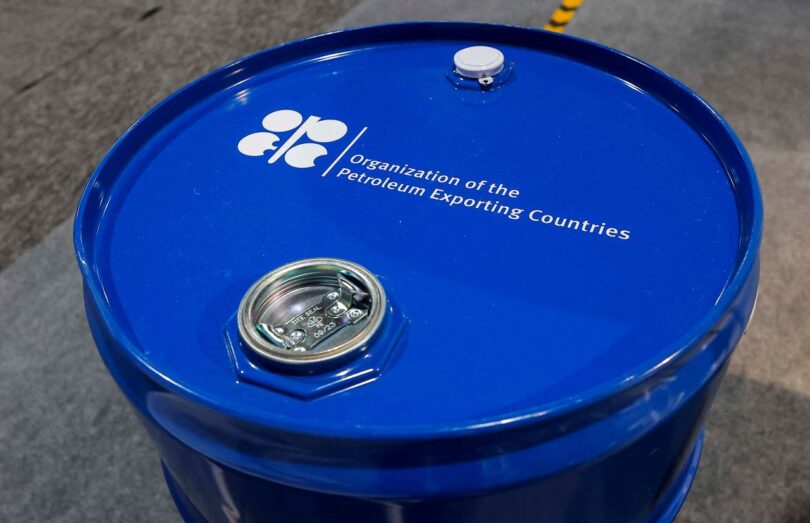
For over six decades, the Organisation of the Petroleum Exporting Countries (OPEC) has stood as one of the most influential forces in global energy markets.
Founded in 1960 by five pioneering nations to counter the dominance of major Western oil companies, the cartel has shaped energy prices, triggered economic shocks, and wielded significant geopolitical power through coordinated production policies.
From the transformative oil crises of the 1970s to the formation of the broader OPEC+ alliance and repeated battles over market share to now, its latest rupture — the planned exit of the United Arab Emirates after nearly six decades, here’s a timeline highlighting seven of the cartel’s defining moments.
September 10-14, 1960 — Born in Baghdad
Five founding members, Iran, Iraq, Kuwait, Saudi Arabia and Venezuela, created OPEC at the Baghdad Conference in response to unilateral price cuts by major international oil companies (the so-called “Seven Sisters”). These companies had reduced “posted prices” for Middle East crude in August 1960, cutting revenues for producing nations.
Today, it includes 12 countries, mainly from the Middle East. The UAE joined in 1967. The UAE is the fourth producer to leave the group in recent years, and by far the biggest. Angola, which joined OPEC in 2007, quit the bloc at the start of 2024, citing disagreements over production quotas. Ecuador quit OPEC in 2020 and Qatar in 2019. Doha is primarily a gas-producing country and didn’t see much utility in the organisation.
The organisation coordinates petroleum policies, stabilises markets and secures fair prices for member countries. It was not initially seen as highly influential, but it laid the foundation for greater producer control.
Its headquarters later moved to Vienna from Geneva in 1965.
The five founders were later joined by Qatar (1961), Indonesia (1962-suspended membership from January 2009), Libya (1962), United Arab Emirates (1967), Algeria (1969), Nigeria (1971), Ecuador (1973, suspended membership in December 1992 until resuming membership in October 2007), Angola (2007) and Gabon (1975-1994).
1973 — First oil shock and Arab oil embargo
OPEC’s global influence became known during the 1973 Yom Kippur War when Arab members of OPEC (via OAPEC) imposed an oil embargo on the US, Netherlands and other supporters of Israel. They also announced rolling production cuts, initially 5 percent monthly.
Oil prices quadrupled from around $3 to nearly $12 per barrel by early 1974. The embargo, lifted in March 1974, caused fuel shortages, long lines at petrol stations, economic strain in the West, and accelerated inflation and recession.
It marked OPEC’s emergence as a major geopolitical force, shifting control of oil production from Western companies to producing states and highlighting oil as a political weapon.
Related
1979 Iranian Revolution and 1980 Iran-Iraq war — second oil shock
A revolution in Iran, which was the second biggest oil seller after Saudi Arabia, produced a second oil shock in 1979. It caused a sharp drop in Iranian oil output, and panic buying followed.
The outbreak of the Iran-Iraq war in 1980 further disrupted supplies.
By the end of the year, North Sea crude stood at a new high of $40 a barrel, a level not to be exceeded for another 10 years.
In 1983, the New York Mercantile Exchange launched crude futures trading and OPEC attempted to introduce production quotas for member countries but with little success.
By 1986, prices crashed in response to an oil glut and a change in consumer habits, with Brent oil price dropping to a low of $8.75 a barrel.