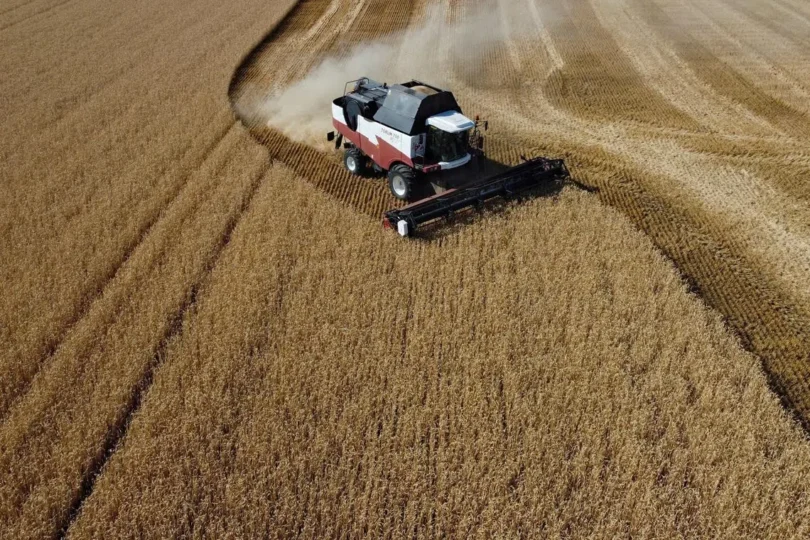
ROSTOV REGION, Russia, July 17 – Vladimir Fedorchenko and his wife Lyubov are expecting a good harvest this year on their farm in southern Russia, and yet the couple are worried.
A nationwide fuel crisis – the result of months of Ukrainian drone strikes on Russian refineries – has caused a spike in the price of the diesel they need for their tractors and harvesters. And their workers, Vladimir says, are “queuing for half a day” just to fill up their cars so they can get to the farm.
The couple are also feeling the impact of the latest military escalation in the Sea of Azov, in the fifth summer of the war between Russia and Ukraine. The sea is the main outlet for exports of grain from the Rostov region where the farm is located.
As a consequence of restrictions on shipping, Lyubov says, offers to buy the farm’s grain have virtually dried up.
“Everything is at a standstill. Barley – on halt. Wheat – on halt,” she told Reuters at the farm this week. “And we desperately need money now. We need to sell (the harvest) and buy diesel fuel, fertiliser.”
Lyubov said an offer had come in the day before for 14,500 roubles ($185) per ton of wheat, minus 2,500 that it would cost to deliver it.
That left very little profit, she said, considering the cost of wages, fuel and fertiliser, and the need to invest in new machinery.
The couple’s problems highlight the scale of the disruption to farmers in Russia – the world’s top wheat exporter – from Ukraine’s intensified campaign of strikes against energy infrastructure and from the flare-up of naval hostilities in the Sea of Azov and the Black Sea.
Russia and Ukraine have struck dozens of each other’s ships in the past week, including tankers and cargo vessels – a new phase in a war that had been fought largely on the ground and in the skies.
Ukraine, whose cities, ports and energy systems are under regular Russian attack, has this year stepped up its long-range strikes inside Russia, focusing especially on refineries, in a bid to cripple Moscow’s war effort and force an end to the conflict, now halfway through its fifth year.
FUEL CONCERNS IN ALL RUSSIAN REGIONS
Russian Agriculture Minister Oksana Lut said on Friday that prospects for this year’s harvest were good, but she acknowledged that there were fuel concerns in all regions.
She promised farmers that the state would ensure they received the fuel they needed.
Andrey Sizov from the SovEcon Black Sea research consultancy told Reuters: “If there is no military solution to open up the Sea of Azov, and the situation drags on for most of the second half of the year, Russia could fall short of supplying the global market by 5 to 10 million tons of wheat.”
Russia exported more than 61 million tons of grain last year, according to its Union of Grain Exporters and Producers, including 46 million tons of wheat.
Sizov said farmers were already losing around 1,000 roubles per metric ton of grain because of the rising diesel prices, and the restrictions in the Sea of Azov effectively doubled this amount.
Financial pressure on farmers could lead them to further reduce the amount of land sown with grain, he said, extending a trend that has been unfolding since 2022.
On the Rostov farm, the Fedorchenkos described the situation as very difficult.
“It’s getting worse and worse every year. Last year, the crop failure and the drought stifled everything, and this year, it’s the financial situation. There is a harvest, but there’s no way to sell it,” Lyubov said.
“We’re constantly watching our cashflow. So, when it comes to acquiring machinery or upgrading our fleet, we just don’t have the money. Nothing is left over.” REUTERS