By Chimezie Godfrey
The Civil Society Legislative Advocacy Centre (CISLAC) has called on the Federal Government to declare a national emergency on insecurity, warning that the death of retired Major General Rabe Abubakar in kidnappers’ captivity underscores the deepening security crisis confronting Nigeria.
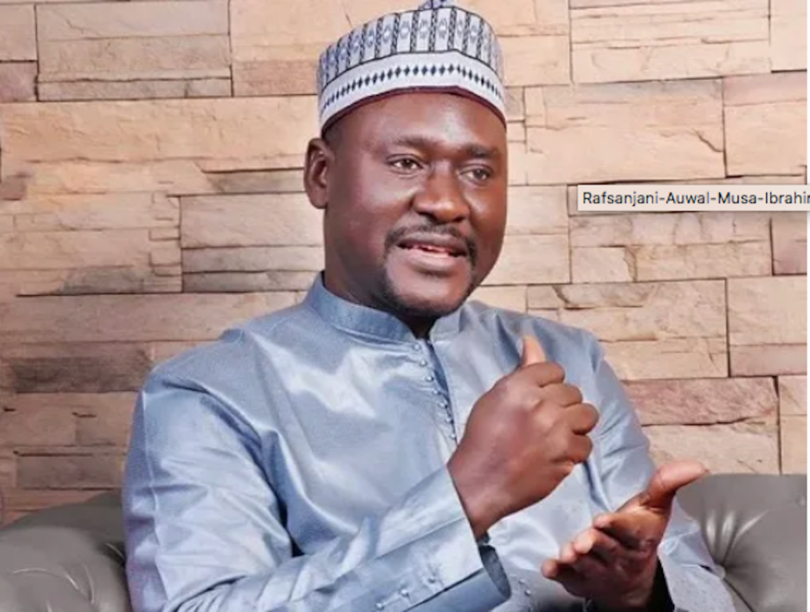
According to Comrade Auwal Musa Rafsanjani, Executive Director of CISLAC, the country’s deteriorating security situation persists despite trillions of naira allocated annually to defence and security operations.
In a statement signed by Rafsanjani, the organisation expressed concern that the insecurity has expanded to the point where even retired senior military officers are no longer safe.
”The death of a retired Major General in captivity is not only a personal tragedy but a national one that reflects the alarming state of insecurity in the country. If a decorated military officer who dedicated his life to defending Nigeria can fall victim to bandits, then ordinary Nigerians face even greater risk,” Rafsanjani said.
He noted that Nigeria has continued to lose military officers, security personnel, traditional rulers, community leaders and ordinary citizens to criminal groups, raising questions about the effectiveness of the nation’s security architecture.
According to him, the situation reflects a collective failure by the political class to adequately address the country’s security challenges.
”We have reached a stage where even those who once occupied strategic positions in government and security institutions are no longer safe after leaving office. This should concern every political leader because insecurity does not discriminate,” he stated.
Rafsanjani also lamented the rising wave of kidnappings, particularly abductions involving schoolchildren and attacks on rural communities, warning that the trend is eroding public confidence and discouraging school attendance in affected areas.
He cited an April 2026 report by Amnesty International indicating that at least 1,100 people were abducted between January and April 2026 in northern Nigeria, especially in rural communities and internally displaced persons’ camps.
The CISLAC Executive Director recalled that President Bola Ahmed Tinubu, in his Democracy Day address, disclosed that the Federal Government allocated N5.41 trillion to defence and security in the 2026 budget.
However, he argued that despite unprecedented spending on security, Nigerians continue to face daily threats from kidnappers, bandits and terrorists.
”The Federal Government must urgently address the horrifying spate of abductions and violent attacks targeting innocent Nigerians. The situation has reached an unacceptable level and requires immediate, coordinated and decisive action,” he said.
Rafsanjani criticised comments attributed to the Minister of State for Defence, Bello Mohammed Matawalle, that only God can ultimately end insecurity in Nigeria.
”Nigerians did not appoint Ministers of Defence to tell them that only God can solve insecurity. They were appointed to develop strategies, mobilise resources, strengthen security institutions and deliver results. Leadership requires action, not excuses,” Rafsanjani said.
He also questioned explanations by Defence Minister, General Christopher Musa (retd.), linking procurement challenges to global conflicts.
”Criminal groups operating across Nigeria do not appear to be suffering from shortages of weapons. Nigerians deserve answers about how terrorists, bandits and kidnappers continue to access arms while citizens are told that procurement challenges are responsible for the failure to defeat insecurity,” he stated.
Rafsanjani called for an independent audit of defence expenditure and security votes at federal and state levels, stressing the need for transparency and accountability in security spending.
He also faulted the National Assembly for inadequate oversight of security allocations, arguing that rising budgets without corresponding improvements in safety raise serious accountability concerns.
The CISLAC Executive Director further advocated stronger intelligence gathering, improved inter-agency coordination, enhanced welfare for security personnel and comprehensive security sector reforms.
According to Rafsanjani, sustainable peace can only be achieved through transparency, intelligence-led operations, community engagement and political will.
What do you think about this?
Drop your opinion in the comment section.
FOLLOW US & Share this with someone who needs to see this.