
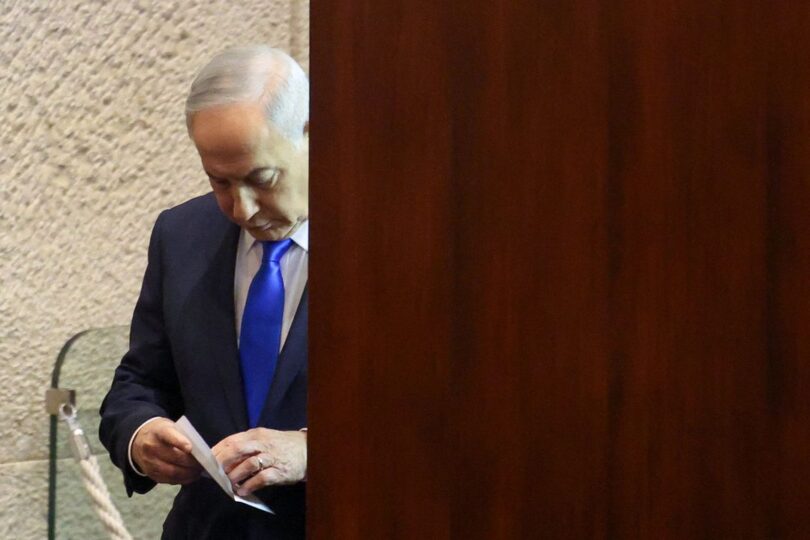
Israel will hold national elections on October 27, the last date allowed by law, its parliament has said, with the vote widely seen as a referendum on Prime Minister Benjamin Netanyahu’s policy, particularly accounting for the Gaza genocide and multiple wars in the Middle East.
The Knesset is set to end its current term on July 17, allowing the ruling coalition to complete a full four-year term for the first time in decades.
“Since the current Knesset is expected to serve its full term and the next general election is already set by law for October 27, with no intention of shortening the legislature’s tenure, there is no need to enact a Knesset Dissolution Law in the usual sense,” the parliament said in a statement on Sunday.
Netanyahu, 76, is already the country’s longest-serving prime minister, having served multiple, non-consecutive terms, and has declared his intention to run again.
He has said he “intends to win” the election.
But recent polls show that a majority of Israelis want him out of office, with former military chief Gadi Eisenkot emerging as his main rival.
A recent poll by the Hebrew University of Jerusalem found that more than 92 percent of Israelis believe Iran had won the Middle East war, while support for Netanyahu’s premiership fell from 40.5 percent in early March to 29.4 percent in June.
Public opinion has also turned critical of the ceasefire that halted the war Israel and the US launched against Iran in late February, which led to a deal between Tehran and Washington that many view as unfavourable to Israel.
Anger also lingers over the multiple security failures.