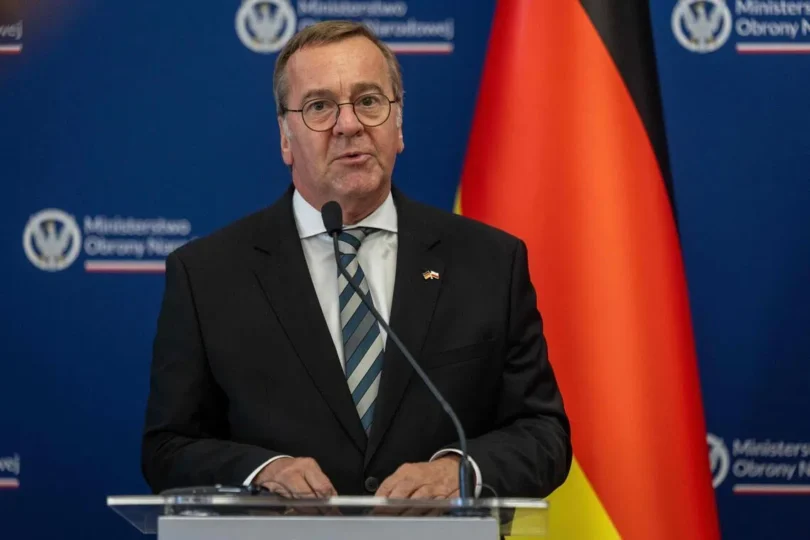
BRUSSELS – German Defence Minister Boris Pistorius called on the US to better coordinate plans for a reduction of military capabilities in Europe to prevent the continent from being left exposed in an event of an armed conflict.
Speaking at NATO headquarters in Brussels on June 18, Pistorius said it was “always foreseeable” that Washington was going to shift its priorities to Indo-China and European allies are ready to take on more responsibility for their own conventional deterrence and defence.
“The crucial question now is the roadmap for synchronising the individual steps,” he told reporters before the meeting of NATO defence ministers that will be attended by US Defence Secretary Pete Hegseth.
“The decision on who will take over which tasks from the Americans, should it come to that, has not yet been made,” Pistorius said.
“But one thing is clear: we must coordinate these responsibilities; we must synchronise them to prevent dangerous capability gaps from emerging in Europe in the conventional domain.”
The administration of US President Donald Trump is planning to slash the military assets the Pentagon would send to defend the European continent in case of an attack, raising questions about how NATO might replace those capabilities.
The cuts could include a 30 per cent reduction in available strategic bombers, which European nations don’t have, a complete loss of reconnaissance and attack drones, a 50 per cent decline in naval vessels and a 33 per cent decrease in fighter jets, Bloomberg reported last week.
Pistorius warned that European allies needed some time to replace certain capabilities.
“We can take on what is being compensated for, but not everything immediately – for example, when we’re talking about deep strike capabilities or other areas,” he said. “So we need a roadmap.”
Hegseth’s push to have allies pay more for their own defence is part of a broader administration effort to shift the costs of protecting Europe and supporting Ukraine onto NATO allies while seeking to reinvest in the US defense industrial base.
As part of those efforts, Europeans agreed to foot the bill for US weapons and ammunition deliveries to Ukraine.
Pistorius said Germany would participate in the fourth so-called PURL package by paying US$200 million (S$257.63 million) for US air defence ammunition for Ukraine.
It will also provide additional US$200 million in another programme to help Ukraine purchase guided missiles for the US-made Patriot air defence system. BLOOMBERG