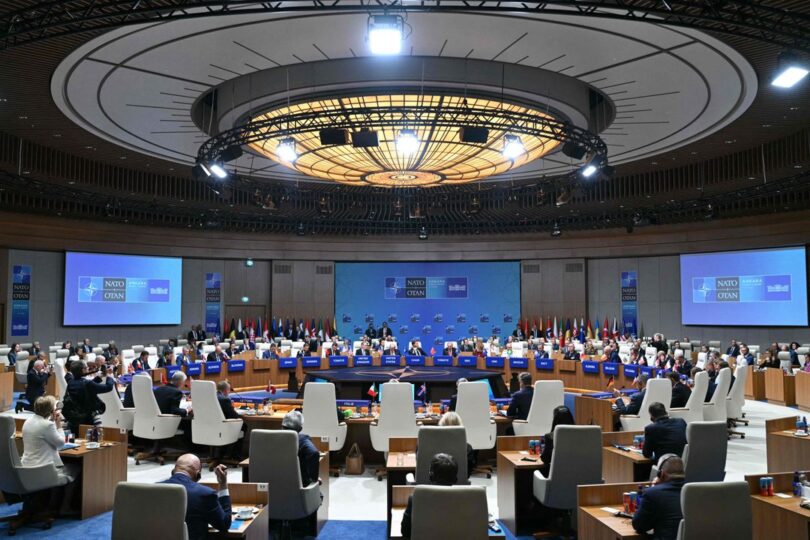
NATO’s commitment to spend more on defence dominated headlines at this year’s summit in Ankara. But beneath the debate over budgets, military hardware and burden-sharing, experts say the alliance is undergoing a more profound transformation — one that could redefine how it approaches security in the decades ahead.
The concept, increasingly referred to by analysts as “NATO 3.0,” reflects a shift from an alliance built primarily around collective military defence towards one focused on technological resilience, industrial capacity and emerging domains such as artificial intelligence, cyber security and cognitive warfare.
While the term does not yet form part of NATO’s official doctrine, it featured prominently in discussions among researchers and security experts attending the ‘NATO Allies in Ankara’ forum held alongside the summit.
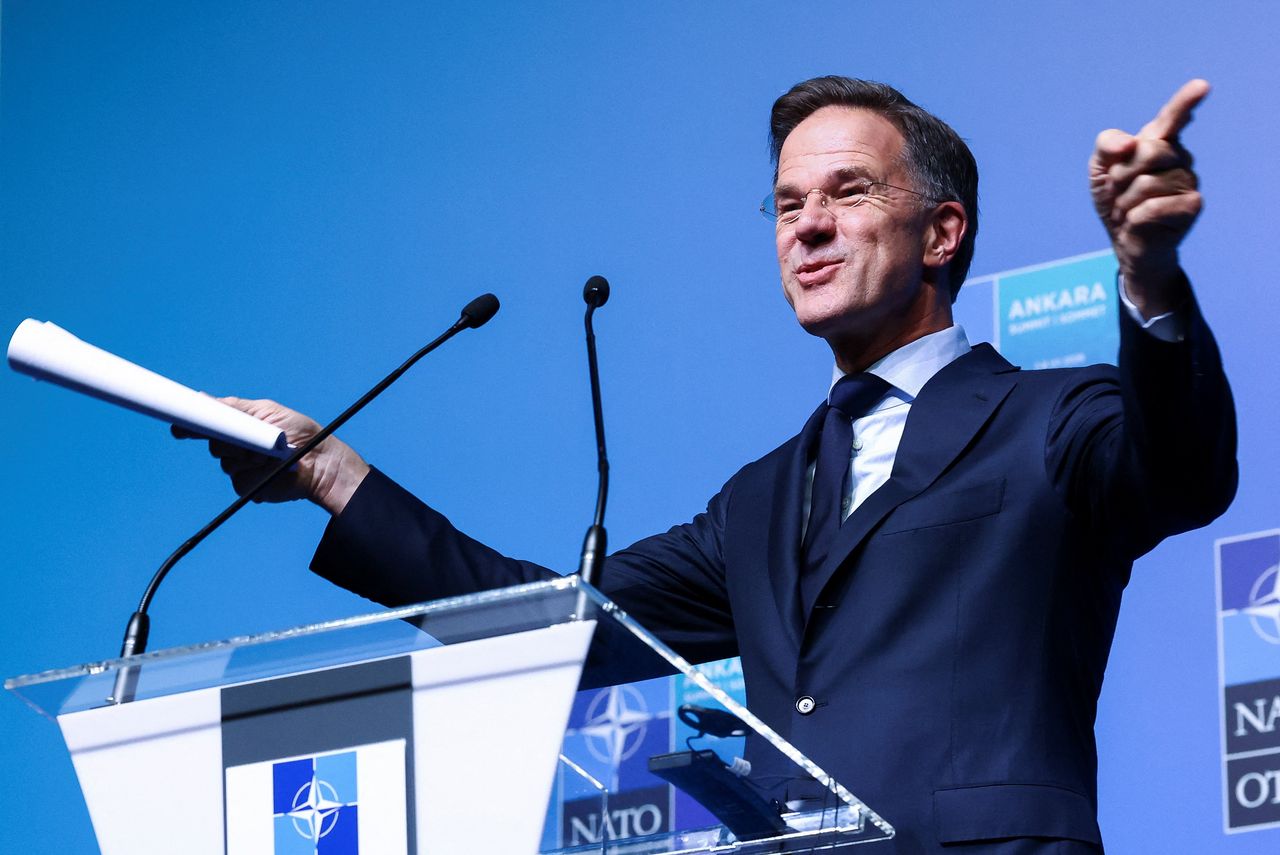
Even Turkish President Recep Tayyip Erdogan used the term in his opening address at the summit. “In order for the ‘NATO 3.0’ vision to achieve its goals, allies must end the restrictions they impose on each other,” he said.
Related
A changing alliance
Kadir Temiz, president of the Center for Middle Eastern Studies (ORSAM), said NATO’s next phase must be understood in the context of an increasingly complex security environment.
“Everybody is discussing NATO 3.0,” he told TRT World. “The mainstream idea is to rebuild NATO from this perspective.”
For Temiz, the first pillar of NATO 3.0 is renewed collective action built around a more balanced sharing of responsibilities among allies.
“The first important issue in NATO 3.0 is collective action through new dimensions, including the European burden-sharing perspective,” he said.
The second is adapting to an expanding list of security challenges that now stretch well beyond Russia’s war in Ukraine.
“The Middle East, the Balkans, Central Asia, the Russia-Ukraine war — they are all combining into a collective challenge for NATO members,” Temiz said.
According to him, discussions in Ankara reflected growing optimism that the alliance is beginning to rethink its long-term strategic posture.
Related
Beyond tanks and missiles
Erman Akilli, professor of international relations at Ankara Haci Bayram Veli University, said NATO’s transformation is being driven as much by technological disruption as by geopolitics.
“The battlefield is changing,” he said. “It is not all about physical force anymore. Algorithms, data and computing power are directly affecting the battlefield.”
Akilli pointed to recent conflicts, including the war involving Iran, where US officials highlighted the growing use of non-kinetic capabilities alongside conventional military operations.
He argued that artificial intelligence, quantum technologies and advanced computing are becoming as strategically important as traditional military platforms.
“When we talk about AI and cutting-edge technologies, we often think they belong to the future. No — they are already here,” he said. “We are already living in a cognitive environment.”
Related
From collective security to collective resilience
Akilli believes the alliance’s founding principle of collective defence under Article 5 remains essential — but no longer sufficient.
“NATO has been built on collective security,” he said. “But it must transform into collective resilience.”
In his view, future security will increasingly depend on member states’ ability to protect their digital infrastructure, technological supply chains, and data sovereignty.
“If a state cannot control its citizens’ data, lacks algorithmic authority, computing power or the ability to produce semiconductors and chips, it becomes vulnerable to systemic shocks,” he warned.