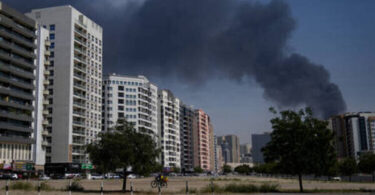
New Delhi [India], May 15 (ANI): Russian Foreign Minister Sergey Lavrov on Thursday issued a stark remark on the ongoing maritime crisis in the Gulf region due to conflict between Iran and US-Israeli coalition forces and the border concern over the blockade in the strategic Strait of Hormuz, noting that the ‘unprovoked aggression’ by Washington and Tel Aviv on February 28 led to such a situation, while stating that Iran was not responsible for it.
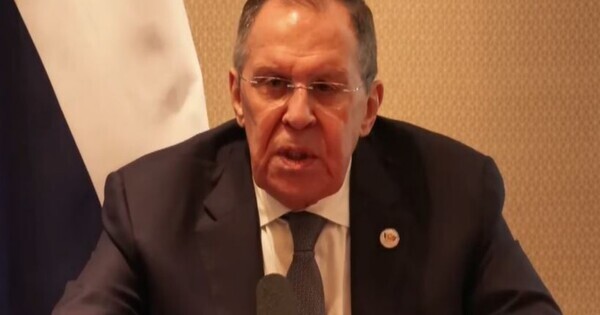
Speaking at a press conference in India after the BRICS Foreign Affairs Meeting, Lavrov said safe navigation in the Strait of Hormuz had already been ensured before US-Israeli forces attacked Iran, asserting that Tehran was not responsible for creating the current state of instability in the Persian Gulf region.
‘We need to understand the root causes of every conflict, and we understand what the root cause is here: unprovoked aggression by the US and Israel against Iran. And now everyone is calling on Iran and everyone else with this demand to open up the Strait of Hormuz. I would like to remind you that before February 28th, before the start of this aggression, there was no problem, no problem with the Strait of Hormuz. The navigation was ensured, safe navigation was ensured 100 per cent. So when this aggression against Iran was launched, the goal was clear, it was declared–to put an end to the period of history where allegedly Iran instilled fear and terror into its neighbouring countries,’ Lavrov said.
‘But Iran is not the country that blocked the Strait of Hormuz. Iran was not the country that created this problem in relation to the other neighbouring countries in relation to the Persian Gulf states,’ he added.
The Russian Foreign Minister also highlighted Moscow’s longstanding proposal for a regional security framework in the Persian Gulf involving Iran, Arab monarchies, the League of Arab States, and the five permanent members of the UN Security Council.
‘Because when the Arab countries and Iran were hostile towards each other, it was not normal; it was only damaging the people of their countries,’ Lavrov said, noting that Russia had for years promoted dialogue and regional cooperation to reduce tensions.
He further said China had also proposed similar initiatives and claimed that Tehran had supported such efforts.
Lavrov stressed that the immediate priority was ending the ongoing conflict and ensuring that the ceasefire evolves into a lasting settlement.
‘Currently, the most important thing is to put an end to this war to ensure that this ceasefire is turned into a final deal on ceasing any hostilities,’ he said.
On the broader regional framework, Lavrov said BRICS as a grouping may not directly mediate such negotiations, but individual member countries could play constructive roles in ensuring stability and uninterrupted navigation in the Strait of Hormuz.
He stated that India could serve as a potential mediator in the conflict involving Iran and the US, emphasising New Delhi’s ‘vast diplomatic experience and international standing’.
Lavrov referred to Pakistan’s role in facilitating dialogue between Iran and the United States on immediate issues, while stressing that India would play a vital role in the broader diplomatic engagement to prevent long-term instability in the region.
‘Pakistan is helping establish dialogues between the US and Iran to resolve urgent problems. If they seek a long-term mediator between Iran and its Arab friends, this role could be played by India, considering its vast diplomatic experience,’ he said.
Lavrov’s remarks after a meeting of the BRICS Foreign Ministers came at a time when Prime Minister Narendra Modi was in the UAE.
The Russian diplomat’s visit coincides with heightened global anxiety over the Iran conflict and the impending expiry of US sanctions waivers on Russian and Iranian oil.
At the press briefing, Lavrov further said that India, as the current BRICS chair and a major energy consumer with direct interests in regional stability, could help bring key stakeholders together for dialogue. (ANI)