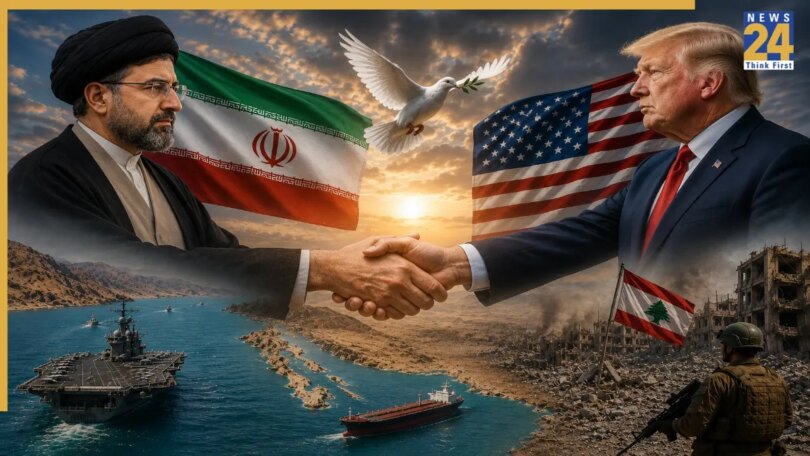
A major breakthrough has reportedly been reached between Iran and the United States. According to reports, both countries have agreed on the draft of a peace deal aimed at ending months of conflict and reducing tensions across the Middle East. The agreement is expected to be formally signed in Geneva, Switzerland, on Friday. If implemented successfully, it could lead to the reopening of the Strait of Hormuz, one of the world’s most important energy routes.
The development has raised hopes of stability in global oil and gas supplies and could bring relief to countries facing rising fuel costs.
Why Strait of Hormuz is so important?
The Strait of Hormuz is a narrow waterway through which a large portion of the world’s oil and gas exports pass. It is often described as a vital energy corridor for the global economy.
Due to the conflict involving Iran, shipping traffic through the strait was severely disrupted. This created concerns about shortages of LPG, petrol and diesel in many countries, including India. Some nations even considered emergency measures because of fears over fuel supplies. If the route reopens, energy shipments could return to normal, easing pressure on international markets.
About Iran-US Peace Deal
The proposed agreement contains several important commitments from both sides. According to reports, a ceasefire will be introduced, and military operations will be halted. The deal is designed to bring an immediate and lasting end to hostilities between Iran and the United States.
The agreement also covers wider regional issues, including conflicts linked to Lebanon, which had been one of the most difficult subjects during negotiations.
Who Helped Arrange the Agreement?
Pakistan is reported to have played a mediating role in the peace process. Pakistani Prime Minister Shehbaz Sharif announced that negotiations had resulted in a breakthrough between the two sides. Diplomatic efforts reportedly helped bring Iran and the United States closer to an agreement after a long period of tension.
What Has Donald Trump Said About the Deal?
US President Donald Trump said that the agreement with Iran is ready and awaiting formal signing. In a social media post, he stated that the Strait of Hormuz would reopen from Friday and that the United States would remove restrictions that had affected Iranian ports.
His announcement was welcomed by financial markets, which viewed the development as a positive step towards regional stability.
How Have Global Oil Markets Reacted?
International oil markets responded positively to news of the proposed agreement. Brent crude oil prices reportedly fell by around 4%, while US West Texas Intermediate (WTI) crude dropped by more than 4.6%.
The decline in oil prices reflects expectations that energy supplies will improve once shipping through the Strait of Hormuz returns to normal. Lower oil prices could also help reduce inflationary pressures around the world.
What Will Happen During the 60-Day Ceasefire?
Iranian Deputy Foreign Minister Kazem Gharibabadi said that a broader agreement would be negotiated during a 60-day ceasefire period.
Talks are expected to focus on several sensitive issues, including:
- Relief from international sanctions on Iran
- Economic cooperation between the two countries
- The future of Iran’s nuclear programme
Temporary arrangements will remain in place while negotiators work towards a long-term settlement.
Will Iran Receive Access to Frozen Assets?
One of the most significant parts of the draft agreement concerns Iranian funds held abroad. According to reports, the United States could release around $25 billion in Iranian assets that have been frozen.
In return, Iran would reportedly commit not to develop nuclear weapons and would avoid expanding its uranium enrichment activities. However, differences remain over the future of Iran’s nuclear programme, and further negotiations will be required.
Has Regional Tension Completely Ended?
Despite the positive announcement, tensions in the region have not disappeared. An Israeli strike in Lebanon on Sunday raised new concerns about the future of the peace process. Iran blamed both Israel and the United States for the incident and warned that it could respond strongly.
President Trump also reportedly criticised the attack, describing it as inappropriate at a time when peace efforts are under way.
Will Israel Stop Military Operations in Lebanon?
According to reports linked to the draft agreement, Israel may be expected to halt military operations in Lebanon. However, Israel is not a formal signatory to the Iran-US peace deal.
Differences have reportedly emerged between Israeli Prime Minister Benjamin Netanyahu and President Trump over military actions in Lebanon. Israel maintains that it must retain the freedom to act whenever it believes its national security is at risk.
Is the Agreement Facing Political Opposition?
The proposed deal has triggered political debate in both countries. In the United States, rising fuel prices had increased pressure on the government to find a solution to the crisis.
In Iran, some hardline groups oppose the agreement, arguing that it gives too much away to the United States. Demonstrations have reportedly taken place in several cities, and Foreign Minister Abbas Araghchi has faced criticism from opponents of the deal.
What Are the 10 Key Takeaways From the Peace Deal?
- Iran and the United States have agreed on a draft peace deal.
- The agreement is expected to be formally signed in Geneva.
- Pakistan reportedly played a mediating role in negotiations.
- A ceasefire and halt to military operations are planned.
- The Strait of Hormuz could reopen.
- US restrictions on Iranian ports may be lifted.
- Global oil prices have already fallen on the news.
- A 60-day period of further negotiations is planned.
- Iran could gain access to around USD 25 billion in frozen assets.
- Political opposition and regional security concerns remain unresolved.
What Could This Mean for the World?
If the agreement is successfully implemented, it could reduce tensions across the Middle East, restore stability to global energy markets and lower fuel prices worldwide. However, significant challenges remain. Disagreements over Iran’s nuclear programme, Israel’s security concerns and domestic political opposition in both countries could still affect the future of the peace process.
First published on: Jun 15, 2026 08:11 AM IST
Get Breaking News First and Latest Updates from India and around the world on News24. Follow News24 on Facebook, Twitter.
End of Article
Related Story