As many members of Türkiye’s traditionally nomadic Yoruk community left the Taurus Mountains for urban life, Osman Kirca chose to stay.
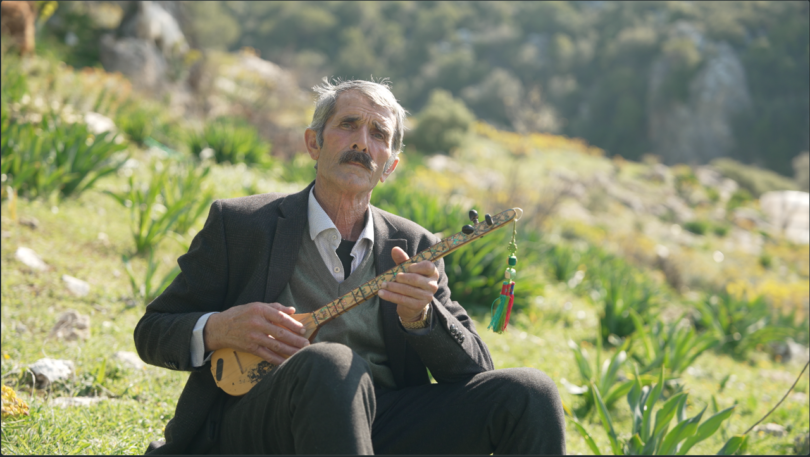
In Cavdır Village in Antalya’s Kas district, the 65-year-old musician has spent decades preserving the traditions, music and memory of the nomadic Yoruk people through the three-stringed baglama, an instrument deeply rooted in the community’s migratory past.
“How could anyone leave their ancestral home? I’m glad I never have,” he tells TRT World.
Having lost his mother at the age of six and grown up an orphan, Kirca spent his childhood herding sheep and goats and travelling with camel caravans during seasonal migrations to the highlands. Preferring a life close to nature over city life.
“I could never leave this place. I stayed so I wouldn’t forget the old migrations, the camels, the herds, or my ancestors,” he says.
The Yoruks’ nomadic way of life shaped not only their customs but also their music. Instruments had to be light enough for families to carry as they moved seasonally between the lowlands and highlands.
As a result, the kaval, sipsi, kemane and, above all, the three-stringed baglama became central to daily life.
“When shepherds moved up to the highlands, came down in winter, or when the rain stopped and the sun came out, they would feel joyful and play the three-stringed baglama.”
His father, a wrestler and baglama player, treated it with great care at a time when replacement strings were scarce and could take months to arrive by sea. In 1973, at the age of 17, Kirca began learning from master musician Halil Kocabiyik.
“In time, I started playing even better than him. He later passed away. As the saying goes, ‘The apprentice surpasses the master.’” Today, he is one of the foremost living practitioners of the instrument.”
The culture Kirca preserves in the Taurus Mountains is also documented and safeguarded at the Antalya Ethnography Museum, where regional instruments such as the baglama, kabak kemane, kemençe, drum, kaval, zurna, sipsi, and whistle are on display.
Academic studies have long documented the nomadic traditions Kirca continues to embody today.