DUBAI, July 8 – Control over the Strait of Hormuz has become a “golden weapon” to Iran, for which it is willing to risk new escalations with the United States, and is a bigger priority than a nuclear programme for which it accepted decades of sanctions.
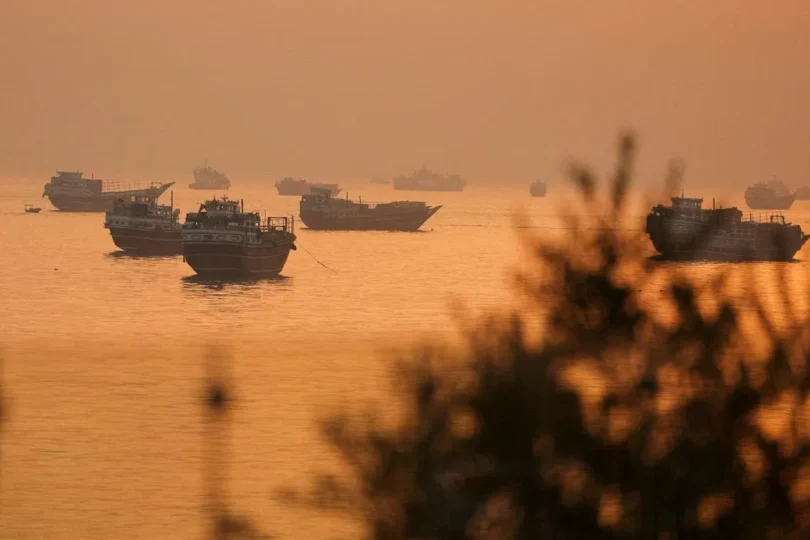
So central is the issue to Iranian strategy that ships passing the Strait without Tehran’s approval were fired upon this week, leading to an exchange of fire with the United States that threatens last month’s interim peace deal.
Iranian leaders, who had demurred for years from choking off the fifth of global energy supplies passing through Hormuz, now see it as their strongest card in a host of disputes with the West, and the reason Washington ended the war.
“Recognise the new Iranian order in the Strait of Hormuz: this is the only way forward,” wrote Ebrahim Azizi, a member of the Iranian parliament’s national security and foreign policy committee on social media, addressing the United States.
While their insistence on maintaining control over the waterway risks becoming another long-term dispute with the rest of the world, there is little disagreement over the policy in Tehran, two senior Iranian sources told Reuters.
There had been discussions about whether Iran risked overplaying its hand, but the overall view in top circles was that no rational country could give up such an important leverage point, one of the sources said.
“The issue of Hormuz, which is Iran’s golden weapon, is something they now want to take away from Iran, and that will be absolutely impossible,” the source added.
While last month’s interim deal to end the conflict, signed by U.S. President Donald Trump, opened the strait to more traffic, the wording was left vague on the waterway’s ultimate fate.
The memorandum of understanding says Iran “will make arrangements using its best efforts for the safe passage of commercial vessels with no charge for 60 days only”.
Iranian negotiators interpret that sentence as U.S. recognition of the Islamic Republic’s right to manage the waterway, albeit without charging fees or tolls for two months.
The United States – and Gulf states – reject that interpretation, regarding the language as meaning only that Iran should facilitate safe passage for vessels, and not impose restrictions backed up by force.
HORMUZ PRIORITISED OVER NUCLEAR ISSUE
One cause of Iran’s stance is distrust of the United States aggravated by Trump’s 2018 decision to tear up an existing nuclear deal, his return to war this year after having agreed a ceasefire last summer, and by his unannounced launch of the war during a process of diplomatic negotiations.
If Iran backed down on Hormuz, one of the senior sources said, Trump would only intensify his demands in other areas including the nuclear file and Iran’s stock of conventional missiles, saying such a move “means surrender and this is not possible”.
While Iran had warned for years it could close the strait, saying once that to do so would be “as easy as drinking a glass of water”, senior officials had also said privately that they were reluctant to do so and viewed it as a weapon of last resort.
The reason for their hesitation was the danger of increasing their international isolation with a move that would anger both Gulf neighbours and global energy consumers, and ultimately hit their own economy.
But when the United States and Israel attacked on February 28, killing Iran’s supreme leader and other top officials, Iranian officials felt they had nothing left to lose. They closed the strait to all traffic apart from their own, causing the biggest disruption to global energy supplies in history.
After hesitating over the impact on oil prices, Washington added its own blockade of Iranian ports in April.
Eventually the costs of the blockade of Hormuz grew so high that both sides agreed the deal. But having forced the U.S. to come to the negotiating table by having closed the strait once, Iran now believes it must formalise that ability.
“Both sides were having anxieties about the immediate economic problems they were facing. But both sides also think they’ve won. So there’s this view that they just need to push a bit further to get what they want,” said Ali Ansari, modern history professor at St Andrews University in Scotland.
Iran is far more focused now on Hormuz than the nuclear issue – where it also believes that Washington has accepted its right to uranium enrichment and the dilution of its existing highly enriched uranium stocks domestically.
The nuclear issue had been the biggest source of dispute between Iran and the United States for nearly 25 years, the cause of major international sanctions on Iran, and the primary stated reason for Trump’s war.
However, negotiations on Iran’s nuclear programme were relegated to further discussions in the interim agreement to end the war.
Iran has refused to even begin talks on the nuclear issue until the United States accepts its full management of the Strait of Hormuz, the senior Iranian sources told Reuters. REUTERS