The members of the Butchers Association of Nigeria say Governor Uba Sani’s investment in modern abattoir facilities transformed meat preservation, processing and marketing in Kaduna State.
The association said the installation of modern cold-chain infrastructure in abattoirs across the state’s three senatorial districts has improved food safety and hygiene, reduced post-slaughter losses and significantly increased butchers’ earnings.
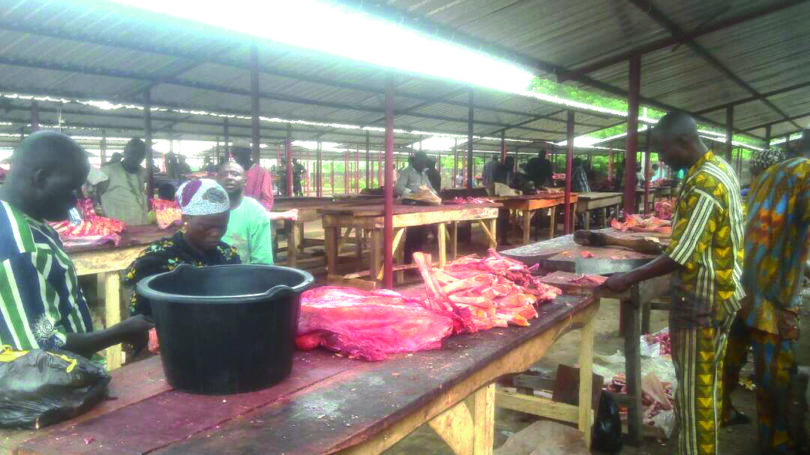
The commendation was made during a media tour of the upgraded Zango Shanu Modern Abattoir in Sabon Gari Local Government Area of Kaduna State on Monday, June 29, 2026.
The tour was facilitated by the Kaduna State Commissioner for Information and Culture, Ahmed Maiyaki, as journalists inspected projects executed by the state government in Zone One.
Speaking on behalf of the Sabon Gari Branch of the Butchers Association of Nigeria, Alkasim Mai-Nama recalled that the absence of storage facilities in the past forced butchers to dispose of unsold meat, leading to substantial financial losses.
“Before now, if meat remained unsold, we had no option but to throw it away because there was nowhere to preserve it. Today, with the cold rooms provided by Governor Uba Sani’s administration, we can safely store meat for later sale. This has drastically reduced wastage, improved hygiene and increased our daily income,” he said.
Mai-Nama added that the improved sanitary conditions at the abattoir have boosted public confidence in the safety and quality of meat processed at the facility.
Also speaking, the Vice Chairman of the Butchers Association of Nigeria, Sabon Gari Branch, Jamilu Umar, described the intervention as the most comprehensive rehabilitation of the abattoir since it was established in the early 1980s.
Umar said: “For more than three decades, we operated under very difficult conditions. There were no functional drainage systems to evacuate blood, water supply was poor, and there were no cold rooms for preservation.
“What we have today is a complete transformation that has restored dignity to our work and improved public health standards.”
The Sarkin Fawan Badawa, Musa Dalhat Abubakar, said the construction of a perimeter fence has enhanced security and protected the investments of butchers and livestock traders.
NBC commissions three new production lines, reaffirms $1bn investment in Nigeria
“For over 30 years, the abattoir remained exposed to encroachment and theft because there was no fence. Today, our businesses are more secure, and the improved infrastructure has attracted butchers and livestock traders from neighbouring Katsina and Zamfara states, expanding commercial activities and boosting the local economy,” he said.
Earlier, the Kaduna State Commissioner for Agriculture, Murtala Dabo, said the Sani administration has prioritised investments across the livestock value chain to improve productivity, strengthen food security, and enhance livelihoods.
He disclosed that 19 pastoralist communities had been provided with pasture fields and solar-powered boreholes to reduce seasonal migration and minimise farmer-herder conflicts.
“By providing grazing support and water infrastructure, we are enabling pastoralists to remain in designated settlements, boosting meat and dairy production while promoting peaceful coexistence,” Dabo said.
The commissioner further revealed that the state government had constructed three modern abattoirs across Kaduna State’s three senatorial districts – Kawo (Kaduna North), Kafanchan (Jema’a), and Zango Shanu (Sabon Gari) – as well as 21 slaughterhouses across the state to strengthen the livestock value chain.
According to him, the facilities are equipped with modern cold-chain infrastructure, including cold rooms, deep freezers, display refrigerators, hygienic meat shops, solar-powered boreholes and water-heating systems to ensure safe meat processing, storage and distribution.
Dabo said the upgraded Zango Shanu Modern Abattoir reflects the Sani administration’s commitment to improving public health, strengthening food safety, reducing waste, increasing the incomes of livestock value chain operators, and positioning Kaduna State as a leading hub for livestock production and meat processing in Nigeria.