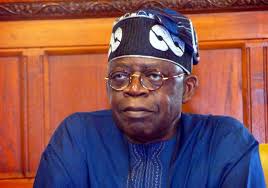
When Bola Tinubu declared that he does not lose sleep over criticism from Nigerians, many heard arrogance. Many heard indifference. Many heard the familiar echo of power speaking from a comfortable distance.
But perhaps – just perhaps – we misheard him. What if this was not arrogance but a confession? What if, in a rare moment of unscripted honesty, Bola Tinubu simply explained, in one sentence, why things are the way they are? If he did lose sleep over Nigerians’ criticism, the country would not look like this.
So:
If Tinubu lost sleep over Nigerians, a bag of rice would not feel like a luxury reserved for weddings and political rallies. It would not be priced like a controlled substance. It would not evoke the quiet despair that now accompanies a trip to the market.
If Tinubu lost sleep, a bag of onions would not feel like contraband – priced beyond reach, whispered about, rationed like hope itself.
If Tinubu lost sleep, fuel would not behave like a rare mineral – unpredictable, unaffordable, and perpetually out of reach. Transportation would not feel like a gamble between survival and insolvency.
If Tinubu lost sleep, diesel would not be treated as a luxury commodity in an oil-producing nation. Transportation would not be a daily negotiation between movement and money.
If Tinubu lost sleep, the naira would not be in a long-distance relationship with stability – constantly drifting, never faithful, always disappointing. It would not drift so casually against stronger currencies, as if stability were optional.
If Tinubu lost sleep, electricity would not be a rumor that visits briefly and then vanishes without apology. It would not flicker in and out like a shy guest at a party, and businesses would not budget for generators as a matter of survival.
If Tinubu lost sleep, hospitals would not feel like waiting rooms for fate. Medicines would not be scarce. Doctors would not be emigrating in waves, seeking out systems and societies that work.
If Tinubu lost sleep, insecurity would not be normalized. Headlines would not read like daily obituaries. Citizens would not whisper prayers before routine trips.
If Tinubu lost sleep, kidnapping would not evolve into a parallel industry and a shadow economy. Roads would not double as hunting grounds and corridors for abduction. Families would not calculate love in ransom or measure wealth in ransom potential.
If Tinubu lost sleep, banditry would not seem like an alternative system of authority with governance outsourced to men with guns. Entire regions would not live under the quiet understanding that the state is absent when it matters most. Entire communities would not negotiate their survival with criminals while the state negotiates its image.
If Tinubu lost sleep, terrorism would not linger like a stubborn shadow – retreating in headlines, advancing in reality – and hovering like a recurring nightmare that no one in power seems fully awake to confront. Nigerians would not have to pretend that “improvement” means merely surviving.
If Tinubu lost sleep, young girls would not be abducted from their schools as if education were an act of defiance and a crime scene. Classrooms would not be places where fear sits in the front row. Parents would not hesitate to choose literacy over safety.
If Tinubu lost sleep, roads would not resemble archaeological sites with evidence of abandonment – cracked, cratered, and dangerous. Travel would not feel like an endurance sport or obstacle courses designed by indifference
If Tinubu lost sleep, corruption would not be so normalized that it would feel less like a crime and more like a procedure and a national language spoken fluently across all levels of power. It would not be the silent tax that inflates every contract and deflates every hope.
If Tinubu lost sleep, embezzlement would not be mistaken for cleverness. Public office would not be mistaken for a private opportunity, and public funds would not vanish like magic tricks performed in broad daylight.
If Tinubu lost sleep, external borrowing would not pile up as deferred consequences. Debt would not become the inheritance of citizens and future generations who never approved of the present stealing, spending, and silence.
If Tinubu lost sleep, the economy would not feel like a collapsing stage where everyone is forced to keep performing despite the set falling. Inflation would not devour salaries before they are earned.
If Tinubu lost sleep, wages would not insult the idea of living. A full month’s work would not translate into survival for half a month. Labor would not feel like charity extended to the employer.
If Tinubu lost sleep, water would not be a daily uncertainty. Citizens would not wake up to dry taps and go to bed dreaming of boreholes, sachets, and ways to improvise for something so basic.
If Tinubu lost sleep, universities would not open and close like unreliable apps. The Academic Staff Union of Universities would not need strikes to be heard. Students would not measure time in lost semesters, as they age in waiting rooms called campuses.
If Tinubu lost sleep, young people would not treat leaving Nigeria as a plan A career goal. Migration would not be the most consistent national aspiration, because hope would not require a visa.
If Tinubu lost sleep, graduates would not become professional applicants – sending CVs into the void, refreshing inboxes that never respond.
If Tinubu lost sleep, insecurity would not be so normalized that survival stories sound like routine updates. Citizens would not adjust to fear the way one adjusts to weather.
If Tinubu lost sleep, governance would not feel distant, detached, or largely indifferent to the weight of ordinary lives. It would not feel like a spectator sport where people watch and leaders perform.
If Tinubu lost sleep, policies would not arrive like sudden storms – unexplained, unprepared for, detached from the lives they disrupt, and devastating in their impact.
If Tinubu lost sleep, Nigerians would not feel like critics shouting into a void. They would feel like participants in a shared national project.
If Tinubu only lost sleep… the list goes on.
But at some point, the list stops being a list. It becomes a pattern. The pattern is simple: nothing changes when nothing disturbs.
Sleep, in this context, is not rest. It is insulation. It is resistance to responsibility. It is the quiet buffer between decision and consequence. It is what allows policies to be announced without absorbing their impact and what allows leadership to continue without interruption. Sleep is the ability to remain untouched in a country where everything touches everyone else.
To lose sleep is to be affected. To be affected is to be unsettled. To be unsettled is to act. How should Nigerians act – and react? Outrage is understandable, human, and justified. But outrage alone is not a strategy.
Perhaps Tinubu’s statement should be treated not merely as an insult but as information – a rare, unguarded glimpse into how power perceives pressure. A leader who does not lose sleep over criticism is unlikely to change as a result. And that realization demands a harder question: If criticism cannot keep him awake… what can? Maybe the redistribution of sleeplessness.
For now, sleepless nights have been reassigned. They belong to the parents waiting for a kidnapped child. They belong to the commuter navigating broken roads. They belong to the worker stretching a non-living wage. They belong to the students who are paused mid-education by endless strikes. They belong to communities negotiating daily with fear. They belong to the millions who manage to survive in a system that does not pause for them.
Power, meanwhile, rests.
There is something almost clarifying about Bola Tinubu’s stupid statement. Not comforting – clarifying. It dispels illusion. It replaces speculation with certainty. It tells Nigerians, plainly, that their criticisms do not reach far enough to disturb the seat of power. And in that clarity lies a choice. A nation is shaped not only by what its leaders tolerate but by what its citizens insist upon.
If sleep remains undisturbed, something else must do the waking. Until then, one side of the country will continue to lie awake – counting costs, counting losses, counting days – while the other side sleeps soundly, untroubled by the quiet, subdued noise of mass poverty and anguish.
So, Bola Ahmed Tinubu spoke a rare truth in an unguarded moment: he does not lose sleep over the plight of ordinary Nigerians. If he ever did lose sleep – truly lose it – the above catalog of national woes and worries would shrink. Not overnight. Not magically. But measurably. Policies would carry urgency. Decisions would carry weight. Leadership would carry consequences. Until then, the insomnia remains democratically distributed – shared by millions who cannot afford the luxury of indifference.
Dr. Vitus Ozoke is a lawyer, human rights activist, and public affairs analyst based in the United States. He writes on politics, governance, and the moral costs of leadership failure in Africa.