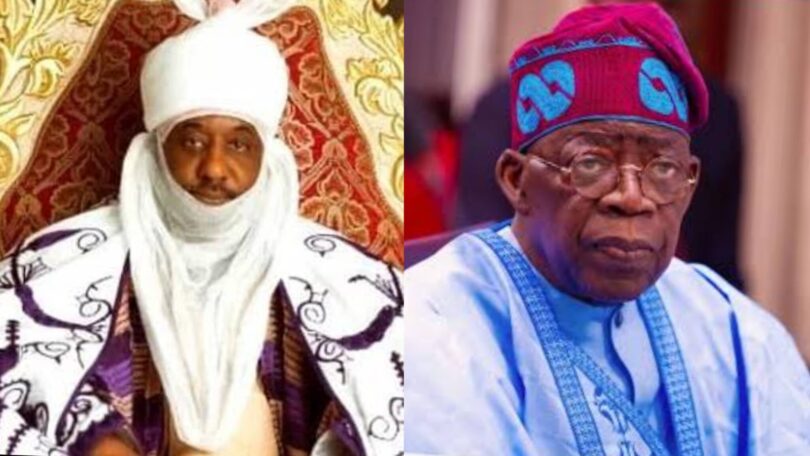
A former Central Bank of Nigeria Governor and Emir of Kano, Sanusi Lamido Sanusi, has reignited national debate on Nigeria’s fuel subsidy removal and foreign exchange reforms, following a viral video in which he reviewed the economic policies and their long-term implications.
In the widely circulated remarks, Sanusi defended key reforms while also questioning their timing and implementation strategy.
His comments come amid ongoing public discussions on rising living costs and currency instability.
He stated, “I have always said the subsidy regime was unsustainable. We cannot continue supporting foreign refineries. We’re an oil-producing country.”
He added that Nigeria’s past dependence on imported refined products while neglecting local refining capacity was economically damaging.
He noted a shift in the current structure, saying, “Today, we have a situation where we have our own domestic refinery. We’re not importing petroleum products. We’re even exporting to Europe, and this is very good for the economy.”
Criticism of economic distortions and policy timing
Sanusi also addressed the challenges of exchange rate management and monetary policy, warning against artificial controls that do not reflect market realities.
He said, “Artificial exchange rates, especially when you’re printing money, cannot work. There was going to be a devaluation.”
While supporting subsidy removal and exchange rate liberalisation, he stressed that timing and sequencing are critical to economic stability.
“For me, removing subsidy or liberalising exchange rates, these are good interventions. Were they done at the right time? Those are certain questions. Were there other things that should be done that have not been done? These are other issues.”
He further argued that policy decisions should be evaluated holistically rather than in isolation. According to him, reforms must be matched with supporting measures to prevent economic shocks.
Debt pressures and fiscal concerns
Sanusi highlighted Nigeria’s worsening debt profile as a major justification for reform. He explained that government finances had reached a critical point before subsidy removal.
“It’s not enough to say, oh, they removed subsidy. You had to. When you get to a point where 100% of your revenue goes into debt service, you cannot continue. Where is the money going to come from?”
However, he warned that removing subsidies and liberalising exchange rates without tightening monetary conditions could destabilise the economy.
“However, if you decide to remove subsidy and liberalise exchange rates in an environment of very loose monetary conditions, before you have tightened money supply, the Naira drops to a bottomless pit. That was a timing issue.”
Calls for fiscal discipline after reforms
The former central bank chief also raised concerns about continued government borrowing despite subsidy savings.
“Secondly, we’ve removed the subsidy. We’re not spending it. What we should not see is fiscal consolidation.”
He stressed the need for discipline in public finance management, warning against wasteful borrowing practices.
“You cannot remove wastages and continue borrowing. I’ve said this before. You need to see the benefits. If you’re not paying the subsidy and you’ve got the money, why are we still borrowing and borrowing? What are we borrowing for?”
Watch the video here…
“If you’re not paying subsidy and you have the money, why are we still borrowing? If the subsidy has ended, citizens should begin to see stronger public finances and practical benefits across the economy.”
— Sanusi Lamido Sanusi, Emir Of Kano State. pic.twitter.com/OEDEBO8cn5
— CHUKS 🍥 (@ChuksEricE) April 24, 2026