In the last few years, Nigeria’s freight and logistics market has exploded.
Every day, food, bags, shoes, clothes and countless other items ordered online move from vendors to consumers across cities and states.
Perhaps nowhere captures the scale of this transformation better than Lagos, the country’s commercial nerve centre where more than 20 million people live.
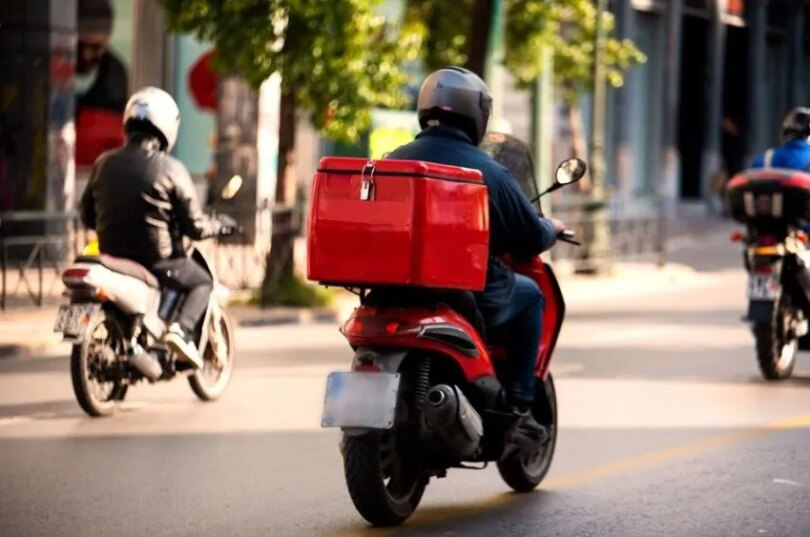
Stand at Oshodi Transport Interchange, Mile 2, Berger, or even at a random junction in Yaba or Lekki, and the movement becomes impossible to ignore. Riders on motorcycles weave through traffic. Others, drenched in sweat beneath the harsh afternoon sun, pedal bicycles carrying oversized delivery bags strapped to their backs.
According to industry estimates, Nigeria’s freight and logistics market is valued at more than $11 billion and is projected to exceed $15 billion by 2030, driven by e-commerce growth, smartphone penetration and rising demand for convenience in cities such as Lagos, Abuja and Port Harcourt.
But beneath the broader logistics boom lies an even faster-growing segment: online food delivery.
Glovo Nigeria, one of the country’s fastest-growing delivery platforms, said it delivered about 38 million items in 2025 alone.
Chowdeck, founded in October 2021, has grown into one of Nigeria’s most recognisable food delivery startups, recording more than 10 million deliveries and over 2.1 million users.
Those numbers translate into thousands of deliveries every hour across Lagos. They are made possible by an army of riders navigating flooded streets, crumbling roads and endless traffic, manoeuvring between danfo buses, trucks and impatient drivers to ensure meals arrive hot and on time.
Yet while they deliver convenience to millions of residents, many of these riders are themselves struggling with the rising cost of survival in one of Africa’s most expensive cities.
Naijaonpoint spoke with several riders across Lagos about what it truly costs to survive in the business of delivery. Their stories reveal a world of long hours, unstable earnings, fuel expenses, hire-purchase debts and the physical toll of navigating Lagos roads daily.
For many riders, earnings are unpredictable and depend heavily on the number of completed orders, distance covered, kind of vehicle used, and even weather conditions.
Henry, a Chowdeck bicycle rider in Lagos, said each delivery request appears instantly on riders’ phones, and whoever accepts first gets the order.
For bicycle riders like him, every delivery means physically pedalling through Lagos traffic — sometimes across long distances under intense heat.
Unlike motorcycle riders who can cover wider areas faster, bicycle riders are often forced to rely almost entirely on physical endurance.
Henry said riders are paid largely based on distance.
On some days, he said, he completes as many as 14 deliveries. On slower days, he manages six. But completing at least 10 orders unlocks a performance bonus of about N4,900.
Assuming an average of 10 orders daily, Henry could gross between N10,000 and N15,000 per day before expenses, translating to roughly N300,000 to N450,000 monthly if he works consistently.
But unlike salaried work, those earnings fluctuate sharply depending on demand, rider availability and personal stamina.
Daniel, who rides a motorcycle for Glovo, said bike riders generally earn more because they can move faster and take more orders across longer distances.
For highly active riders, weekly earnings can exceed N150,000, he said. But those figures come with steep operating costs.
Fuel expenses alone have become a major burden following the removal of petrol subsidies in 2023, and the recent hike in cost of petrol due to the conflict in the Middle East. Riders who spend the entire day on the road often refuel multiple times weekly, significantly cutting into earnings.
Then there is the cost of acquiring the motorcycle itself.
The pressure to keep working is therefore constant. Missing work for illness, fatigue or accidents can mean struggling to meet repayment obligations.
Behind the brightly coloured delivery boxes seen across Lagos lies a highly competitive ecosystem where riders are constantly racing not just against traffic, but against one another.
Both Glovo and Chowdeck operate largely through mobile applications that assign orders to riders in real time. Once an order appears, riders have only seconds to accept before another rider claims it.
Henry said Chowdeck riders can choose whether or not to accept certain deliveries, especially when distances are too long or traffic conditions are difficult. But declining too many orders may also reduce earning opportunities during busy periods.
Glovo, meanwhile, operates a slightly different onboarding structure.
Naijaonpoint reached out to Glovo to confirm whether they charge an onboarding fee but had not received a response at the time of publication.
Riders say onboarding fees often cover training, branded kits and registration processes. After signing up, riders are expected to own or source their own motorcycles, bicycles or tricycles.