By Firdausi Abubakar
For many women, the loss of a spouse is not only an emotional turning point but also the beginning of a new and often difficult reality marked by economic uncertainty, social expectations, and the responsibility of rebuilding life while carrying grief.
As the world marks the 2026 International Widows Day, widows have called for increased support, social inclusion, and economic empowerment to help them navigate life after losing their husbands and regain stability for themselves and their children.
Their experiences reveal that widowhood extends far beyond bereavement. For many women, it brings financial strain, emotional hardship, social isolation, and the challenge of assuming responsibilities they never imagined carrying alone.

Speaking with SolaceBase, two widows shared their personal journeys and reflected on the realities of life after loss.
For Nana Aisha Akiniran, widowhood is a life-changing experience that altered her world in ways she never expected.
She described the period after losing her husband as one of the most difficult phases of her life.
Read Also:2024 IWD: WOFAN, partners launch ambulance to promote inclusive access to healthcare in rural farming FCT communities
“I went through a lot, and I don’t even wish upon my enemy to loss her husband at a tender age,” she said.
But according to Aisha, the pain of widowhood does not end with losing a life partner.
She explained that beyond financial hardship, widows often face social stigma and subtle forms of exclusion that deepen their struggles.
According to her, some women are treated differently after losing their husbands and are sometimes judged based on circumstances beyond their control.
Aisha said widows deserve to be treated with dignity and respect rather than being excluded or looked down upon because of their status.
Despite the emotional burden and the pressure of raising a family alone, she said her children continue to inspire her to move forward and remain hopeful.
For many widows, becoming the sole caregiver and provider means adjusting to responsibilities that once belonged to two people.
Another widow, Rafiya Isa, said stronger support systems are needed to help widows regain financial independence and support their households.
Read Also:IWD: WOFAN empowers 54,000 women in agro- produce marketing across nine states with rice distribution initiative to boost family income
According to her, many widows are willing to work and become self-reliant but often lack access to opportunities that could help them rebuild.
“Many widows want to work and provide for their families, but they need opportunities and support. Skills acquisition programmes and financial assistance can go a long way in helping us rebuild our lives,” she said.
Her comments reflect a broader concern shared by widows who believe targeted interventions can make a significant difference in helping women move from dependency to economic stability.
Support advocates say empowerment initiatives such as vocational training, access to financing, mentorship programmes and social protection can reduce the vulnerability widows face after the death of a spouse.
They also argue that addressing widowhood requires more than charity—it requires creating an environment where women can access opportunities, participate fully in society and raise their families with dignity.
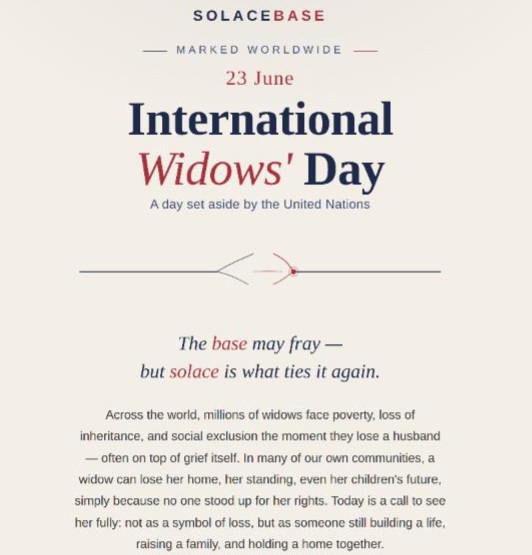
International Widows Day, observed annually on June 23, serves as a global reminder of the challenges widows continue to face and the need for sustained attention to their welfare and rights.
The day also highlights the importance of empathy, inclusive policies and practical interventions that can help widows rebuild their lives and secure better futures for their families.