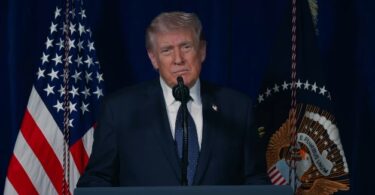
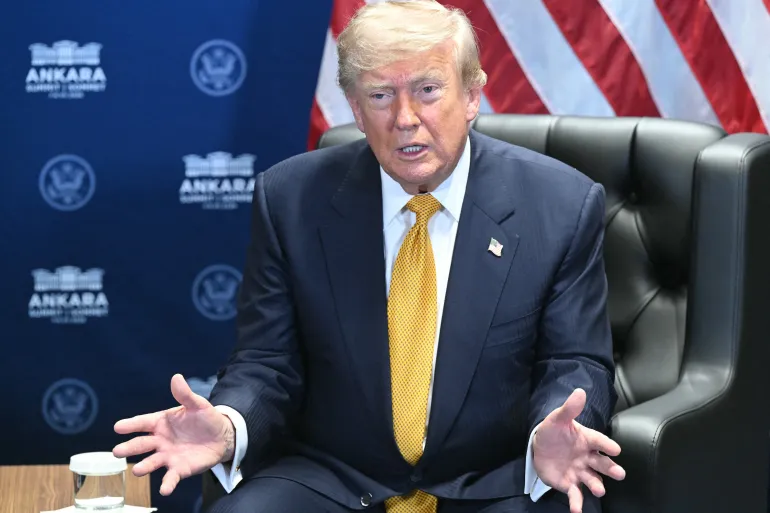

United States President Donald Trump said on Wednesday (Jul 8) that the memorandum of understanding signed with Iran to end the conflict was “over”, adding he didn’t want to engage with Tehran.
The interim ceasefire agreement signed between Washington and Tehran – under the mediation of Pakistan – was intended to provide a 60-day window for negotiations on a permanent agreement, but indirect talks in Qatar ended last week with no sign of headway.
“To me, I think it’s over. I don’t want to deal with them,” Trump said ahead of a NATO summit in the Turkish capital Ankara.
“They’re scum. They’re sick people. They’re led by sick people,” he added alongside NATO Secretary General Mark Rutte. “As far as I’m concerned, it’s just a waste of time dealing with them.”
The US had earlier unleashed new military strikes on Iran and revoked a licence allowing Iran to sell oil after three tankers were hit by projectiles in the Strait of Hormuz.
The US Central Command (CENTCOM) said more than 60 small boats of the Iran’s Islamic Revolutionary Guards Corp (IRGC) were among the targets hit, in a bid to impose a high cost on Iran for strikes on shipping in violation of the ceasefire.
The IRGC said it targeted US military sites in Bahrain and Kuwait in retaliation.
Iran’s top joint military command, Khatam al-Anbiya Central Headquarters, condemned the US strikes as a “blatant act of aggression”, threatened a “crushing response” and warned that Tehran would not allow US interference in the management of the strait.
Under the interim US-Iran agreement, the US Treasury issued a Jun 22 general license to allow the sale of crude oil and petrochemical and petroleum products of Iranian origin through Aug 21. In revoking that license on Tuesday, it gave Iran until Jul 17 to wind down any transactions.
Trump added that US representatives can continue negotiations but he cast doubt on the outcome. “They can talk, but I think they’re wasting their time,” he said.
World oil prices soared more than five per cent after Trump’s comments.
International benchmark Brent North Sea crude jumped 5.3 per cent to US$78.09 a barrel, while the main US contract, West Texas Intermediate, advanced 5.4 per cent to US$74.23 a barrel.
“The latest developments have effectively thrown the future of the 60-day negotiation process into doubt,” said Bjarne Schieldrop, chief commodities analyst at SEB.
“In my view, a price closer to US$80 a barrel is more consistent with current market fundamentals than US$70,” he added.