TheIran framework agreementgave an immediate boost to markets, with shares rising and oil prices dipping. But whether this translates into durable economic gains will largely depend on shipping in the Strait of Hormuz.
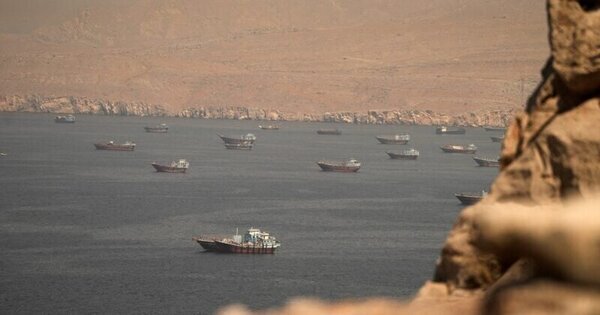
There were signs of traffic beginning to revive on June 18 in the hours immediately after the US and Iranian presidents signed a memorandum of understanding to end the war, according to Windward, a maritime intelligence company.
Speaking in an online briefing, Windward chief analyst Michelle Wiese Bockmann said 18 vessels had transited the strait between 6 p.m. on June 17 and 2 p.m. UTC on June 18, in what she described as “a sign of confidence in the agreement.”
SEE ALSO:
Oil Prices Fall, Dollar Steady As US-Iran Deal Eases Supply Concerns
Specifically, she said these were a French-flagged liquid natural gas (LNG) tanker, two Hong Kong-flagged tankers, an Italian-flagged vehicles carrier, a Japanese-controlled oil tanker, and some Saudi-flagged tankers.
Ten of the vessels were outbound, having been stuck in the Persian Gulf for 109 days owing to the war that began with US and Israeli air strikes on Iran on February 28.
Prior to the war, some 20 percent of the world’s oil supplies passed through the Strait of Hormuz, as well as large quantities of LNG, fertilizers, and other important products and commodities.
A ‘Trickle’ Of Ships
“It’s going to start as a trickle, but certainly this is a very good sign, an early sign that there is confidence for outbound transits,” Bockmann said.
“Transits averaged about seven vessels a day in the first two weeks of June until we had word of this agreement coming on [June 14]. And the total volume of transit so far in June already exceeds the 156 that we saw in May that we tracked. Certainly we see everything gathering force,” she added.
Ben Cahill, a nonresident senior fellow at the Atlantic Council’s Global Energy Center, indicated that this trickle needs to grow if the hope of an economic peace dividend is to be realized.
SEE ALSO:
Trump’s Iran Accord And The 2015 Nuclear Deal: What’s Different This Time?
“It’s all about tanker traffic. Agreements on paper don’t matter much unless they really get oil moving again through the Strait of Hormuz, because that’s what everyone will be monitoring — the number of tankers exiting the strait to carry oil, gas, and other products to market,” he told RFE/RL.
“But also, the entrance into the strait of tankers, because that’s when normal loading operations will resume and when upstream oil and gas production throughout the Middle East can resume as well. You have to keep an eye on the two-way tanker traffic,” he added.
This is a real test. Shipping companies must have confidence that if their vessels enter the Persian Gulf they will not get stuck there again by a renewed outbreak of hostilities. It’s key to restarting loading of oil tankers from Iraqi, Kuwaiti, and Saudi port facilities, and to get Qatari LNG moving.
Under the deal, Washington has also issued a waiver of sanctions on Iranian oil, giving a further potential economic boost.
Windward also tracked Iranian vessels moving through the strait, as well as Iranian-controlled LNG and oil tankers heading west from southeast Asia through the Malacca Straits — apparently confident of being able to load up in Iranian ports now that the US naval blockade of Iranian ports and waters has been lifted.
The First Test Is At Sea
But the bullish mood only lasts as long as the deal.
“There is an element of proof of concept in all of this,” Naysan Rafati, Iran senior analyst at the International Crisis Group, told RFE/RL.
“The first test is at sea. Does traffic in Hormuz start to creep up? Do the Iranians still try to harass or fire drones at vessels? Does the US allow Iranian ships to go through the cordon?” he added.
Other key tests of the viability of the strait include insurance premiums, the presence of sea mines, and the question of tolls.
The text of the US-Iranian memorandum says: “The traffic of commercial vessels will immediately start and considering the need for removing the technical and military obstacles and demining by the Islamic Republic of Iran, will be instated within 30 days.”
But at this stage, there are no details on when demining will begin and who will do it.
SEE ALSO:
US Officials Disclose Details Of Framework Deal With Iran
The deal also says Iran has agreed to toll-free transit through the Strait of Hormuz for 60 days, pending further talks with US negotiators.
Bockmann said the southern route through the strait is in Omani waters and that once this was demined the question of a toll became unimportant. Tehran has spoken of imposing “maritime service fees” in cooperation with Oman, but Bockmann said, “I really don’t think that’s going to fly.”
On insurance, she told RFE/RL that it was “too early to say” whether costs would start to come down.
“We do know that additional premiums, which are part of war risks for going into what’s called listed areas, are being recalculated daily. And they’re a percentage of hull value. And before the war, they were less than 1 percent of hull value. And then we saw it sorted between 3 percent and 5 percent, sometimes as high as 10 percent,” she said, adding that a return to lower premiums would be important for shipping to return to normal levels.