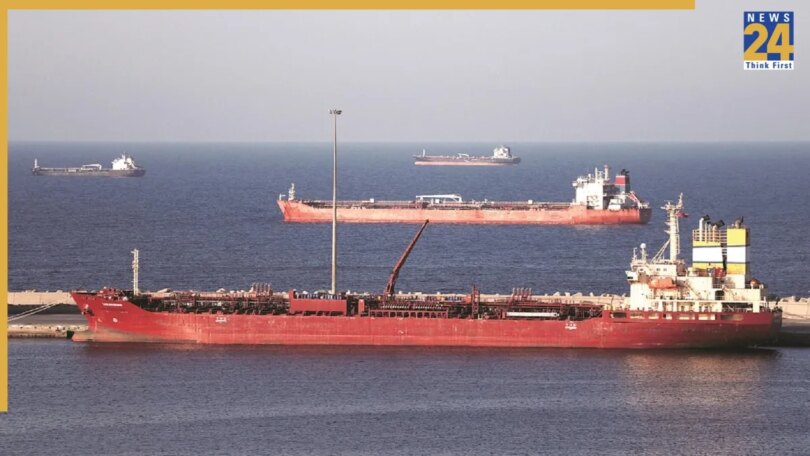
Amid the continuing US-Iran standoff over the Middle East conflict and restrictions in the Strait of Hormuz, Tehran has introduced a new regulatory framework for vessels seeking passage through the strategic waterway, according to a leading shipping journal.
The move comes as Washington pushes for an agreement to reopen the narrow maritime corridor, through which nearly one-fifth of the world’s oil supply typically passes.
Iran Introduces New Transit Authorisation Rules
“The Persian Gulf Strait Authority (PGSA) has already introduced a new framework requiring ships to obtain transit authorisation and pay tolls before sailing,” shipping industry journal Lloyd’s List reported.
According to the report, vessels seeking safe passage through the Strait of Hormuz must submit a “Vessel Information Declaration” form containing extensive operational and ownership details.
The journal said ships “are required to submit detailed records of ownership, insurance, crew details and intended transit route.”
The form reportedly contains more than 40 questions, including details such as the vessel’s name, identification number, previous names, country of origin and destination, nationalities of registered owners, operators and crew, along with cargo information.
Iranian broadcaster Press TV also reported on Tuesday that Tehran had established a “system to exercise sovereignty over the Strait of Hormuz” and that vessels were receiving “regulations” from the email address [email protected].
The PGSA has instructed ships to submit “complete and accurate information” before transit approval is granted. It added that after reviewing applications, “further instructions will be communicated via email” to vessels.
The authority also warned that any incomplete or incorrect information would remain “the sole responsibility of the applicant,” with any consequences borne accordingly.
ALSO READ: Shocking! Israel secretly ran military base in this country to carry out airstrikes on Iran, was exposed by…
Iran Warns Sanction-Complying Nations
Iran has not officially announced preferential treatment for any country seeking passage through the Strait. However, senior Iranian military officials have warned that nations complying with US sanctions could face restrictions.
“Countries that comply with the United States by imposing sanctions on the Islamic Republic of Iran will certainly face difficulties crossing the strait,” army official Mohammad Akraminia told Iran’s official IRNA news agency on Sunday.
“We have established a new legal and security system in the Strait of Hormuz. From now on, any vessel wishing to pass through it must coordinate with us,” he added.
Akraminia said the system was “now in force” and would bring “economic, security and political gains”.
On Saturday, Ebrahim Azizi, head of the Iranian parliament’s national security commission, issued a similar warning on X.
“We warn governments, including microstates like Bahrain, that siding with the US-backed resolution will bring severe consequences. The Strait of Hormuz is a vital lifeline; do not risk closing it on yourselves forever,” he wrote.
Iran has previously warned that vessels linked to the US or Israel could be denied passage, while other ships may transit only with Iranian approval. India and Pakistan are among the countries reported to have negotiated with Tehran to secure passage for their flagged vessels.
Oil Supply Concerns Intensify
Tehran has tightened control over the Strait of Hormuz since the outbreak of the Middle East conflict on February 28, allowing only limited maritime traffic to pass. The restrictions have contributed to a major global oil supply shock and driven energy prices sharply higher.
Iran has repeatedly indicated that it wants to establish a new framework in the Strait, including the collection of tolls from transiting vessels and revenue-sharing arrangements with Oman.
Last month, Iranian deputy speaker of parliament Hamidreza Hajibabaei said Tehran had received its first revenue payments from the toll system.
Last week, Supreme Leader Mojtaba Khamenei’s Telegram account outlined his vision for the Persian Gulf, calling for a “new regional and global order under the strategy of a strong Iran” with “no place for foreigners and their mischief”.
The message also referred to “using the leverage of closing the strait” as part of that strategy.
US Pushes Back With Sanctions, UN Move
The United States has imposed its own blockade on Iranian ports in the Gulf, further escalating tensions in the region and complicating efforts toward a broader ceasefire agreement.
Earlier this month, the Trump administration announced additional sanctions targeting Iranian interests and warned shipping companies against paying Iranian authorities for passage through the Strait.
The US and Bahrain have also reportedly drafted a United Nations resolution urging Iran to halt restrictions on shipping through the waterway, which has emerged as a major flashpoint since the war began.
However, diplomatic sources said Russia, which holds veto power at the UN Security Council, has signalled that it is prepared to block the proposed resolution.