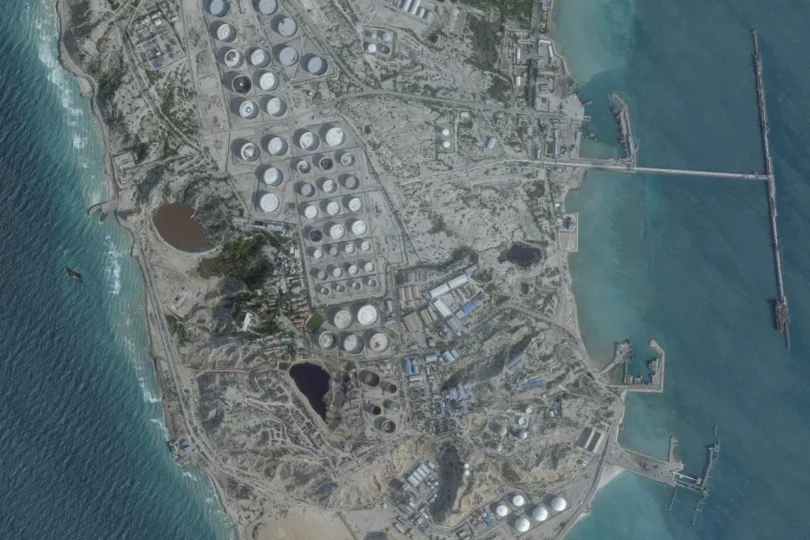
TEHRAN – Iran is racing to court some of Asia’s largest oil buyers as a 60-day US sanctions waiver takes effect, a temporary lifeline that should allow Tehran to resume exports and begin clearing a backlog of cargoes on the water, even as peace talks continue.
Sellers including middlemen and representatives from the National Iranian Oil made contact with refiners in India, Japan, South Korea and elsewhere even before the license was officially granted, according to traders involved in the discussions, who asked not to be named as the talks are not public.
That urgency has since increased, they said.
Iran – which has long sold its shipments primarily to China, due to sanctions constraints – is eager to find a wider range of buyers and to clear oil currently in tankers.
According to data from analytics firm Vortexa and Bloomberg calculations, approximately 68 million barrels of crude and condensate were on the water as of June 22.
At least 80 per cent of this volume does not have a clear destination and so could be available to buyers.
Conversations have also covered longer-term deals, the traders said, as Iran seeks to ramp up output.
Asia’s buyers, however, are not in a rush, they added. Most are well-supplied, having already secured alternative shipments to work around months-long blockades of the Strait of Hormuz.
There are lingering concerns over the Trump administration’s vacillations, plus EU and UK restrictions remain in place, complicating financing and insurance.
Not all ports, meanwhile, will take tankers from the so-called dark fleet still ferrying Iran’s oil.
“Asia is unlikely to commit to Iranian crude imports while US policy on sanctions continues to flip-flop and the geopolitical situation remains highly fluid,” said Sumit Ritolia, lead analyst for refining supply and modeling at data intelligence firm Kpler.
“Most importantly, refiners in Asia ex-China have already lined up increasing volumes of crude to secure their energy needs.”
He added Indian refiners – major oil importers – had secured crude arrivals until August.
Indian refiners typically shy away from sanctioned crude, but its geographic position means its buyers can take prompt supplies quickly, potentially a negotiating advantage, given Iran’s urgency and the short-term nature of the current waiver.
Some shipments can reach Indian processors within just two or three days, giving them ample time within the permitted period.
“The more realistic areas for engagement are LPG, petrochemicals, fertilisers, and broader energy cooperation, but even there I’d be cautious about expecting concrete outcomes given the uncertainty around sanctions relief and Washington’s policy stance,” Ritolia said.
An even bigger headache for Iran, however, may be supply. Even after months of disruption, Asia is not currently short of crude, providing little incentive for refiners to take risks – unless discounts are deep.
Benchmark Middle East grades like Dubai and Abu Dhabi’s Murban are already in a contango structure, meaning nearer contracts trade at discounts to later-dated ones, suggesting a short-term oversupply.
“The waiver does open more doors for Iran to sell into Asia, rather than relying almost exclusively on China,” said Warren Patterson, the head of commodities strategy for ING Groep NV in Singapore, pointing to the potential for narrower discounts on Iranian crude.
“To see more meaningful upside in Iranian oil supply, sanctions relief would need to be more permanent.” BLOOMBERG