Iran will only accept “a fair and comprehensive agreement” in its negotiations with the US on ending the war in the Middle East, its foreign minister said on May 6, as US President Donald Trump cited “great progress” in the process.
“We will do our best to protect our legitimate rights and interests in the negotiations,” Foreign Minister Abbas Araghchi said in Beijing after a meeting with China’s top diplomat Wang Yi, Iranian media reported. “We only accept a fair and comprehensive agreement.”
He did not directly address Mr Trump’s offer of a pause in the US operation to escort ships through the Strait of Hormuz, offered earlier as an incentive to help reach an agreement between the two sides.
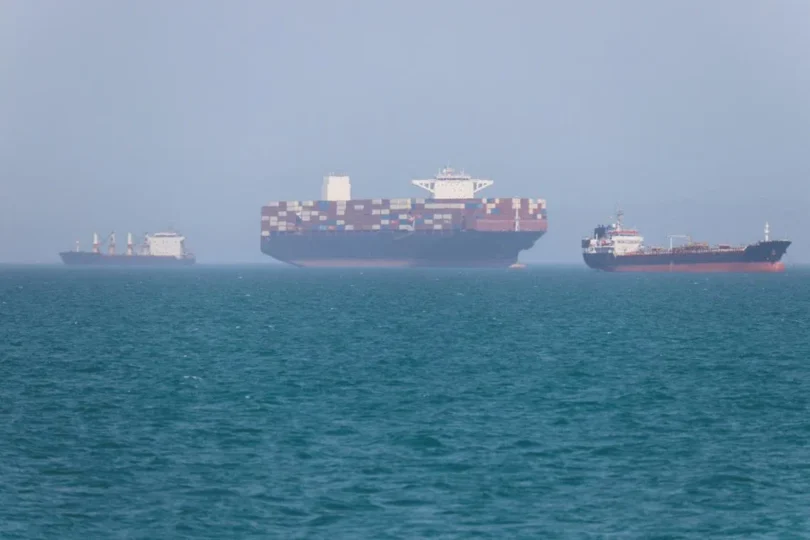
The strait has been virtually shut since the conflict began on Feb 28 with air attacks on Iran by the US and Israel, blocking about 20 per cent of world oil supplies and igniting a global energy crisis.
“We have mutually agreed that, while the Blockade will remain in full force and effect, Project Freedom… will be paused for a short period of time to see whether or not the Agreement can be finalised and signed,” Mr Trump wrote on social media.
Following Mr Trump’s post, Brent crude oil futures fell 1.2 per cent, to US$108.60 a barrel, after dropping 4 per cent in the previous session. US West Texas Intermediate futures eased 1.2 per cent to US$101.06 a barrel, after settling down 3.9 per cent the day before.
The White House did not immediately reply to a request for comment on what progress had been made, or how long the pause would last.
US Secretary of State Marco Rubio and other senior administration officials said earlier on May 5 that Iran could not be allowed to control traffic through the strait.
Iran has effectively sealed off the strait by threatening to deploy mines, drones, missiles and fast-attack craft. The United States has countered by blockading Iranian ports and mounting escorted transits for commercial vessels.
The US military said on May 4 it had destroyed several small Iranian boats, as well as cruise missiles and drones.
However, a fragile ceasefire agreed four weeks ago is holding.
The war has killed thousands as it has spread beyond Iran to Lebanon and the Gulf, and roiled the global economy. The head of the International Monetary Fund said on May 5 that even if the conflict ended immediately, it would take three to four months to deal with the consequences.
Mr Trump told reporters in the Oval Office that Iran’s military had been reduced to firing “peashooters” and Tehran wanted peace, despite public sabre-rattling.
“Great Progress has been made toward a Complete and Final Agreement with Representatives of Iran,” he said on his Truth Social platform.
The conflict is also pressuring Mr Trump’s administration ahead of crucial midterm elections in November, as rising gas prices hit voters’ pockets.
Mr Trump has said the US-Israeli attacks aimed to eliminate what he called imminent threats from Iran, citing its nuclear and ballistic missile programmes and its support for the Hamas and Hezbollah militias.
Iran has called the attacks a violation of its sovereignty and said that it has the right to develop nuclear technology for peaceful purposes, including enrichment, as a party to the Nuclear Non-Proliferation Treaty.
Diplomatic efforts to end the conflict have yet to yield results. US and Iranian officials have held one round of face-to-face peace talks, but attempts to set up further meetings have failed. REUTERS