
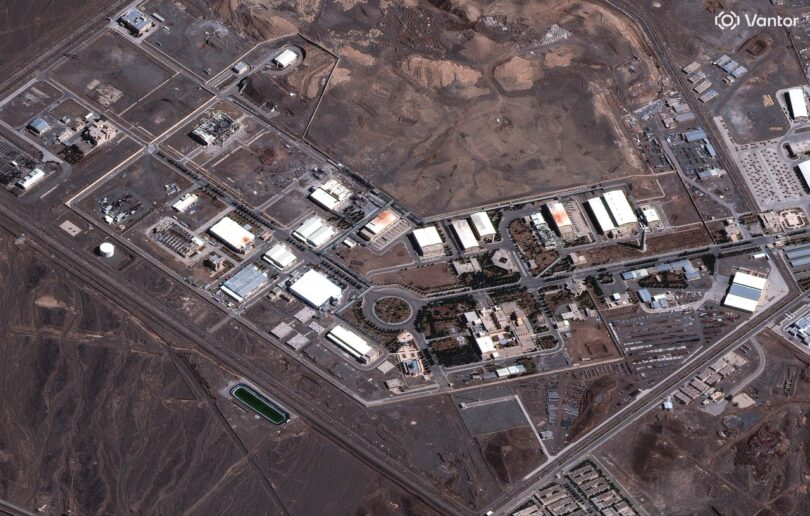
The IAEA said on Thursday that it was ready to begin defining the “concrete steps” needed to implement a US-Iran deal to end the Middle East war.
“Now it’s for us to sit down with our American colleagues, our Iranian colleagues, and start formulating the concrete steps that will have to be taken,” IAEA chief Rafael Grossi told reporters in Geneva.
“This is a very complex operation and it’s not a secret so we will have to be very, very detailed,” Grossi said, adding that the outcome would depend “on the political will of both sides”.
“Anything can work when two sides decide that they want something to be done,” he said, adding that they were looking to his organisation to tell “them what is needed”.
The IAEA estimates that Iran had 440 kilogrammes of uranium enriched to 60 percent, close to the level needed for a bomb, as Israel and the United States launched their first attacks in June last year.
Related
Iran suspended cooperation with the IAEA then and inspectors have not seen the material since.
The UN nuclear watchdog’s governing board last week approved a Western resolution demanding that Iran immediately provide information and access to its uranium stockpile and production facilities.
Tehran slammed that resolution as “counter-productive” at a time when talks were going on, and charged it was “politically-motivated”, something Grossi vehemently denied.
Regional unease
Israel and Arab states, especially Gulf countries like Saudi Arabia and the UAE, have long expressed deep concerns about Iran’s nuclear programme.
Key issues include Iran’s secrecy and non-compliance history, stockpiles of near-weapons-grade (60 percent) uranium, which shortens “breakout” time to weapons-grade material (90 percent) and potential for a nuclear-armed Iran to embolden regional proxies, shift power balances, or trigger proliferation.
These countries view highly enriched uranium as a direct threat, not just a civilian energy matter. The MoU’s deferral of full resolution keeps tensions alive, as neighbours worry about any deal that leaves significant enrichment infrastructure or stockpile intact under Iranian control.
Related
Downblending is a standard process that is reversible in theory but effectively neutralises weapons potential if done thoroughly and monitored.
Typically done at enrichment facilities under IAEA seals, cameras, and inspector oversight, experts note it can be done “on site” without export, as referenced in the MoU.
Stockpiles require significant effort and verification to prevent diversion. Analyst reports emphasise IAEA monitoring as critical to build confidence, given past Iranian non-compliance. Some view it as a concession, others see it as insufficient if enrichment resumes at scale.
Overall, the MoU buys time with a ceasefire and outlines a path, but leaves the most difficult nuclear details to final negotiations.