Just when signs of easing tensions in the Gulf region had started to emerge, fresh military action involving the United States has once again escalated the situation.
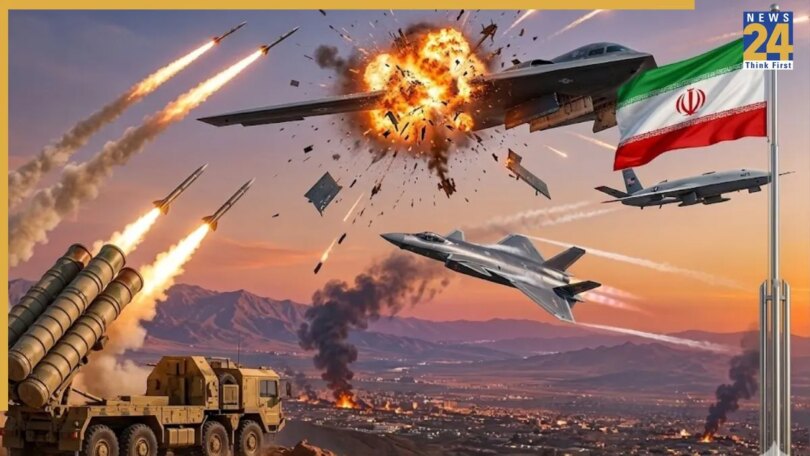
The US earlier claimed that it had targeted boats in southern Iran in self-defence. In response, Iran’s Islamic Revolutionary Guard Corps (IRGC) has now claimed that it shot down an American MQ-9 drone.
The IRGC also alleged that it forced a US RQ-4 surveillance drone and an F-35 fighter jet to leave Iranian airspace. According to Iran’s Tasnim News Agency, the Revolutionary Guard warned the United States that Iran reserves the right to retaliate if the ceasefire is violated.
Khamenei warns Gulf nations and US
Meanwhile, Iran’s Supreme Leader Mojtaba Khamenei issued a strong statement regarding the Gulf region and the United States. He said Gulf countries would no longer serve as a shield for American military bases.
Read More: Reasons why Pakistan refused to join Abraham Accords proposed by US president Trump, which countries have joined Abraham Accords?
According to Al Jazeera, Khamenei wrote on his Telegram channel that the Gulf region would no longer remain a safe zone for the United States.
In a message released on the occasion of Eid Al-Adha, he said time cannot be reversed and countries in the region would no longer accept the old regional order.
Iranian state television and AFP reported that Khamenei also claimed that American influence in West Asia is steadily weakening and becoming less effective with each passing day.
Talks continue alongside military tensions
Despite the rising tensions, diplomatic discussions between Iran and the United States over ending the conflict are reportedly continuing.
Read More: Israel PM Benjamin Netanyahu rushed to hospital in Jerusalem, sparks health speculation, here’s what we know so far
According to Reuters, Iranian Foreign Ministry spokesperson Esmail Baghaei said several points under a proposed 14-point memorandum of understanding have already been agreed upon, though a final deal is still far away.
Reports suggest that the main focus of the talks is ending hostilities and lifting the US naval blockade. In return, Iran could take steps to ensure the safe movement of ships through the Strait of Hormuz.
The proposed agreement may reportedly include a 60-day ceasefire, reopening the Strait of Hormuz and measures aimed at reducing tensions in the region.
Nuclear issue remains the biggest obstacle
The nuclear issue continues to remain the biggest point of disagreement between the two countries.
The United States wants Iran to eliminate its stockpile of highly enriched uranium, while Tehran does not appear fully willing to accept those demands. Differences also continue over Iran’s ballistic missile programme, sanctions relief and Tehran-backed groups such as Hezbollah.
Read More: US conducts ‘self-defence’ strikes on Iranian boats, missile launch sites amid peace talks
Reuters reported that if Iran’s Supreme National Security Council approves the proposed agreement, it will be sent to Mojtaba Khamenei for final approval.
At the same time, US officials have claimed that Khamenei has already supported the broader framework of the proposed deal.
First published on: May 26, 2026 04:34 PM IST
Get Breaking News First and Latest Updates from India and around the world on News24. Follow News24 on Facebook, Twitter.
End of Article
Related Story