
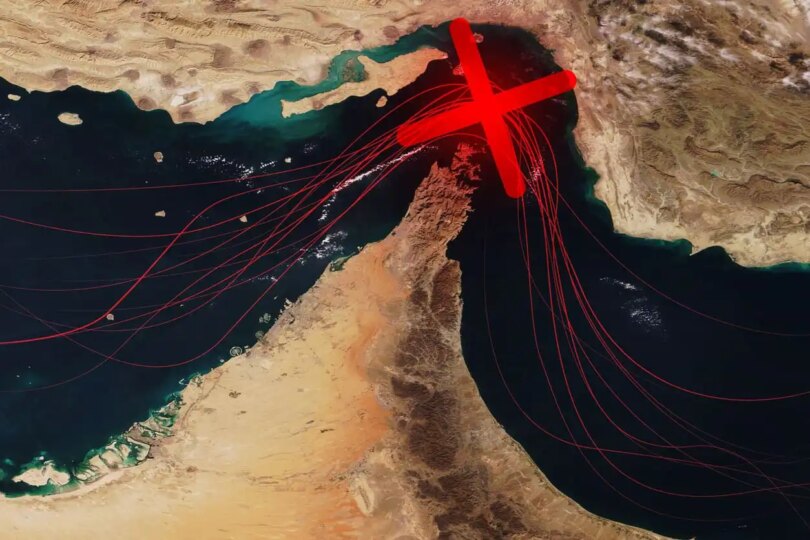
Iran has insisted it will not reopen the Strait of Hormuz as long as a United States naval blockade remains in force, despite a fragile ceasefire extension aimed at easing weeks of escalating conflict in the Gulf.
The position, reiterated on Thursday by Iranian authorities, underscores the deep mistrust between Tehran and Washington and signals continued disruption to one of the world’s most critical energy transit routes.
Iranian officials said the closure of the strait — through which roughly a fifth of global oil supplies typically pass — would remain in place until the blockade restricting its oil exports and maritime access is lifted.
Tehran argues that any ceasefire is meaningless if economic and military pressure continues at sea. The country’s parliament speaker, Mohammad Bagher Ghalibaf, said a “complete ceasefire” must include an end to what he described as violations through naval restrictions.
Seizure of vessels raises tensions
In a further escalation, Iran announced it had seized two foreign cargo ships attempting to transit the strait without authorization. The vessels were intercepted by Iran’s elite Revolutionary Guard naval forces and redirected into Iranian waters.
Iranian authorities accused the ships of breaching maritime regulations, including failing to coordinate passage and allegedly tampering with navigation systems.
The seizures mark the first such incidents since the latest phase of hostilities began earlier this year and have drawn criticism from Western governments, which view the actions as a threat to international shipping.
Ceasefire holds, but uncertainty remains
Although the United States recently extended a ceasefire to allow more time for diplomatic talks — reportedly mediated by Pakistan — negotiations remain stalled, with Iran yet to formally commit to new discussions.
At the same time, the U.S. military continues to enforce its blockade, having reportedly turned back dozens of vessels in recent days as part of efforts to restrict Iranian oil exports.
Global economic implications
The ongoing standoff has intensified concerns in global energy markets, with shipping through the strait severely limited and oil prices rising amid fears of prolonged disruption.
Analysts warn that even if a political agreement is reached, clearing the waterway and restoring normal traffic could take months, particularly due to reported deployment of sea mines and heightened military presence in the region.
Wider regional impact
The Hormuz crisis is unfolding alongside broader instability in the Middle East, including continued tensions involving Israel and Hezbollah, further complicating diplomatic efforts and raising the risk of a wider regional conflict.
For now, Iran’s stance suggests that the strategic waterway will remain effectively closed, leaving global shipping and energy markets in a state of uncertainty pending any breakthrough in negotiations.