DUBAI, U.A.E.: Iran’s ruling clerics are planning several days of large funeral events for Ayatollah Ali Khamenei to show public support for the Islamic Republic and prove that its revolutionary spirit is still strong.
Khamenei, Iran’s supreme leader, was killed in U.S. and Israeli strikes at the start of the war. Funeral ceremonies will begin in Tehran over the weekend, followed by large processions in Qom and Mashhad next week, and events in Iraq.
A senior cleric said that a large public turnout at the funeral would act like a public vote of support for the Islamic Republic. Authorities are working hard to ensure this by organizing transport, accommodation, and food to bring millions of supporters into cities.
Khamenei’s death and the rise of his son Mojtaba as the new supreme leader mark a major turning point in Iran’s history. Mojtaba, who was seriously injured in the same attack, has not appeared in public since the war began.
However, experts say that real public support for the government has become very weak. Many Iranians are unhappy after years of economic problems caused by sanctions and are angry about strict government control.
During protests earlier this year over rising prices, many people shouted slogans against Khamenei, and security forces used violence to stop the protests. After news of his death spread, some people in Tehran were heard cheering inside their homes.
Now, the atmosphere in Tehran is tense and quiet, very different from the huge emotional crowds seen at the funeral of Iran’s first supreme leader, Ayatollah Khomeini, when millions gathered in grief.
Some residents say they plan to avoid the funeral events. One woman said her family would leave Tehran during that time, adding that the city feels heavily controlled by security forces.
In Iran’s system, Khamenei was not just a political leader but also seen as a religious figure representing an important Islamic belief. His death in an attack fits into a strong tradition in Shi’ite Islam that honors martyrdom, which is reflected in public mourning rituals.
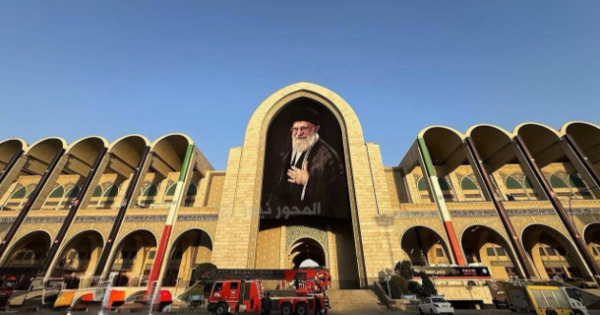
Since his death, black flags have been placed across cities, and mourning ceremonies have compared him to important religious martyrs. Posters supporting the new leader Mojtaba are also being put up.
For supporters of the government, the sense of loss is very real. A young militia member said these were the hardest days of his life and that people are deeply mourning their leader.
Officials and foreign leaders from countries like Russia, China and India will attend condolence events. Khamenei’s body will be taken to different cities for funeral ceremonies before being buried in Mashhad.
The bodies of several of his family members, who were also killed in the same attack, will be carried alongside him during the processions.
Authorities are offering hotel discounts and using schools and public buildings to house visitors. Transport systems are being adjusted to handle large crowds.
After a major procession in Tehran, the funeral events will continue in Qom and later in Iraqi cities. There will be ceremonies in Iraq’s shrine cities of Najaf and Kerbala on July 8 with prominent attendees from Iran’s regional network of Shi’ite proxies. His burial will be on July 9, after another procession, in Mashhad near the tomb of the Imam Reza, a figure of great devotion in Iran.
Security will be very tight, with airspace restrictions and warnings of strong action if the U.S. or Israel carry out more attacks.
One war veteran said these events are also a way for Iran to show its strength to other countries.