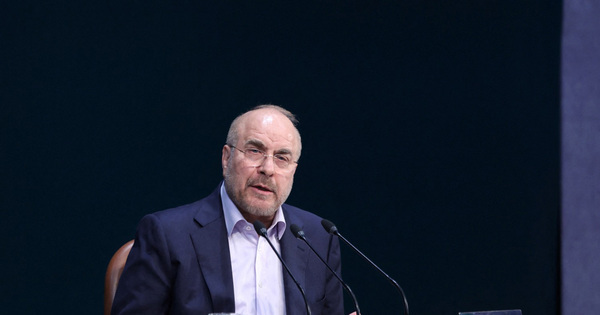
Tehran [Iran], July 1 (ANI): Iran’s Parliament Speaker Mohammad Bagher Ghalibaf has said that Iran’s nuclear rights and red lines are ‘non-negotiable’, asserting that Tehran will not proceed to the next stage of negotiations until key commitments under its 14-point Memorandum of Understanding (MoU) with the United States, including the end of the war in Lebanon and implementation-related measures, are fulfilled.
According to ISNA, Ghalibaf on Tuesday said in a television interview that Iran’s nuclear programme remains within the framework of the Nuclear Non-Proliferation Treaty (NPT) and under the supervision of the International Atomic Energy Agency (IAEA).
‘The Islamic Republic of Iran is a member of the Nuclear Non-Proliferation Treaty (NPT) and is under the supervision of the International Atomic Energy Agency, and considers enrichment to be its right. NPT obligations are being observed, but Iran’s nuclear rights and red lines are non-negotiable, and these are considered components of the Islamic Republic’s power and guarantee against American excesses,’ he said.
Questioning the effectiveness of international guarantees, Ghalibaf cited Iran’s experience with the Joint Comprehensive Plan of Action (JCPOA), the 2015 nuclear deal. ‘The JCPOA experience has shown that even ratification by the Security Council does not create an executive guarantee,’ he said.
On the MoU with the United States, Ghalibaf said Washington had committed to ending the war in Lebanon. ‘In Article 1 of the memorandum, the US is committed and guarantees that the war in Lebanon will end, no military operations will be carried out, the people will return to their land, and the national sovereignty of Lebanon will prevail over its land. This is a very big victory and must be achieved, and we are now pursuing its definitive implementation,’ he said.
He said Iran remains committed to ensuring navigation through the Strait of Hormuz in accordance with the MoU and expects the United States to do the same. ‘The Islamic Republic is committed to ensuring that passage through the Strait of Hormuz is carried out in accordance with that memorandum, and the United States must do the same,’ he said.
Warning that Iran was prepared for escalation if commitments were not honoured, Ghalibaf said, ‘We are also in talks, and if they do not want to fulfil their commitments in the talks, we are ready for war.’
Ghalibaf said a joint committee comprising representatives from Iran and the United States had been formed to oversee implementation of the Lebanon-related provisions of the memorandum and said talks would continue until the five key clauses were fully implemented.
‘We prioritised the issue of Lebanon, and today you see that relative calm has been established there. The follow-up is serious, and the talks are still ongoing, and until these five clauses, one of the most important of which is the issue of Lebanon, are consolidated and finalised, we will not enter the next stage of implementing the other clauses of the memorandum of understanding,’ he said.
Referring to the situation in Lebanon, Ghalibaf said Israel continues to occupy parts of southern Lebanon, although attacks have declined since the agreement.
‘This issue is different in Lebanon because the Zionist regime is occupying part of southern Lebanon, and military clashes there have intensified. Of course, after the signing of the agreement, attacks in southern Lebanon decreased significantly,’ he said.
Ghalibaf also accused US Secretary of State Marco Rubio of attempting to normalise Lebanon’s relations with Israel, saying such efforts were contrary to the MoU.
‘This same Rubio is pursuing the Washington memorandum of understanding so that they will follow the Abraham Plan and normalise Lebanon’s relations with the Zionist regime, but our memorandum of understanding precisely preserves Lebanon’s independence,’ he said.
Reiterating Iran’s negotiating position, Ghalibaf said Tehran would not move to the next phase until key provisions of the memorandum were implemented. ‘The implementation of these clauses includes the end of the war on all fronts, the gradual opening of the Strait of Hormuz, the possibility of exporting oil and oil derivatives, and the liberation of resources, and until these commitments are fulfilled, the Islamic Republic will not enter into negotiations,’ he said. (ANI)