The signing of the Islamabad Memorandum of Understanding (Islamabad MoU) by US President Donald Trump and Iranian President Masoud Pezeshkian has set the stage for direct talks between Washington and Tehran on Friday.
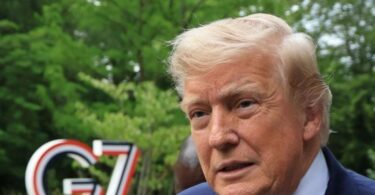
Trump was still in France, where he attended the G7 summit, when he put his signature on a one-page document that Pakistan has been negotiating for the past 100 days.
Later, Pezeshkian was seen holding the document with his signature on it.
The Islamabad MoU gives officials and experts from the two sides the next 60 days to chalk out a final agreement, which is particularly focused on the Iranian nuclear program, as Trump declared that Tehran cannot have a nuclear weapon.
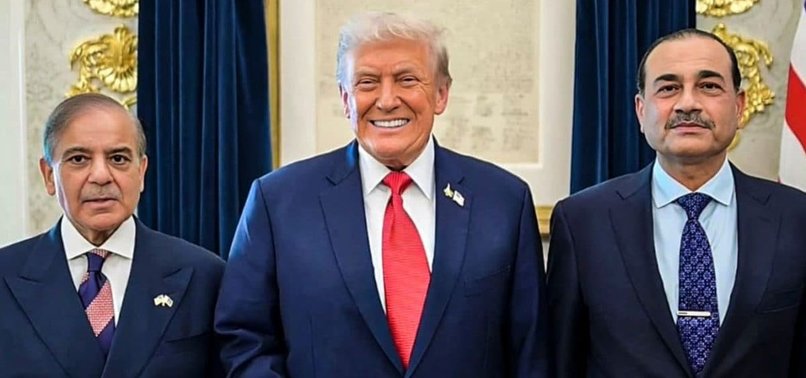
Pakistani Prime Minister Shehbaz Sharif declared that the Islamabad MoU was effective immediately after signing and said Iran and the US would take measures to open the Strait of Hormuz for full international passage.
Sharif also signed the pact as “mediator.”
The pact calls for immediate and permanent cessation of military operations on all fronts, including in Lebanon, with commitments not to resort to force and to guarantee Lebanon’s sovereignty.
Soon after the US and Israel initiated war on Feb. 28, Iran closed the Hormuz and later, on April 13, American forces imposed their blockade on Iranian ports-making passage of commercial ships nearly impossible through the critical waterway.
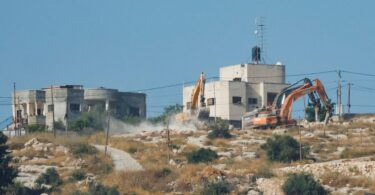
Israel has also waged attacks on Lebanon, killing nearly 3800, including civilians and soldiers, since the war began.
Over 3,300 people, including civilians and soldiers, have been killed in Iran, while the US has confirmed the death of 14 personnel, in addition to the loss of armed weaponry and aircraft.
Swiss city of Burgenstock to host talks
Welcoming the Islamabad MoU, the Swiss government said the first negotiations on the implementation of the agreement “are expected” to take place on Friday at the resort city of Burgenstock.
“Currently, the plan remains for the United States and Iran, along with the mediators Pakistan and Qatar and other involved countries, to meet tomorrow at the Burgenstock for initial negotiations on the implementation of the agreement,” the Swiss Foreign Ministry said.
Neither Washington nor Tehran has released any details of who will represent the two sides.
“The signing (of the Islamabad MoU) is an important step toward de-escalation in the region,” said the ministry.
The expected talks mark the first time since April 13 that the US and Iran will engage in direct talks since the war began on Feb. 28.
After securing a ceasefire on April 08, Pakistan hosted the highest-level direct talks between the two nations on April 12 and 13 since they severed diplomatic ties in 1979.
These two-day negotiations, dubbed the Islamabad Talks, ended inconclusively, leading Pakistan to continue its role as mediator, which resulted in the signing of the Islamabad MoU during this week.
The two sides have agreed to mutual respect for sovereignty and territorial integrity and non-interference in each other’s internal affairs.
If everything goes as agreed, the two sides can extend the initial two-month period for negotiations to discuss, among other issues, the creation of a reconstruction and economic development program worth at least $300 billion for Iran with US and regional partners’ support.