
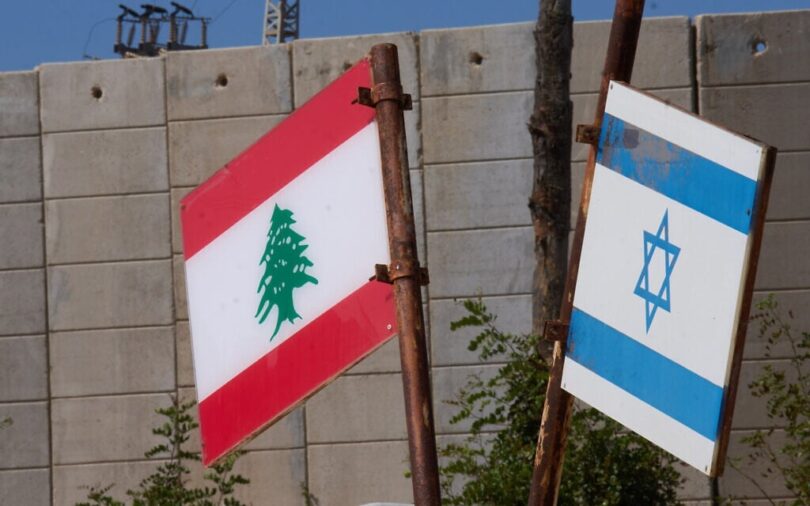
Israeli security officials are preparing for the possibility that Hezbollah may attempt to undermine the framework agreement signed by Israel and Lebanon by launching attacks on Israeli yishuvim or IDF forces in the coming days, Israeli media outlets reported on Motzei Shabbos.
A senior security official told Ynet that Israel’s working assumption is that Hezbollah “will not sit idly by” and that the IDF is preparing for a range of scenarios, including a significant increase in attacks on Israeli targets.
He stressed that Israel’s freedom of action remains unrestricted. “If Hezbollah attacks, we will eliminate the threats and respond,” the official said. “We’re prepared for escalation.”
The official noted that, unlike the policy followed in the past, Israel is no longer operating under the equation that every attack on Israel will be met by an IDF strike on Beirut’s Dahiyeh district.
“Each case will be examined on its own merits,” he said. “If Israeli communities come under attack, a decision will be made on how to respond. Dahiyeh may be a target, but it is no longer an automatic response.”
The IDF is taking into account that an Israeli strike in Dahiyeh could prompt an Iranian retaliation. Iran may also act if it concludes that the framework agreement supersedes its memorandum of understanding with the United States regarding Lebanon.
Defense Minister Yisrael Katz addressed the issue on Motzei Shabbos, saying that if such a scenario materializes, “We will act against Iran with great force and demonstrate the existing disparity in strength between us.”
The security official added that the US is not expected to rush to restrict Israel’s operations if Hezbollah acts to sabotage the agreement. “Striking Hezbollah also serves the Lebanese government and the American‑brokered agreement,” he said. “The U.S. will not want Iran and Hezbollah to derail the diplomatic process.”
He stressed that “Lebanon’s sovereignty is not violated when Israel strikes Hezbollah.”
Regarding the agreement itself, the official said it is a framework agreement that establishes pilot zones where the IDF will withdraw, and the Lebanese Army will assume control. “However, this is only a good beginning. The main achievement is that Israel will not withdraw from the Yellow Line until Hezbollah is disarmed throughout Lebanon.”
Katz was personally involved in drafting the agreement’s final wording and insisted that pilot areas not be located within the “Yellow Area”—the anti-tank missile line. According to the official, the Lebanese side insisted on that demand, and the dispute extended the negotiations by an additional day.
Ultimately, both sides agreed on a pilot framework that “takes a bite out of the expanded line” in areas captured by the IDF over the past two weeks, allowing Lebanese President Joseph Aoun to present the beginning of an Israeli withdrawal to the Lebanese public.
At the same time, Katz said he and Prime Minister Netanyahu have instructed the IDF “to prepare for a prolonged presence” in southern Lebanon.
A Lebanese anti-Hezbollah political source told Kan News that the framework agreement is viewed as a historic achievement since it isolates Hezbollah, in part because it explicitly calls for the terror organization’s disarmament.
He believes that Hezbollah is expected to try to sabotage the agreement and delay the Lebanese Army’s deployment. However, he added, Hezbollah and its Iranian patron are trapped, as any attempt to obstruct the agreement’s implementation would also delay Israel’s withdrawal.
For now, Hezbollah is focusing on pressuring the Lebanese government to reverse course. But according to the source, “the train has already left the station,” as Lebanese leaders understood that without signing the agreement, Iran would have claimed credit for securing Israel’s withdrawal.
(YWN Israel Desk—Jerusalem)