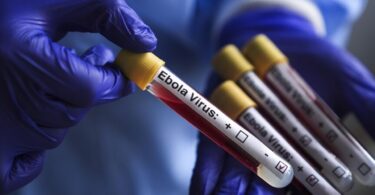

Two people are suspected of being infected with Ebola in Milan, northern Italy, according to the Italian daily Corriere della Sera on Monday.
The individuals, a man and a woman originally from Como, are said to have recently returned from Uganda, where they had been working as aid workers for three months.
They reportedly developed symptoms, including high fever, vomiting, diarrhea, and nausea.
The man is said to have suffered intestinal problems, while the woman experienced neurological symptoms, the report said.
Ebola disease is caused by viruses belonging to the Orthoebolavirus genus. Three strains are known to cause major outbreaks in humans: Ebola virus (Zaire), Sudan virus, and Bundibugyo virus.
The suspected cases come amid heightened concern over Ebola outbreaks in parts of Africa, with health authorities monitoring potential cross-border risks.
Earlier, health authorities warned that the outbreak is continuing to spread in parts of Africa, with neighboring countries also affected.
On May 17, the World Health Organization (WHO) declared the Ebola outbreak affecting the Democratic Republic of the Congo and Uganda a global health emergency after suspected infections and deaths continued to rise in eastern Congo and confirmed cases emerged beyond the initial outbreak zone.
The WHO has also warned that while the risk of global spread remains low, the situation is being closely monitored due to the number of cases, infections among health care workers, and outbreaks in urban areas.
Earlier on Monday, WHO Director-General Tedros Adhanom Ghebreyesus warned that the Ebola outbreak in Congo is “extremely serious and difficult” to manage, adding that the epidemic is currently spreading faster than response operations.
Ten other countries, including Rwanda, Kenya, Tanzania, Angola, Burundi, the Central African Republic, the Republic of Congo, Ethiopia, South Sudan, and Zambia, face the risk of an Ebola outbreak, according to the Africa Centres for Disease Control and Prevention (Africa CDC).