
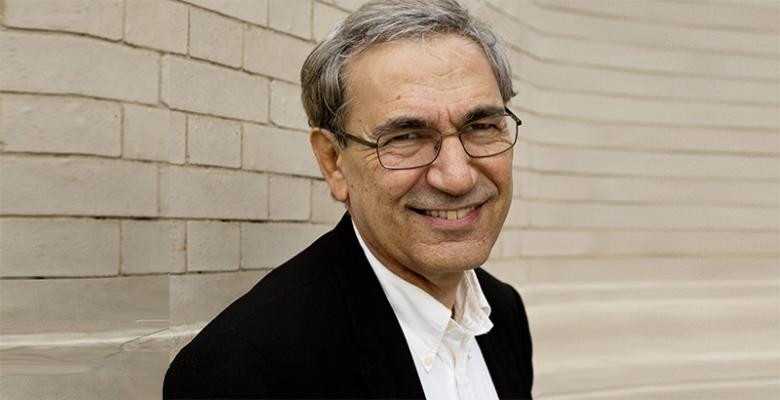
By Nehru Odeh
Orhan Pamuk, Turkish writer and winner of the Nobel Prize in Literature in 2006 is dead. Swedish writer and journalist Ingrid Carlberg made this known via a post on X on Wednesday.
The post reads:
“The Swedish Academy now receives from Istanbul the sad news of the sudden death of the writer Orhan Pamuk, Nobel Prize in Literature for 2006. “
Pamuk, a novelist, screenwriter and academic, was one of Turkey’s most prominent novelists; and sold over 13 million books in 63 languages, making him the country’s best-selling writer.
His novels include Silent House, The White Castle, The Black Book, The New Life, My Name Is Red and Snow.
He was the Robert Yik-Fong Tam Professor in the Humanities at Columbia University, where he taught writing and comparative literature. He was elected to the American Philosophical Society in 2018.
Born in Istanbu on 7 June 1952, Pamuk was the first Turkish Nobel laureate. He was the recipient of many literary award.
His bestselling novel, My Name Is Red won the 2002 Prix du Meilleur Livre Étranger, the 2002 Premio Grinzane Cavour, and the 2003 International Dublin Literary Award.
Pamuk was educated at Robert College secondary school in Istanbul and studied architecture at the Istanbul Technical University, a subject related to his dream career, painting.
He left architecture school after three years to become a full-time writer, and graduated from the Institute of Journalism at the University of Istanbul in 1976.
From ages 22 to 30, Pamuk lived with his mother, writing his first novel and attempting to find a publisher.
He described himself as a Cultural Muslim who identifies with Islam historically and culturally while not believing in a personal connection to God.
Pamuk started writing regularly in 1974. His first novel, Karanlık ve Işık (Darkness and Light) was a co-winner of the 1979 Milliyet Press Novel Contest (Mehmet Eroğlu was the other winner). This novel was published with the title Cevdet Bey ve Oğulları (Mr. Cevdet and His Sons) in 1982 and won the Orhan Kemal Novel Prize in 1983. It tells the story of three generations of a wealthy Istanbul family living in Nişantaşı, the district of Istanbul where Pamuk grew up.
Pamuk won a number of critical prizes for his early work, including the 1984 Madarali Novel Prize for his second novel Sessiz Ev (Silent House) and the 1991 Prix de la Découverte Européenne for its French translation. His historical novel Beyaz Kale (The White Castle), published in Turkish in 1985, won the 1990 Independent Award for Foreign Fiction and extended his reputation abroad.
On 19 May 1991, The New York Times Book Review wrote, “A new star has risen in the east—Orhan Pamuk.” He started experimenting with postmodern techniques in his novels, a change from his early works’ strict naturalism.