
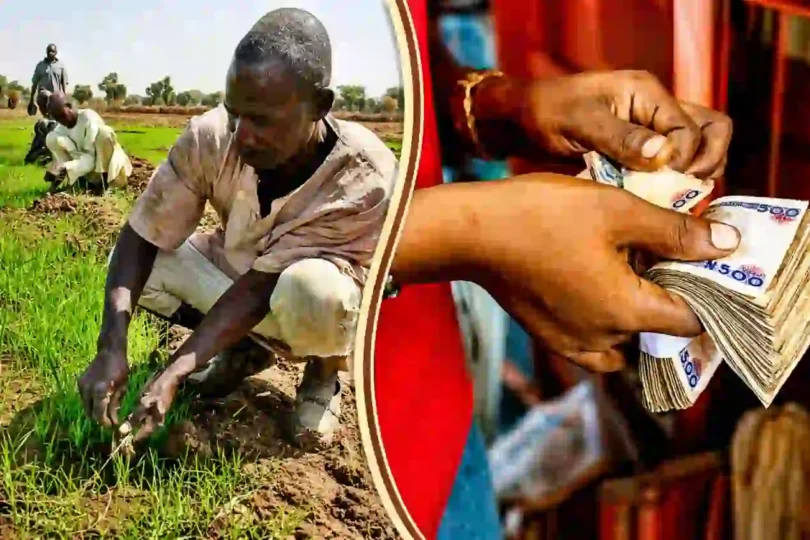
Over 12,000 farmers across eight local government areas in Kano State have received climate-smart agricultural inputs under the Special Agro-Industrial Processing Zones (SAPZ) programme, marking a key milestone in the Federal Government’s push to strengthen Nigeria’s agricultural productivity and food systems.
The intervention, implemented in 2025, forms part of a broader strategy to modernise agriculture through targeted support for smallholder farmers and value chain actors. It also comes as the SAPZ programme scales up community engagement and awareness campaigns to expand participation across additional catchment areas in the state.
SAPZ, a flagship agro-industrialisation initiative, is being delivered in collaboration with the International Fund for Agricultural Development (IFAD), the Islamic Development Bank (IsDB), the African Development Bank (AfDB), participating state governments, and private sector investors. The programme is currently operational in Kano, Kaduna, Imo, Cross River, Kwara, Oyo, Ogun, and the Federal Capital Territory.
Speaking on the development, the Knowledge Management and Communication Officer of the SAPZ Kano Programme, Hajiya Rabi Mustafa Sadiq, said the initiative is designed to empower smallholder farmers, agro-processors, traders, and service providers, with a focus on women and youth inclusion.
“The programme is structured to drive inclusive growth across the agricultural value chain, ensuring that vulnerable groups are not left behind,” she said.
She explained that SAPZ’s implementation framework covers the development of Agro-Industrial Hubs, improvement of agricultural productivity, strengthening of market linkages, policy and institutional support, and coordinated programme delivery.
Data from the programme shows that about 15,463 smallholder farmers were profiled across key value chains in eight LGAs in Kano, reflecting growing reach and data-driven targeting. Out of this number, over 12,000 farmers have already benefited from a matching grant scheme that provides climate-smart inputs for rice, tomato, and groundnut production.
Under the scheme, beneficiaries contribute a portion of the input costs, with women covering 20 per cent, men 30 per cent, and youth 25 per cent, while the programme provides the balance. The model is designed to encourage ownership and sustainability among participants.
To deepen collaboration within the sector, the SAPZ Kano Programme has also established a Multi-Stakeholder Agribusiness Forum, bringing together farmers, processors, financial institutions, and relevant government agencies to improve coordination and investment flow.
As part of ongoing expansion efforts, awareness campaigns are being extended to additional LGAs including Dawakin Kudu, Kumbotso, Tofa, Gwarzo, Madobi, Shanono, Minjibir, and Gabasawa, where stakeholders are being sensitised on access to programme opportunities.
Dr Auwal Muhammad noted that a Matching Grant Facility is being introduced in the new LGAs to further improve access to inputs, support value addition, and strengthen climate resilience and market integration.
He added that the programme is targeting about 75,000 direct beneficiaries in Kano and Ogun States, including women, youth, persons with disabilities, and internally displaced persons, with expected outcomes centred on increased productivity and improved livelihoods.
Traditional leaders across the benefiting LGAs have commended the initiative and pledged continued support, urging participants to maximise the opportunities and extend the benefits within their communities.
What do you think about this?
Drop your opinion in the comment section.
FOLLOW US & Share this with someone who needs to see this.