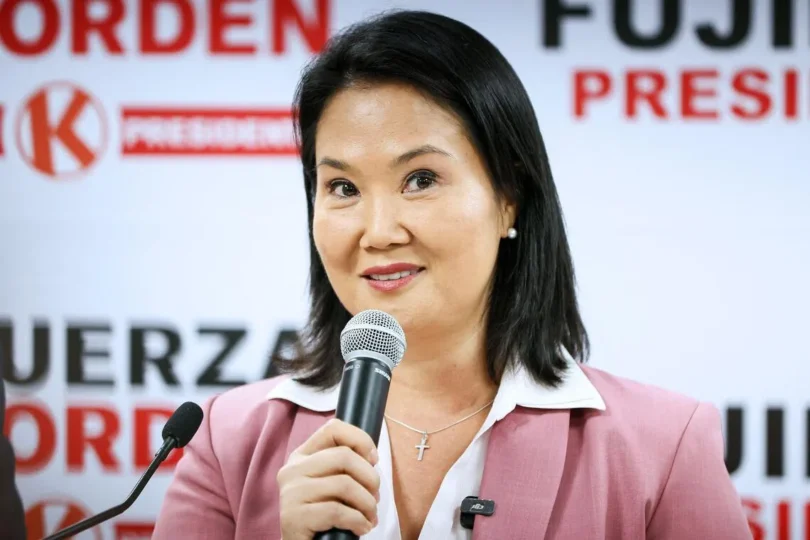
LIMA – Conservative Keiko Fujimori won Peru’s presidential election by a slim margin in her fourth bid for the highest office in the copper-rich nation.
Fujimori received 50.14 per cent of the vote, according to the full count by the electoral agency ONPE on June 29, after a lengthy review of thousands of disputed ballots from the June 7 runoff.
The 51-year-old conservative finished just 49,641 votes ahead of leftist rival Roberto Sánchez, who trailed with 49.87 per cent.
Fujimori, addressing reporters outside her home on the afternoon of June 29, said she was happy with the results of ONPE’s vote count, but was awaiting the official proclamation from Peru’s National Jury of Elections “with humility and great prudence.”
“We know that our country is practically divided,” she said, “and we have the great responsibility to listen to both sides.”
The result makes Fujimori the first woman ever elected president in Peru.
It also adds her to a growing list of Latin American candidates to come to power by offering voters an iron fist on security and market-friendly economic plans.
Fujimori, daughter of late former President Alberto Fujimori, will take office on July 28 for a five-year term and become Peru’s ninth president in a decade of political chaos.
Her win by such a tight margin could deepen divisions in the polarised nation, in which the latest two elections were decided by less than 45,000 votes.
Sanchez had previously called for protests and alleged that there were irregularities in the overseas vote.
The leftist lawmaker has said he won’t recognise Fujimori’s government, although international observers said the election proceeded normally.
Still, Fujimori is expected to enjoy greater stability than any of her recent predecessors.
Her party won 22 of the 60 senate seats in congressional elections in April, making it the largest minority and enough to block any initial impeachment attempts.
Fujimori has pitched herself as a source of stability after years of impeachments and ousters, despite her role in that upheaval as a major congressional power broker.
Her policies have won support from markets and business leaders concerned about the direction of policy in one of Latin America’s most stable economies.
Fujimori is seen as a defender of the country’s 1993 Constitution, enacted under her father, which helped Peru grow faster than its regional peers and become a top exporter of metals and fruits.
She has promised to slash red tape, boost private investment and preserve the independence of the central bank.
Fujimori has also firmly established herself as a tough-on-crime politician at a time when public safety tops Peruvians’ concerns.
She has capitalised on the legacy of her father, who led a bloody war against Maoist guerrilla groups in the 1990s, and pledged to deport all undocumented immigrants who commit crimes, while militarising borders and rounding up criminals in El Salvador-style mega prisons.
“Just like my father, I have the guts to take on crime,” she said during the campaign. BLOOMBERG