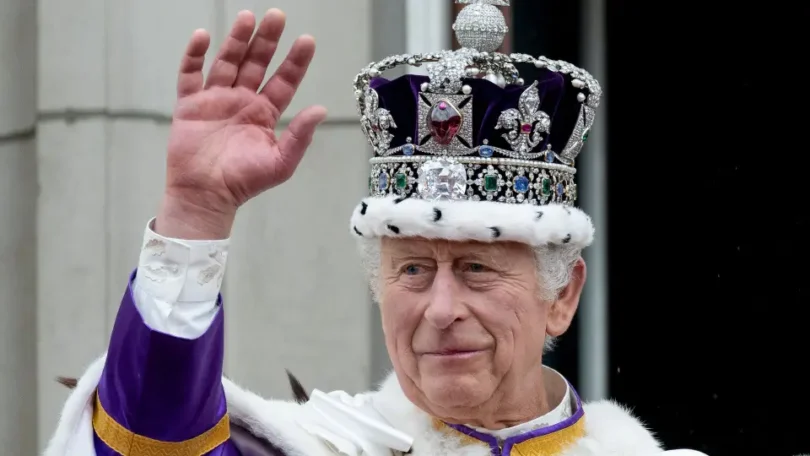

King Charles has become the first monarch to publish a tax bill, which revealed that he paid £12.9m for 2024-2025.
Financial accounts released on Thursday, June 25, revealed that King Charles ranked among the UK’s top 100 taxpayers during the financial year, having paid more than £30 million in taxes since ascending the throne in September 2022. The records also showed that Prince William has contributed over £20 million in taxes since becoming Prince of Wales.
The accounts also showed that the Sovereign Grant, which funds Charles’s official duties and the work of his household, increased by £45.8m to £132.1m in 2025-26.
It was also announced that the King and Queen will not live at Buckingham Palace once almost £370m of refurbishment work to make it fit for purpose has been completed, with public access to the London landmark to be increased.
James Chalmers, keeper of the Privy Purse, said: “When Prince of Wales, His Majesty disclosed his tax, and he has asked that we make public his combined income and capital gains tax payments as king.
“Today I can share with you that His Majesty’s tax payable for 2024-25 was £12.9m.
“If annual media league tables are to be believed on such matters, that places His Majesty among the top 100 taxpayers in the country for that year.
“I can also share with you that His Majesty’s tax payable for 2023-24 was £11.7m, and the total amount of tax payable by His Majesty since accession to the throne is more than £30m – all of this, remember, on a voluntary basis.
“The tax payable for 2025-2026 is not yet available as the underlying figures are subject to audit and review in accordance with our normal reporting timetables.”
Charles voluntarily pays income tax on all his private income, capital gains tax on relevant elements of his assets, and inheritance tax under arrangements agreed by the late Queen that first came into effect in 1993.
The King’s private sources of income could include money from investments or trading profits, funds generated by his private estates of Balmoral and Sandringham, and private savings.
The Duchy of Lancaster estate, a private portfolio of land, investments and office, retail and industrial properties, also provides the King with an annual income which in 2025-26, was £25.2m.
It was designed to give the monarch of the day an independent source of income, historically known as the Privy Purse, used for both official and private expenditure and for meeting the expenses of other members of the royal family.
William receives an income from the Duchy of Cornwall, a billion-pound hereditary estate featuring The Oval cricket ground and providing the heir to the throne with funds, independent of the monarch.
He pays tax voluntarily on this income – £21.6m from the duchy during 2025-26 – which is not used to meet official expenditure.
During the 2024-25 financial year his tax bill was £7.76m in income and capital gains tax, and was £8.34m in 2023-24.
The accounts also showed that William undertook the most expensive official overseas trip, making a round trip by charter plane to Saudi Arabia in February at a cost of £130,106, including a separate staff planning visit.
Meanwhile, Buckingham Palace will remain the operational centre of the monarchy but Charles has decided it will not be his official residence, instead continuing to use nearby Clarence House as his London home.
Mr Chalmers said: “I can update you that after careful consideration, and to greatly increase opportunities for public access, the King and Queen have decided not to adopt Buckingham Palace as a personal residence and will instead continue to use Clarence House as their London home.
“Their Majesties will, however, have access to private rooms within the palace where they can retire during the course of a working day, and which could be utilised as potential residential accommodation in times ahead.”
The last decade has seen a £369m project to reduce the fire and flood risk, including replacing boilers, electrical cables and pipes, undertaken at the palace. It is due to be completed next March.
Mr Chalmers added: “This is both a change from the past and a recognition of the future. Let me be clear, however, that in all other ways Buckingham Palace will continue to be both the ceremonial and operational centre of royal life.
“It is and will remain Monarchy HQ, the crown jewel of our national buildings, with the sovereign’s standard flying proudly from the roof whenever His Majesty is in London, just as it has done since accession.”
A Buckingham Palace spokesperson said: “It will remain a working home but we are seeking to widen public access precisely to maximise the national benefit of a publicly funded building.”