A former Minister of Information and Culture, Alhaji Lai Mohammed, has described #EndSARS crisis as a classic example of how fake news and disinformation inflame a volatile situation, rather than a failure of government communication.
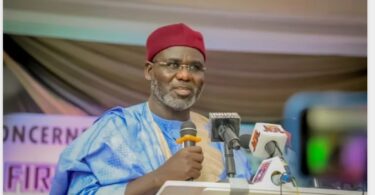
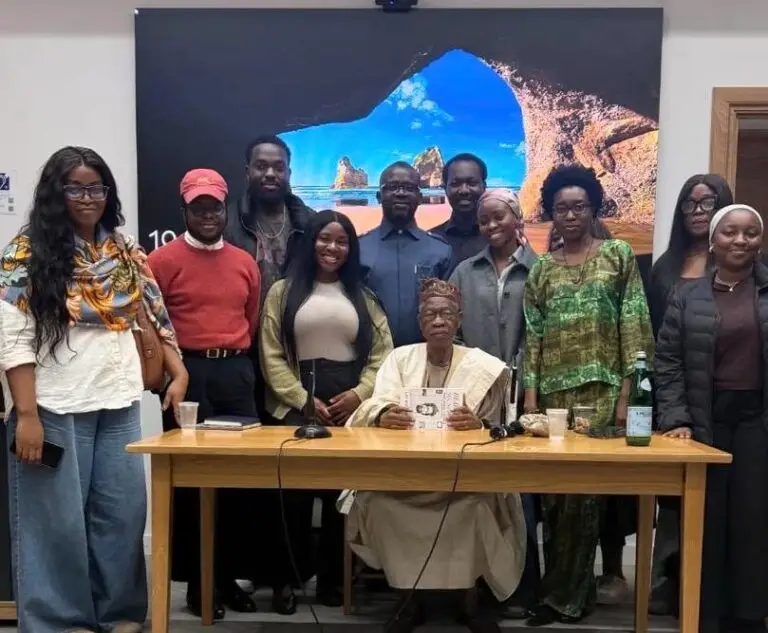
The News Agency of Nigeria (NAN) reports that Mohammed stated this at a high-level forum at the London School of Economics and Political Science (LSE), over the weekend.
He noted that while the protests began as a genuine expression of grievances against police brutality, they were hijacked by those with ulterior motives.
He said the situation escalated significantly through the deliberate spread of misinformation and unverified reports across traditional and digital media, particularly after troops were deployed to the Lekki Toll Gate in Lagos.
The former minister specifically cited the role of CNN, alleging that its reports relied heavily on unverified and sometimes doctored content, which amplified tensions and shaped a global narrative that did not reflect the realities on the ground.
”The problem we had was not the usual communication gap between the government and the citizens. It was fake news and disinformation, coupled with unbridled violence,” he said.
Reflecting on the COVID-19 pandemic, Mohammed highlighted Nigeria’s success in leveraging a coordinated and adaptive communication framework.
He noted that despite the absence of a global template, the government’s strategy of transparency and daily briefings helped achieve public approval ratings between 97 and 98 per cent.
On the fight against insurgency, he recalled a groundbreaking media tour of territories previously occupied by Boko Haram.
He said leading 40 journalists to the North-East was a turning point that countered extremist propaganda and restored confidence in the military’s progress.
Addressing the suspension of Twitter during his tenure, the former minister clarified that it was not an impulsive act but a necessary step to curb incitement and divisive content after repeated efforts to secure the platform’s cooperation failed.
He also highlighted the introduction of nationwide town hall meetings as a key innovation that bridged communication gaps.
He described the sessions as unscripted platforms that allowed for localised messaging and inclusive engagement across the six geopolitical zones.
Mohammed revealed that upon assuming office, he met a vacuum in structured communication strategy, which necessitated the development of a proactive framework integrating both traditional and digital media to ensure a two-way feedback system.
The interaction at the LSE concluded the former minister’s three-day speaking tour to the United Kingdom, where he promoted his new book.
The book, which was titled”Headlines & Soundbites: Media Moments That Defined an Administration,” chronicles Mohammed’s tenure from 2015 to 2023.
(NAN)