
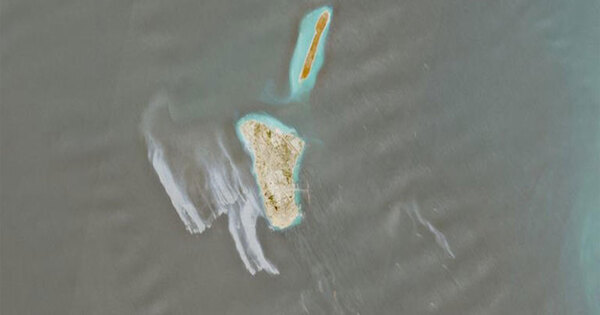
Washington DC [US], May 10 (ANI): A large oil slick has been detected in the Persian Gulf near Kharg Island, Iran’s main crude oil export hub, raising fresh concerns over the condition of the country’s oil infrastructure amid mounting regional tensions and shipping disruptions, according to a report by The New York Times.
Satellite imagery reviewed by the newspaper showed the slick spreading off the western coast of Kharg Island, a critical centre of Iran’s oil export network. The spill had expanded to more than 20 square miles by Thursday, according to estimates from Orbital EOS, a global oil spill monitoring service cited by the news report.
Orbital EOS estimated that more than 3,000 barrels of oil may have been released into the waters of the Persian Gulf.
The exact cause of the spill remains unclear. However, the news report said Iran’s oil and gas infrastructure has been under growing strain due to the ongoing US-imposed naval blockade linked to tensions around the Strait of Hormuz, one of the world’s most strategically important oil transit chokepoints.
According to the NYT report, restrictions on ship traffic through the strait and stalled negotiations over reopening maritime passageways have left tankers stranded and created storage pressures for Iranian crude exports. Analysts warned that the congestion may have increased the risk of leaks and accidents at storage facilities and offshore terminals.
The report noted that by midday Thursday, the oil slick appeared to be drifting southward toward Saudi waters, potentially increasing regional environmental concerns.
According to the newspaper, Iranian state media have not reported on the slick, and the Iranian Ministry of Foreign Affairs did not immediately respond to a request for comment.
Kharg Island remains the backbone of Iran’s oil export industry, housing the country’s largest oil terminal, extensive storage tanks, pipelines and related infrastructure. The facility is central to Iran’s economy and energy revenues at a time of heightened geopolitical and economic pressure.
Meanwhile, the United States and Iran could resume negotiations as early as next week in Islamabad, according to a report by The Wall Street Journal citing people familiar with the matter.
The report said both sides are working through mediators on a one-page,14-point memorandum of understanding (MoU) intended to establish the framework for a month-long negotiating process aimed at ending the conflict.
Regional tensions escalated after US and Israeli strikes on Iran on February 28 triggered retaliatory attacks by Tehran and disruptions in the Strait of Hormuz, a critical global energy shipping corridor.
A ceasefire brokered through Pakistani mediation came into effect on April 8, though the first round of talks in Islamabad on April 11 failed to produce a durable agreement. The truce was later extended by US President Donald Trump without a defined end date.
Since April 13, the US has maintained a naval blockade targeting Iranian maritime traffic in the strategic waterway. (ANI)