
…Agency clarifies widely reported figures as 2018 diagnosed cases, not new infections
The Lagos State Government has assured the public that it remains firmly committed to protecting the health and wellbeing of every resident, particularly in ensuring that every resident has access to quality HIV prevention, testing, treatment, and care services.
The Government further dismissed what it described as misleading reports in some media about the number of infections in Lagos.
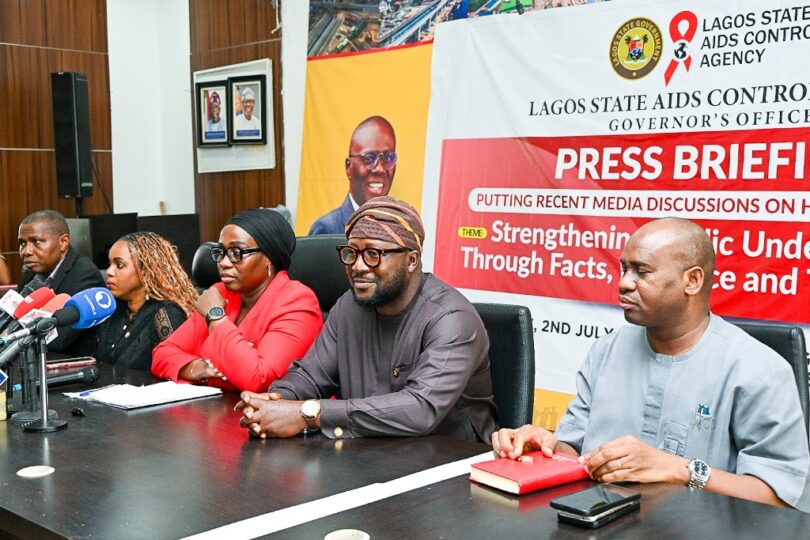
The assurance and clarification were given by the Chief Executive Officer of the Lagos State AIDS Control Agency (LSACA), Dr. Folakemi Animashaun, during a press conference on Thursday at the Bagauda Kaltho Press Centre, Alausa, Ikeja.
Dr. Animashaun stated unequivocally that Lagos State’s HIV response remains strong, proactive, evidence-based, and firmly on course.
While providing factual clarification regarding recent media reports suggesting that Lagos State recorded the highest number of new HIV infections in Nigeria in 2025, disclosed that the report, which is actually a 2018 survey, does not literally translate to Lagos State recording 10,430 new HIV infections in 2025.
She said the number that has been widely circulated refers to newly diagnosed HIV-positive cases, not necessarily new HIV infections that occurred within the year.
She said while recent media reports have generated understandable public concern, the available programme data does not support panic but underscores the strength of Lagos State’s surveillance system, expanded access to HIV services, and sustained progress towards epidemic control.
Giving detailed clarification on the report, Dr. Animashaun said, “A newly diagnosed HIV-positive case simply means an individual was confirmed HIV-positive during the reporting period. These include persons who may have acquired HIV several years earlier but were only recently tested. The figure may also include people who travelled to Lagos for testing or treatment, referrals from other states, and individuals identified because the state expanded access to HIV testing services.