Nigeria’s efforts to reduce cancer deaths are being undermined by late diagnosis, delayed treatment and misinformation about the disease, the National Coordinator of the National Cancer Control Programme (NCCP), Federal Ministry of Health and Social Welfare, Abuja, Dr Uchechukwu Emmanuel Nwokwu, has said. Dr Uche spoke on Wednesday, September 2,……
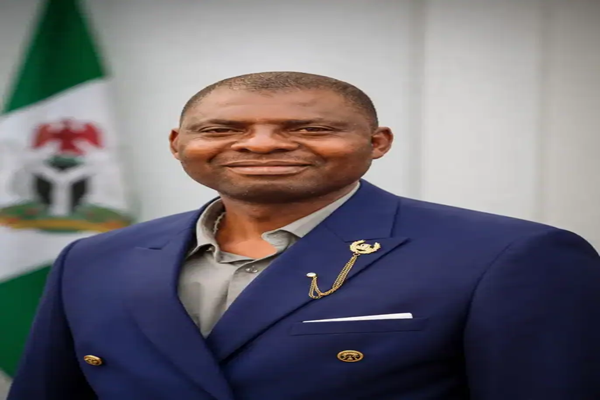
Nigeria’s efforts to reduce cancer deaths are being undermined by late diagnosis, delayed treatment and misinformation about the disease, the National Coordinator of the National Cancer Control Programme (NCCP), Federal Ministry of Health and Social Welfare, Abuja, Dr Uchechukwu Emmanuel Nwokwu, has said.
Dr Uche spoke on Wednesday, September 2, 2026, while addressing 16 fellows of Sebeccly’s 2026 Naija Cancer Watch Fellowship, where he highlighted some of the major challenges confronting cancer care in Nigeria and ongoing government efforts to improve access to prevention, diagnosis and treatment.
According to him, late presentation remains one of the major challenges in Nigeria’s oncology sector, with many patients commencing treatment only after the disease has advanced.
“One of the things we are facing in the oncology space in Nigeria is very late presentation and then very late commencement of therapy for those who are even diagnosed. So we have challenges with late diagnosis,” he said.
Dr Uche attributed part of the problem to the quality of information available to Nigerians, noting that misinformation and misconceptions about cancer often discourage people from undergoing screening or seeking medical care.
....: From Socks to Prosthetic Breast: The Untold Struggles of a Cancer Survivor
“One of the major reasons for this is the kind of information out there,” he said, adding that some narratives surrounding cancer “make people wish it away rather than go for screening.”
He also addressed the role of faith in cancer treatment, stressing that while spirituality is important to many Nigerians, it should not replace medical intervention.
“When they go for screening and they are tested positive, they want to pray it out, pray away out syndrome,” Dr Uche said.
He added: “I’m a Christian and I know that Nigeria is a religious country, so I understand the path of prayer, but I also understand the intersection between spirituality and science. So you don’t need to separate them.”
According to Dr Uche, delaying medical treatment while relying solely on prayer could worsen a patient’s condition, as the disease may progress to a stage where treatment becomes more difficult.
He also identified limited access to cancer screening and diagnostic services as another major barrier to early detection.
Dr Uche said many cancer services are concentrated in tertiary hospitals and major urban centres, forcing people in rural and underserved communities to travel long distances to access screening.
“So if they have to go to get screening done at the tertiary health institutions within their state, many of them will have to travel for days or travel a long distance to get that,” he said.
He advocated the expansion of cancer screening and diagnostic services to secondary and primary healthcare facilities to make early detection more accessible, while allowing patients requiring specialised care to be referred to tertiary institutions.
Dr Uche said the Federal Government was aware of the gaps in cancer care and was working within available resources to strengthen the country’s response to the disease.
....: TVC’s Ayobami, Judith, 14 Others Selected for Sebeccly’s 2026 Naija Cancer Watch Fellowship
He explained that the National Cancer Control Programme was established to develop and implement policies and programmes aimed at addressing Nigeria’s cancer burden.
Dr Uche also disclosed that the Federal Government had developed a new National Cancer Control Plan for 2026 to 2030, following previous plans covering 2008–2013 and 2018–2022.
“I admit that the previous plans were not comprehensively implemented,” he said, adding that the government was now working towards a more vigorous implementation of the latest plan.
According to Dr Uche, the new plan has 10 strategic pillars covering areas including risk assessment, vaccination, screening, diagnosis and treatment.
On cancer prevention, Dr Uche said the government was exploring digital health and artificial intelligence as part of efforts to identify people at risk of developing cancer.
“We are integrating digital health into a true artificial intelligence,” he said.
He said discussions were ongoing with AI developers on how available data could be analysed to potentially identify people at risk of developing cancer years before the disease emerges.
“So right now, I’m working on a memorandum of agreement with some AI developers to see how we can look at our data and begin to even predict three years before those who are even at risk of developing cancer,” he said.
Dr Uche further disclosed that the government was working to strengthen diagnostic capacity and expand cancer infrastructure across the country.
He said efforts were also being made to address the financial and social barriers preventing patients from accessing cancer care.
According to Dr Uche, the government launched a cancer care support initiative in 2026 and had, at the time of his address, provided funding for more than 175 patients to meet non-medical needs such as food and transportation.
“As of today, we were able to fund over 175 patients, cancer patients, to be able to have resources to feed or pay transportation, or be able to sort out when they are going to access cancer care,” he said.
He added that more than 700 patients had registered for the programme, with plans to support them in accessing care in public or private hospitals.
“What we want to ensure is that every cancer patient that is linked by non-medical barriers is supported to initiate or complete their care,” Dr Uche said.
The government is also introducing a patient navigation programme to help cancer patients move through the healthcare system, particularly those who face difficulties navigating complex hospital processes.
“Patient navigation is going to practically handhold this patient from the community through the entire journey of care,” he said.
Dr Uche said the programme would initially be piloted in about 12 hospitals, with 12 non-governmental organisations or civil society organisations expected to support the initiative.
He also identified shortages of skilled personnel as another challenge confronting cancer care in Nigeria, saying the government was working to strengthen human resources across the oncology sector.
He said the focus would extend beyond oncologists to include radiotherapists, laboratory scientists, oncology pharmacists, oncology nurses and psycho-oncologists.
Dr Uche expressed optimism that sustained implementation of the 2026–2030 National Cancer Control Plan could significantly improve Nigeria’s oncology capacity by 2030.
“We may not be where we want to be or where we ought to be, but I think there is a very steady step being taken to ensure that we bridge that gap,” he said.