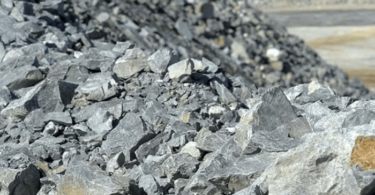
The federal government says Nigeria’s solid minerals sector has attracted about $3 billion in investments over the past three years, driven by interests in lithium, gold and other strategic minerals.
The disclosure was made recently during a press briefing ahead of the 5th African Natural Resources and Energy Investment Summit (AFNIS), scheduled to hold from June 23 to 25, 2026, at the State House Conference Centre, Abuja, noting that the investments are being supported by policy changes introduced under President Bola Tinubu’s administration, aimed at repositioning the mining sector as a major contributor to economic diversification.
The Minister of Solid Minerals Development, Mr Dele Alake, who was represented at the briefing by the chief executive of the Nigeria Solid Minerals Company, Mr Martins Imonitie, said the inflow of $3 billion within three years was significant, given the capital-intensive and long development cycles typical of mining projects globally.
According to him, mineral development requires extensive geological studies, financing arrangements, and offtake agreements, meaning investment decisions are rarely immediate and often take years to materialise.
“For Nigeria to attract about $3bn in investments within this period is unprecedented and demonstrates growing confidence in the direction of reforms in the sector,” he said.
He noted that mining projects can take between 15 and 20 years to reach full commercial maturity, stressing that the sector demands long-term capital commitment rather than short-term returns.
“These investments cut across lithium, gold and several other minerals. More importantly, they signal what lies ahead for the sector in terms of sustained growth and global investor interest,” he added.
Mr Alake said the forthcoming AFNIS 2026 would focus on repositioning Africa from a raw materials exporter to a value-added industrial hub capable of driving job creation, technology transfer and inclusive growth.
He noted that Africa’s natural resource base must be leveraged not only for exports but for domestic industrialisation and long-term economic transformation.
“The significance of AFNIS 2026 goes beyond its fifth edition. It comes at a defining moment for Africa, as global demand for critical minerals continues to rise amid the energy transition,” he said.
He added that the summit’s theme, “One Africa, One Resource Vision,” reflects the need for stronger regional cooperation in developing mineral resources, energy infrastructure and integrated value chains.
According to him, isolated national approaches are no longer sufficient, given the scale of global demand and the need for competitive positioning in supply chains for critical minerals such as lithium, cobalt, graphite and rare earth elements.
Mr Alake also disclosed that the 2026 edition would place greater emphasis on implementation, with structured investment sessions, sovereign meetings, project financing discussions and deal-oriented engagements.
“The objective is clear: participants should leave Abuja with concrete partnerships, investment commitments and actionable projects that translate into jobs and economic growth,” he said.