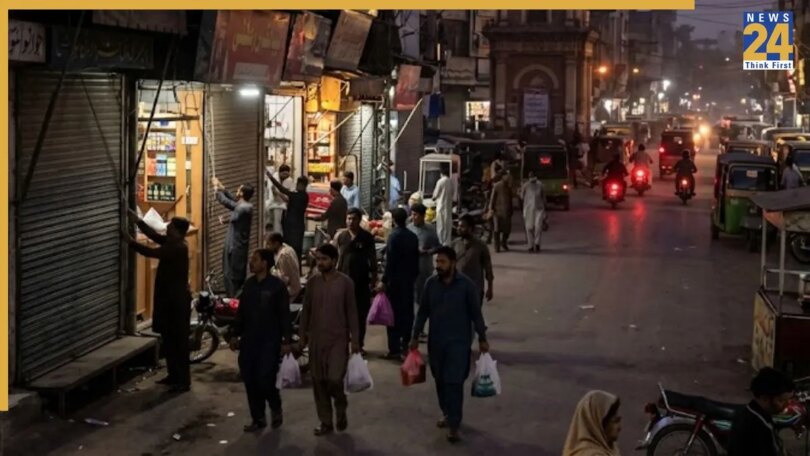
Amid a deepening energy crisis linked to regional instability, Pakistan has once again enforced revised business hours in its capital, Islamabad. Starting June 1, 2026, all markets, shops and shopping malls in the city must close by 8 pm.
The decision was confirmed by Deputy Commissioner Irfan Memon through an official notification shared on social media. According to the order issued by the district administration, the revised timings will remain in force throughout the week and will be implemented strictly.
Revised business hours announced
Under the new regulations, markets, retail shops and shopping malls must cease operations by 8 pm every day.
Restaurants, grocery stores, bakeries, fast-food outlets and other food-related businesses will be allowed to remain open until 10 pm. Wedding halls, tent houses, banquet venues and other event locations may also operate until 10 pm.
Read More: Ranveer Singh’s Dhurandhar made Dawood Ibrahim angry, then D-Company decided to…, sources reveal chilling details
The administration has stated that these restrictions will apply not only to commercial establishments but also to private functions, weddings and other events held at personal residences or private venues.
Essential services exempted
Several essential services have been exempted from the restrictions. Pharmacies, hospitals, emergency medical facilities, petrol pumps, dairy shops, sports facilities, call centres, data centres and IT and IT-enabled service companies catering to international clients will continue operating without any limitations.
Read More: What is Russia’s ‘Dead Hand’? Chilling nuclear system designed to strike after…, US fears it due to…
Authorities have warned that strict action will be taken against anyone found violating the new rules.
Traders oppose the decision
The business community has strongly criticised the move, arguing that many Pakistani markets traditionally open in the afternoon and remain active until late at night.
Traders say that forcing businesses to close early will significantly affect sales and reduce the income of small shopkeepers and medium-sized businesses. They fear the decision could put additional financial pressure on already struggling traders.
The government, however, maintains that the restrictions are necessary to reduce electricity consumption during peak evening hours.
Read More: Meet Kabeer Chillar, JEE Advanced 2026 topper who secured AIR 2 after perfect JEE Main score, eyes these premium institutes, he is from…
Officials argue that encouraging commercial activity during daylight hours will help lower energy demand at night, resulting in national-level electricity savings and reduced power costs.
The district administration has urged traders’ associations and business owners to cooperate with the measures to help address the country’s growing energy challenges.
Energy crisis linked to regional tensions
According to officials, the renewed restrictions are part of efforts to manage an energy crisis that intensified following regional instability after the US military strikes on Iran on February 28, 2026.
The developments reportedly led to a sharp increase in fuel prices and placed additional pressure on Pakistan’s power generation system. The government had initially introduced early market closures in March to conserve energy.
Read More: Bad news for Shehbaz Sharif, Asim Munir as bankrupt Pakistan spends nearly multimillion dollar every month in Washington for…
A temporary relaxation was granted ahead of Eid-ul-Fitr on May 27, 2026, following requests from traders. However, with the holiday period over, the government has reinstated the restrictions and is expected to encourage other provinces to adopt similar measures.
First published on: Jun 01, 2026 08:40 PM IST
Get Breaking News First and Latest Updates from India and around the world on News24. Follow News24 on Facebook, Twitter.
End of Article
Related Story