
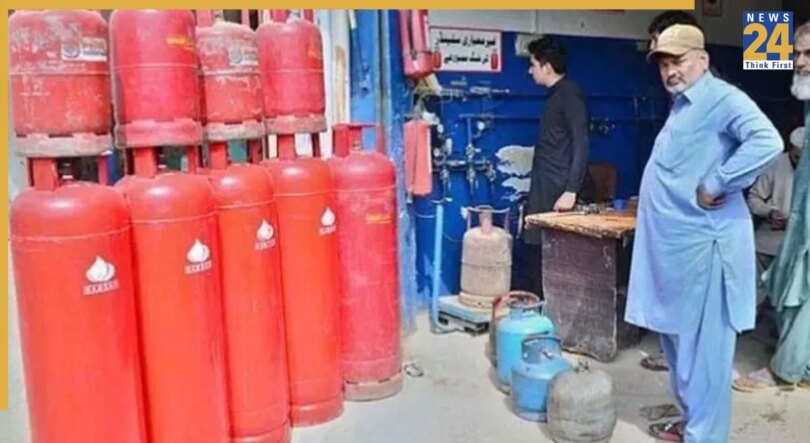
To provide relief to poor families, India offers LPG subsidies through schemes like the Pradhan Mantri Ujjwala Yojana. These initiatives have played a vital role in ensuring energy security for millions of Indian households. However, the situation is different in Pakistan, India’s northwestern neighbour. Pakistan does not have a major subsidy program for LPG cylinders. As a result, low-income families are forced to buy cylinders at high market prices. The situation becomes even more difficult during winters, when LPG prices rise sharply.
No LPG subsidy for poor families

2 / 6
Pakistan does not provide any direct LPG cylinder subsidy for poor households. Although some consumers receive limited relief on pipeline gas (PNG), people who rely on LPG cylinders must pay the full price.
Domestic LPG cylinder prices in Pakistan

3 / 6
Standard 11.8-kilogram domestic LPG cylinder in Pakistan costs between 4,000 and 5,150 Pakistani rupees. These prices are considered expensive for average and low-income families.
Prices rise sharply in winter

4 / 6
Demand for LPG increases during the winter season in Pakistan. As a result, cylinder prices can rise to as high as 8,000 Pakistani rupees, making them unaffordable for many poor households.
OGRA Regulates LPG Prices

5 / 6
LPG prices in Pakistan are regulated by the Oil and Gas Regulatory Authority (OGRA). The authority has officially fixed LPG prices between 3,500 and 3,600 Pakistani rupees, although market prices often go much higher.
Commercial LPG cylinders also costly

6 / 6
Commercial LPG cylinders in Pakistan weigh 45.4 kilograms and are priced between 13,600 and 17,000 Pakistani rupees. The high prices also increase the burden on small businesses and shop owners.