Eleven weeks ago, US President Donald Trump said the outcome of the Iran war would be simple.
“There will be no deal with Iran except UNCONDITIONAL SURRENDER!” he wrote on social media. The White House issued a clarifying statement hours later, saying that even if no one in Tehran submitted a formal surrender, Mr Trump would declare when the country had essentially given up, or, as Trump put it, cried “uncle”.
It is too early to tell what exactly Mr Trump and Iran have agreed to, or if they have agreed to much at all. The president wrote in a Truth Social post that the Strait of Hormuz would reopen under some kind of memorandum of understanding.
It appears – but again, there are no details – that the questions of whether and how Iran will dispose of its stockpile of highly enriched uranium, and whether it will be able to enrich nuclear fuel in the future, and what will become of its missile program are all being pushed to a later negotiation.
But that is based on reports from American and Middle Eastern sources, not all of whom seem to have the same understanding of what is in the memorandum, or even whether the details have been locked down.
Nonetheless, some Iran hawks were already taking to social media to denounce the agreement, even before they saw any details.
“The rumored 60-day ceasefire – with the belief that Iran will ever engage in good faith – would be a disaster,” Senator Roger Wicker, R-Miss., the chair of the Senate Armed Services Committee, wrote on the social platform X before Mr Trump’s announcement of a near deal.
“Everything accomplished by Operation Epic Fury would be for naught!”
Mr Trump’s first-term secretary of state, Mr Mike Pompeo, was similarly dismissive on X, only to receive an expletive-laden response from Mr Steven Cheung, a top White House communications official, who said “he should shut his stupid mouth and leave the real work to the professionals”.
Mr Trump and his aides said repeatedly in recent weeks that they would not agree to any accord that did not address the nuclear issues. But in judging whether Mr Trump achieved his objectives, here are a few key questions to look for:
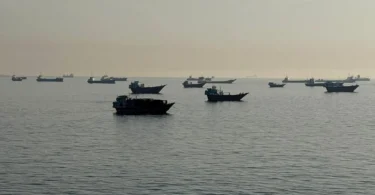
Does the agreement deal solely with resuming commerce in the Strait of Hormuz, which was open Feb 28, the day Israel and the United States began their attack? Is the reopening permanent, or does Iran claim that it now has the authority to control the waterway, even if it agrees to suspend “tolls” on traffic in and out of the strait? Does the United States remove its blockade on ships headed to or from Iranian ports?
Does the United States agree to release any of the US$25 billion (S$32 billion) in frozen Iranian funds that Iran has demanded must be released? Mr Trump harshly criticised former President Barack Obama – as recently as in the past few weeks – for releasing US$1.7 billion in 2015 as part of the agreement that suspended most nuclear activity.
Does Iran agree to turn over its 900 pounds (408.2kg) of near-bomb-grade uranium, or blend it down to a form that would largely neutralise the threat that it could be used in a weapon? What happens to the roughly 11 tons of other uranium, enriched at varying levels, that the International Atomic Energy Agency says is in Iran’s possession? Mr Trump has frequently said Iran must give up all of its nuclear material.
Is Iran allowed to enrich uranium in the future? Does it suspend its enrichment for 20 years, which Mr Trump told reporters on Air Force One eight days ago would be acceptable?
And what happens to Iran’s missile arsenal? This is a critical issue for Israel, which is in range of many of Iran’s ballistic missiles. Early in the conflict the Trump administration said Iran would have to give up its missiles or limit their range, but more recently that topic had not been discussed publicly. NYTIMES