The rescue of pupils and teachers abducted from three schools in Oriire Local Government Area of Oyo State followed more than one month of intelligence gathering and coordinated operations by the Nigerian Army and several security agencies.
Naijaonpoint had earlier reported that the victims regained their freedom after spending 56 days in captivity, triggering widespread celebrations, particularly in the Ogbomoso axis of the state.
Travellers, residents and passers-by reportedly erupted in jubilation as news of the successful operation spread across affected communities.
According to the Army, the mission was led by the General Officer Commanding 2 Division, Maj. Gen. Chinedu Nnebeife, with support from personnel drawn from several military, intelligence and paramilitary organisations.
Nnebeife coordinated the intelligence-driven operation that led to the freedom of the abducted pupils and teachers.
The senior Army officer is the General Officer Commanding 2 Division, Nigerian Army, headquartered at the Adekunle Fajuyi Cantonment in Ibadan.
He assumed command of the division on August 19, 2025, succeeding Maj. Gen. Obinna Onubogu.
During his assumption of office, Nnebeife pledged to intensify efforts in the discharge of the division’s responsibilities while prioritising troop welfare and improving operational effectiveness.
Before the Oriire rescue operation, Nnebeife had also supervised military efforts in Babasango Forest, Kwara State, where two kidnapped victims were rescued.
Apart from his position as GOC of the 2 Division, Nnebeife also serves as the Force Commander of Operation FANSAN YAMA Sector 3.
Operation FANSAN YAMA is one of the Nigerian Army’s internal security formations established to combat terrorism, banditry, kidnapping and other criminal activities.
His leadership role placed him at the centre of the planning and execution of the prolonged operation against the terrorist network linked to the Oyo school abduction.
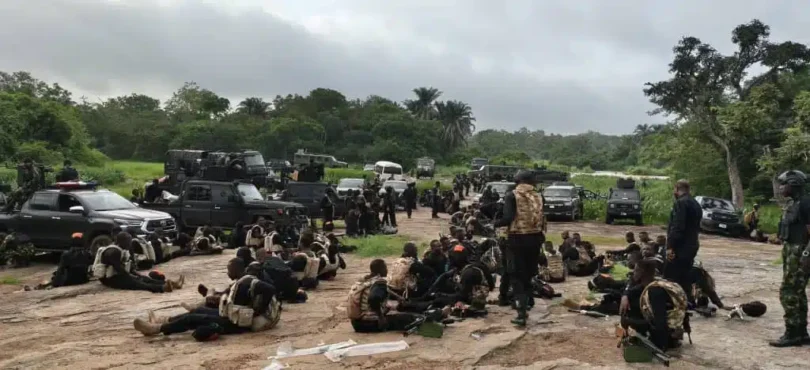
The rescue was not solely an Army operation, as personnel from several security and intelligence agencies participated in the mission.
The operation, which lasted more than one month, culminated on July 10, 2026, after sustained efforts to locate the abductees, identify their captors and disrupt the network supporting them.
Participating agencies included special units from the Office of the National Security Adviser (NSA), the National Counter Terrorism Centre and the Defence Headquarters.
Personnel from the Nigerian Army, Navy, Air Force, Nigeria Police Force (NPF), Department of State Services and National Intelligence Agency (NIA) also played key roles.
Others involved were operatives of the Nigeria Security and Civil Defence Corps, Amotekun Corps, local vigilantes and hunters familiar with the terrain.
The operation also featured specialised military and tactical units trained for counterterrorism, hostage rescue and intelligence operations.
Among those reportedly deployed were operatives of the Nigerian Navy Special Boat Service and the Defence Headquarters Special Operations Forces.
Nigerian Army Special Operations Forces, including trained snipers, also participated in the mission.
Special units from the Office of the National Security Adviser (NSA) supported the operation alongside personnel of the Police Intelligence Response Team.
The DSS deployed members of its Special Tactical and Anti-Terrorism Team to assist in tracking the kidnappers and dismantling their network.
The Nigerian Air Force (NAF) and allied intelligence, surveillance and reconnaissance platforms also provided support during the operation.
The surveillance assets assisted security forces in monitoring suspected locations, gathering intelligence and tracking activities around the terrorists’ hideouts.
Local hunters and vigilantes complemented the technical capabilities of the security agencies by providing knowledge of the forests and surrounding communities.