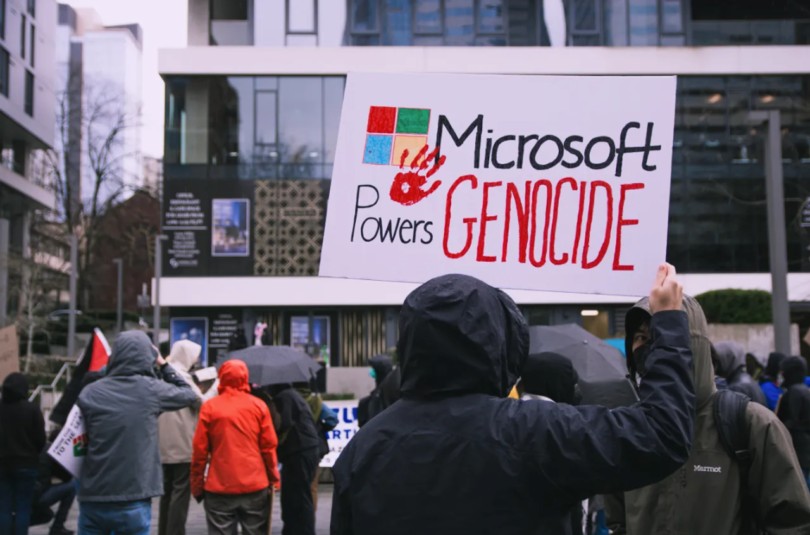
Microsoft has dismissed the head of its Israeli subsidiary and several senior managers following an internal investigation into allegations that its cloud infrastructure was used to surveil Palestinians in Gaza and the occupied West Bank, marking one of the most serious accountability crises to hit Big Tech in years.
Alon Haimovich, who served as Microsoft’s general manager in Israel for four years, has been removed from his role and is set to leave the company at the end of the month.
Until a replacement is appointed, Microsoft Israel will operate under the management of Microsoft France.
The scandal stems from reporting by The Guardian and +972 Magazine, which revealed that Israeli intelligence agencies were using Microsoft servers to run a mass surveillance operation targeting Palestinian communications.
According to the Guardian’s investigation, the Israeli military secretly stored a vast database of Palestinians’ phone calls on Microsoft’s servers in Europe.
The arrangement was finalised in 2021 during a meeting at Microsoft’s headquarters in Redmond between CEO Satya Nadella and then-Unit 8200 commander Yossi Sariel.
Following October 7, 2023, Unit 8200 significantly expanded its use of commercial cloud infrastructure.
By the time the Guardian published its findings, Microsoft’s servers were being used to process recordings of millions of phone calls made daily by Palestinians.
Microsoft President Brad Smith later said Microsoft’s internal review had confirmed parts of The Guardian’s reporting, including details about the Israeli defence ministry’s use of Azure storage servers in the Netherlands and its access to AI services.
Microsoft added that it had disabled certain cloud storage and AI services for a unit within the Israeli defence ministry.
Related
How the pressure built
The scale of what was built on Microsoft’s infrastructure is staggering.
As of July 2025, more than 11,500 terabytes of Israeli military data, equivalent to roughly 200 million hours of audio, were stored in Azure data centres in the Netherlands and Ireland.